

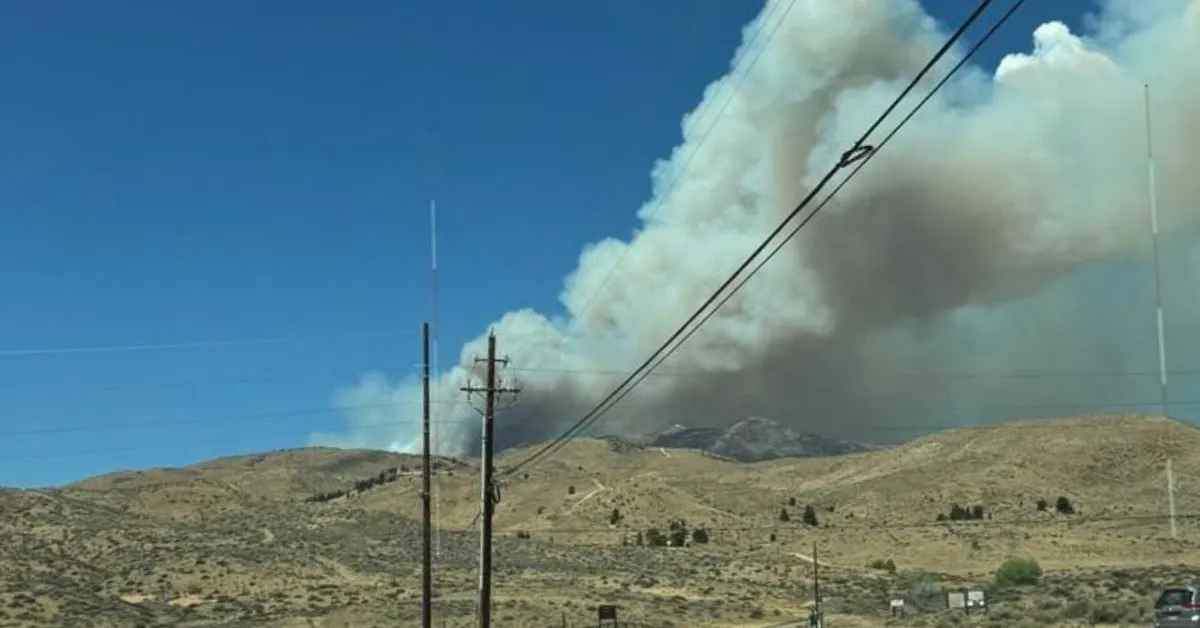
Jason Pasco saw the smoke from his northwest Reno home Saturday afternoon.
The blaze on Peavine Peak resembled an ordinary vegetation fire, the type that Nevadans are accustomed during the summer months, until it didn’t.
A Red Flag Warning was in place, signaling elevated fire danger because of weather conditions. So, people were warned that a dangerous wildfire could spark at any moment — and it soon became apparent to Pasco that what he was seeing develop from his own backyard was not going to be a conventional fire story.
More than 90,000 residents received evacuation orders in the first hours of what became the Hawk Fire. Pasco, the news director at KTVN (Channel 2, CBS), was one of them. So were other members of his news team, some of whom have not returned home.
“I’ve been working here, in the Reno market, for 31 years,” Pasco said in a telephone interview with The Desk on Tuesday. “Seeing that level of evacuation notices go out — my home included, our general manager, several people on our news team — by that point, it’s not just a firefighting story, it becomes an evacuation story from the human aspect, including the panic and frustration that comes with it.”

Wildfires are among the type of large-scale emergencies that encourage the public to tune in to their local broadcast television stations. While stations in bigger cities often have considerable resources to cover those events, smaller stations in places like Reno often do not, which makes the human commitment to covering those emergencies all the more remarkable.
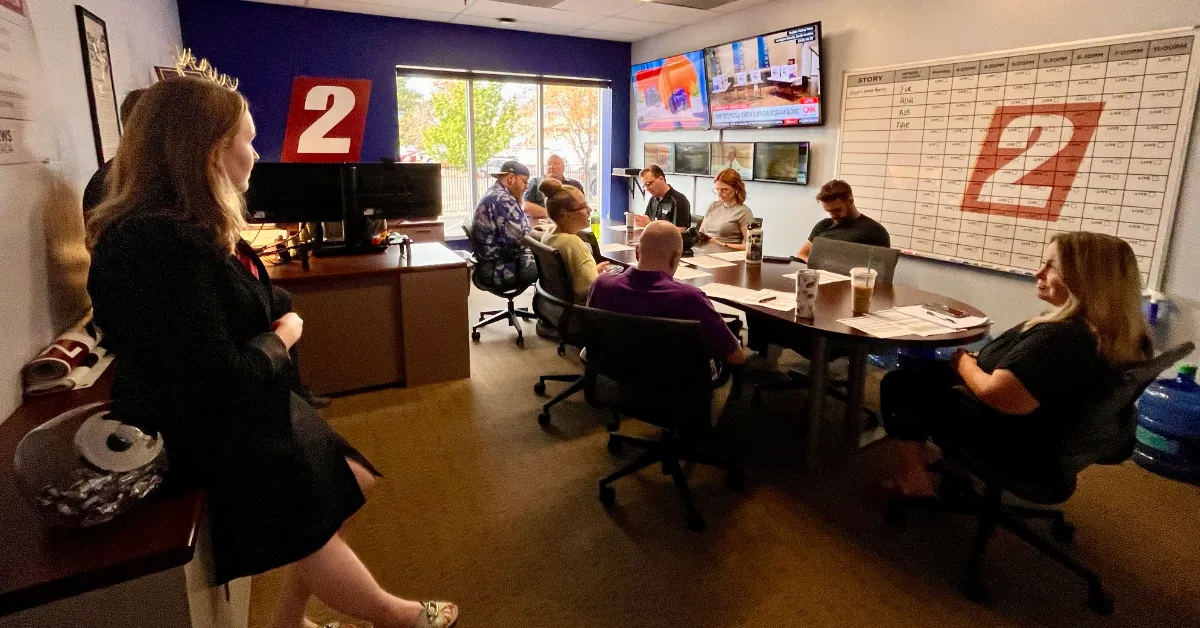
Around four dozen employees work on Pasco’s news team — a considerably smaller number compared to outlets in places like Los Angeles and San Francisco, which can employ upward of one hundred workers to support news operations — and by Sunday morning, the scale of the fire meant it was all hands on deck.
“Even though we’re small staffed and short staffed, everyone has risen to the challenge to provide coverage that our viewers are looking for, especially in these times of crisis,” Pasco said.
Some of those employees are working despite being forced from their homes — one reporter is staying with her parents, and others are seeking accommodations elsewhere. Pasco grabbed his go-bag, went to the station and “hoped for the best,” he said.
The commitment to the story means Pasco and others on his team have to set aside how the Hawk Fire is personally affecting them in order to focus on delivering reliable information to members of the community — not an easy task, and one made even more challenging by the fewer resources that the station has, given its stature.
But the dedication that stations in major cities show to a wildfire or other civil emergency is on full display at KTVN, where normal programming has been interrupted by community briefings with fire officials and where community leaders have been invited to the station’s studios to speak directly with affected residents during newscasts.
“We have a great team of people here who understand the commitment that we all have to rise to the occasion and do our jobs, despite some of us being personally affected by it,” Pasco said.
KTVN has leaned on the resources of CBS News during its wildfire coverage, sending and receiving video from CBS NewsPath and coordinating with CBS News producers and reporters to help supplement some of its own reporting. Pasco said CBS News has been “tremendous with not just doing it for themselves,” but also helping KTVN secure video footage from “stringers” — freelance video photographers who have professional relationships with news outlets — and coordinating the availability of material from CBS stations and affiliates.
As a CNN affiliate, KTVN also benefits from the resources provided by CNN Newsource, an in-house newswire service that distributes live feeds and video packages to local TV stations.
“That helps us to have a few extra eyes and ears who are a bit removed from the chaos of covering the fire,” Pasco said. “They let us know when they have things that can help us out, which has been really good.”
In the initial moments of a wildfire, many people turn to social media platforms and apps like Watch Duty for early updates. But Watch Duty doesn’t offer live video feeds or links to community briefings that are streamed online, and social platforms like Facebook, NextDoor and TikTok can quickly become flooded with wrong information as panicked citizens repeat rumors or start their own.
Broadcasters, on the other hand, play an important role in being reliable sources of accurate information throughout an emergency, from start to finish. Pasco said his journalists are not only trained on wildfire preparedness and response — they participate in annual events held by local firefighting agencies that educate them on what to do, and what not to do, during fire emergencies — but also how to carefully vet and verify information provided by law enforcement sources.
“We don’t report something until we can verify it with our own eyes, our cameras or through official channels,” Pasco affirmed.
That deliberation, coupled with a news team’s rapport with public safety agencies and local emergency officials, makes broadcast TV an invaluable resource for the community.
“Everyone here is working hard, around-the-clock, to make sure that we keep our viewers safe and informed, and that’s what’s most important,” Pasco said. “That’s our job, and it’s even more important when there is a crisis like this.”
That job doesn’t end when the emergency does: Local reporters often continue to advance the story by highlighting the efforts of local heroes and documenting disaster recovery. And there are opportunities for broadcasters who normally compete to come together to help their communities rebound from a disaster.
In this case, KTVN is working with local radio broadcaster Reno Media Group to organize a drive-by fundraiser to help collect money for wildfire victims. The companies are expected to release more information about the drive, including when and where it will be held, in the coming days.