

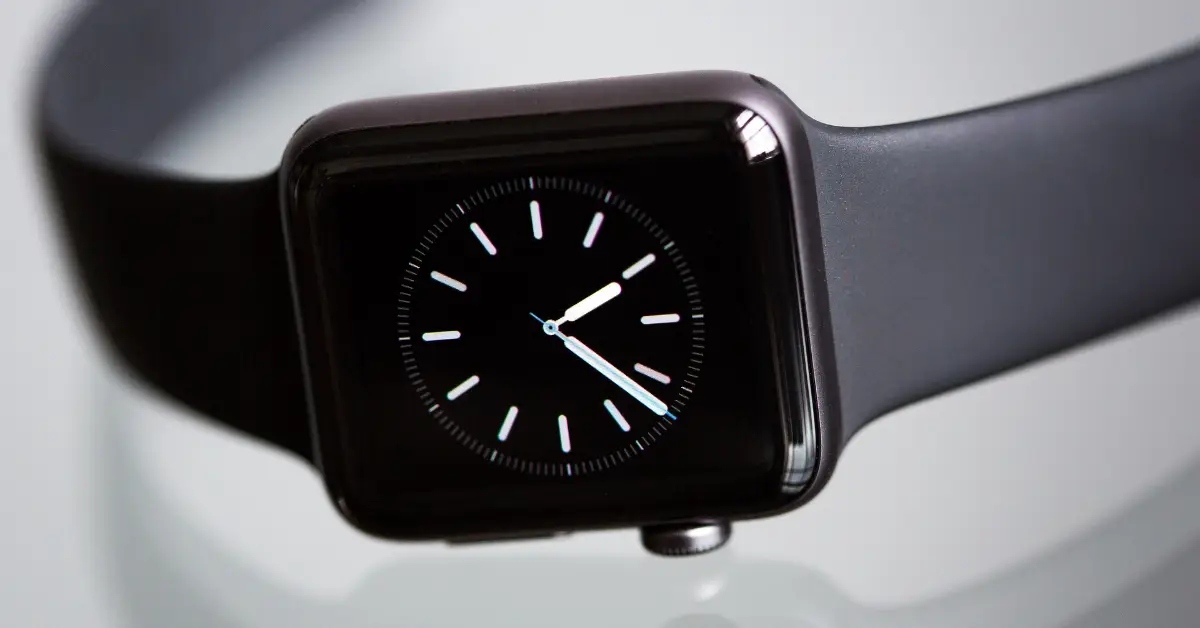
One of the market’s biggest independent provider of wireless phone and data services has accused Apple of attempting to force a “predatory” deal in order to support Apple Watch devices on some of its partner networks.
In a note to customers this month, the chief executive of U.S. Mobile said the company wanted to bring Apple Watch support to two of its partner networks — AT&T and T-Mobile, marketed as Dark Star and Lightspeed, respectively — but Apple demanded “a commitment in the hundreds of millions of dollars” to make its devices work with U.S. Mobile plans.
“We said no,” Ahmed Khattak, the founder and CEO of U.S. Mobile, said in the note. “In my opinion, the ask was predatory, and signing a bad agreement because customers understandably want the feature would eventually mean making all of you pay for that bad agreement.

U.S. Mobile allows customers to use and move between AT&T, T-Mobile and Verizon, making it one of the few mobile virtual wireless network (MVNO) operators in the country to offer that perk. Typically, a MVNO — which offers prepaid phone service — only supports one or two wireless networks.
Customers who select Verizon, marketed as Warp, as their preferred network are able to add an Apple Watch line to their plan for a separate monthly fee, but that perk hasn’t been available to customers who use AT&T or T-Mobile’s network for their U.S. Mobile plan because of arrangements between Apple and those networks that exclude prepaid carriers.
A spokesperson for Apple did not return a request from The Desk seeking comment and additional information.
U.S. Mobile surpassed 1 million customers this year, according to marketing data provided by the company. It offers monthly and annual plans that include unlimited talking, texting and wireless data at prices that are typically far below what AT&T, Verizon and T-Mobile offer.
To receive that low monthly or annual service pricing, customers typically compromise in other areas by foregoing perks like subsidies on new phones and included streaming and music subscriptions rolled into their plans. (U.S. Mobile does offer a bill credit, which is intended to bankroll a third-party music or video subscription, for customers with certain multi-line plans.)

Customers who have an Apple Watch can still use their device with their iPhones, but those with cellular-capable watches are forced to carry their phones with them if they use non-supported U.S. Mobile plans — which misses the point of having a cellular-capable Apple Watch in the first place.
Khattak said the situation could change in the future if Apple and the carriers agree to certain bundles that “materially change the technical and commercial requirements” for operators and users when it comes to supporting cellular Apple Watches on post-paid and prepaid networks, though the specific plans weren’t clear.
In the meantime, U.S. Mobile is updating its plan so that customers who use the company’s Multi-Network perk — which allows them to seamlessly move between AT&T, T-Mobile and Verizon’s networks — will be able to use their Apple Watch on Verizon’s network for free.
“It is not the outcome I wanted for Dark Star and Lightspeed, but I would rather wait for the ecosystem to open up than sign something I think makes no economic sense,” Khattak said.
To that end, Kattak said the multi-network perk has been “incredibly successful for us,” something that other prepaid companies are trying to imitate.
“I am excited to see that,” Khattak noted. “We think we have a bit of a head start on the technology because it took us the better part of a decade to get here, and it is an extraordinarily difficult engineering and (development) problem in addition to being a commercial one.”