


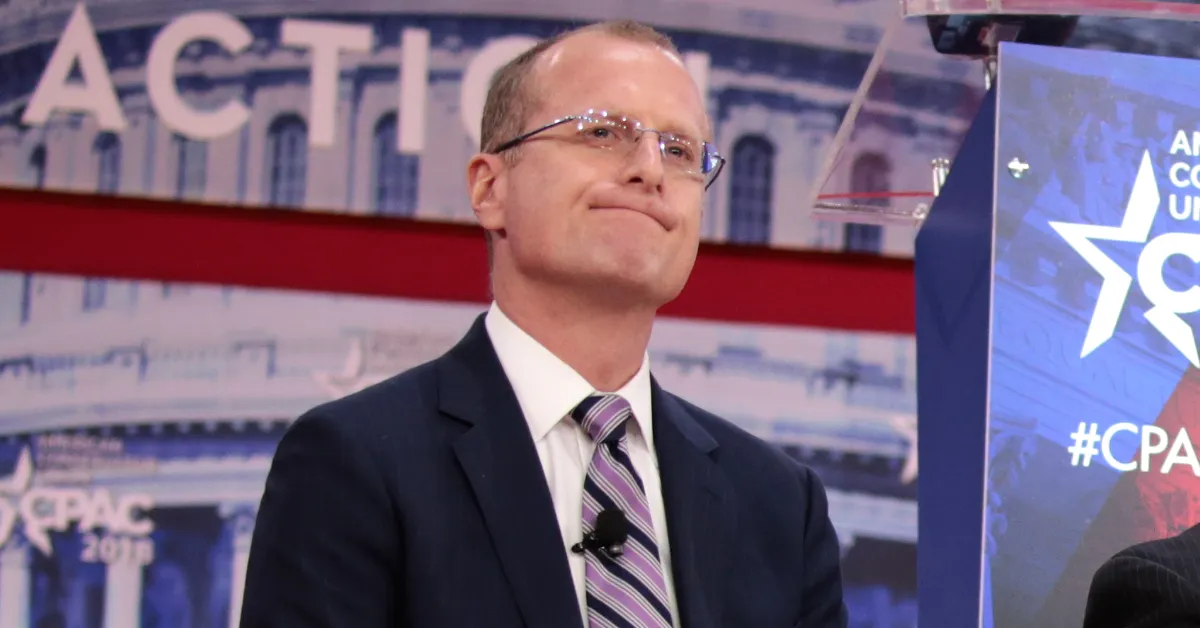
The Federal Communications Commission (FCC) is conducting an informal investigation into recent announcements involving network affiliation changes in several markets across the country, the agency’s chairman said in a recent interview.
Speaking to a former lobbyist-turned-publisher this week, FCC Chairman Brendan Carr accused some broadcasters of treating the landscape as “the Wild West” when it came to their affiliation agreements, adding that the agency is “taking investigative action” involving at least one, “if not more,” recent announcement that a major network affiliation was moving from one station to another.
Carr did not say what transactions the agency is looking into, and the interview was conducted with a conservative writer who has expressed favorable opinions about Carr’s activities over the past two years. The chairman has not responded to numerous requests for an interview from this publication.

Last week, The Desk was first to report a major affiliation change involving several Nexstar-owned stations in places like Albuquerque and Bismarck, where CBS programming will disappear next month. In affected areas, other broadcasters like Hearst Television and Forum Communications are picking up the CBS affiliation, with some distributing the network on a digital sub-channel and through local cable platforms.
One day later, Gray Media and Sinclair, Inc. confirmed a transaction involving the ABC affiliation in St. Louis, which will move from Sinclair-owned KDNL (Channel 30) to a digital sub-channel of KMOV (Channel 4). Deadline was the first to report on the matter; The Desk learned that the change is part of a pending deal to swap TV stations between the companies, which has not been formally announced.
The FCC issues licenses to use radio frequencies set aside for television broadcasting, and can scrutinize the transfer of those licenses between stations. But the agency typically cannot regulate or scrutinize network affiliation deals between local TV broadcasters, since those are private arrangements.
That said, the owners of the five major broadcast networks — ABC, CBS, Fox, NBC and the CW Network — also own licensed TV stations in major markets. Under Carr, the FCC has brought action against at least one major broadcaster, challenging the local TV licenses of ABC-owned stations over purported diversity and equity programs employed at the corporate level, which local stations typically have no involvement in.
It wasn’t clear from Carr’s remarks if the FCC’s probe involving any of the affiliation swaps was concentrated largely on the owners of the broadcast networks.

Since last year, Carr has targeted broadcasters that air news programming critical of President Donald Trump, who appointed Carr to lead the agency shortly after his inauguration. His scrutiny of stations owned by ABC, NBC and CBS far outweighs any critical consideration given to licensed TV stations owned by Fox, whose cable channels have conducted numerous interviews with the chairman in recent months.
On Friday, Carr appeared on the Fox Business Network to reaffirm his commitment to hold broadcast stations accountable to their public interest obligations as required by their privilege of holding an FCC-issued license.
“The FCC is really enforcing rules that have been on the books for a very long time,” Carr told Fox Business Network host Maria Bartiromo. “People that are familiar with broadcast understand that. And ultimately, it’s a good thing. As a country, we should have a trusted, respected news media, and we’re not there. So, I hope more broadcasters return to their public interest obligations.”