

The Walt Disney Company and its broadcast network ABC has gained another political ally in its ongoing fight with the Federal Communications Commission (FCC) over its eight local television broadcast licenses.
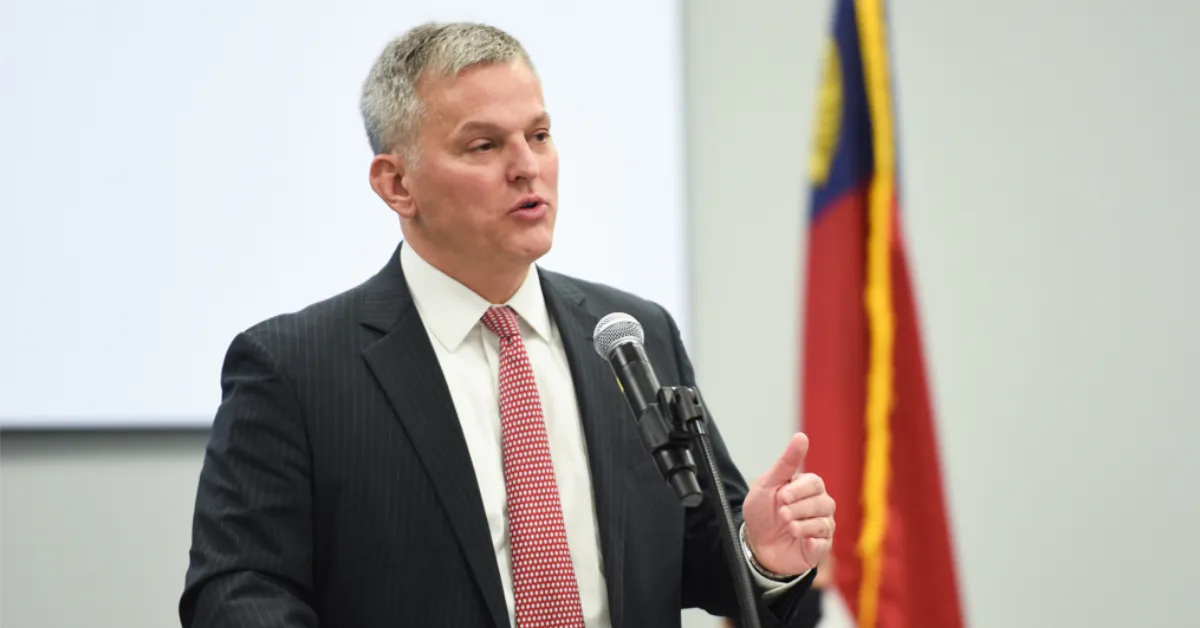
Last week, North Carolina Governor Josh Stein sent a letter to the FCC supporting Raleigh-Durham’s local ABC station WTVD (Channel 11), one of eight broadcast outlets directly owned by Disney.
“WTVD has served Raleigh, Durham and Fayetteville, and communities throughout central and eastern North Carolina, for over 70 years and is one of the trusted media institutions that North Carolinians turn to when they need reliable information about what is happening in their community. Its license should be renewed,” Stein wrote in the letter, a copy of which was obtained by The Desk.
Stein said the FCC’s ongoing battle against Disney and ABC has the potential to disrupt WTVD’s ability to deliver critical local news and information to North Carolina residents, should the agency ultimately decide to pull the station’s broadcast license.
“There is a broader principle at stake in this proceeding that extends beyond one station,” Stein wrote. “Strong local media outlets are part of the fabric of our communities, and the First Amendment protects against government action that threatens or chills that essential public service.”
In April, the FCC ordered Disney to renew its broadcast license for WTVD and the other seven stations following a year-long probe into the company’s use of diversity, equity and inclusiveness (DEI) practices in its hiring and promotional decisions.
Disney said it complied with the probe and denied its use of DEI programs violated any local or federal laws. Officials at the FCC said Disney’s answers to its questions were not satisfactory, and the agency accused the broadcasters of spreading false information about the probe in order to garner public support.
FCC Chairman Brendan Carr, who was appointed to lead the agency by President Donald Trump last year, has been a vocal critic of ABC and its programming. The decision to force ABC to renew its licenses appear directly connected to his comments about its daytime program “The View” and late night talk show “Jimmy Kimmel Live,” though he denies that to be the case.
Stein said the FCC has legitimate authority over broadcast licenses but must exercise that authority in a manner consistent with constitutional and statutory protections for the press. He cited Section 326 of the Communications Act, which says the law does not give the FCC the power of censorship and prohibits the agency from imposing rules or conditions that interfere with free speech by radio communication.
“That statutory protection is particularly important when the government holds the power to determine whether a broadcaster can continue operating,” Stein wrote, adding that “even the perception that critical or unpopular reporting could invite regulatory consequences can have a chilling effect on what journalists are willing to report.”
The governor said a disruption to WTVD’s license, or the license of any local broadcaster in North Carolina, could have serious consequences for residents. He said local news outlets help create a shared civic culture and provide critical information during emergencies.
“In times of emergency, first responders rely on these outlets to disseminate critical information to the public, with context and instructions tailored for each community,” Stein wrote.
Stein also warned that local news organizations are already under pressure, particularly in rural areas where newspapers and other outlets have reduced staffing or closed. He said research has linked the decline of local news to lower civic engagement and greater vulnerability to misinformation.
“The continuity of local news outlets should not be placed at risk by broader political and regulatory disputes in Washington that are separate from the local station’s record of serving its community,” Stein wrote.
Stein said the FCC should focus on WTVD’s specific commitment to local service and community information when it weighs whether to continue granting Disney a license to broadcast in North Carolina.
Disney’s other stations are located in New York City, Chicago, Philadelphia, Los Angeles, San Francisco, Houston and Fresno. The company has filed a legal challenge to the FCC’s ongoing scrutiny of its broadcast licenses; on Tuesday, a federal judge overseeing that case scheduled a hearing for early October.

More Stories
- Groups seek to join Disney’s lawsuit against FCC over ABC licenses
- Disney, ABC sue FCC over probe that triggered license renewals
- Disney urges FCC to toss petitions challenging ABC broadcast licenses
- Maryland Congressman Jamie Raskin warns FCC against probe into ABC’s TV licenses
- Free speech groups back Disney in ongoing fight with FCC