


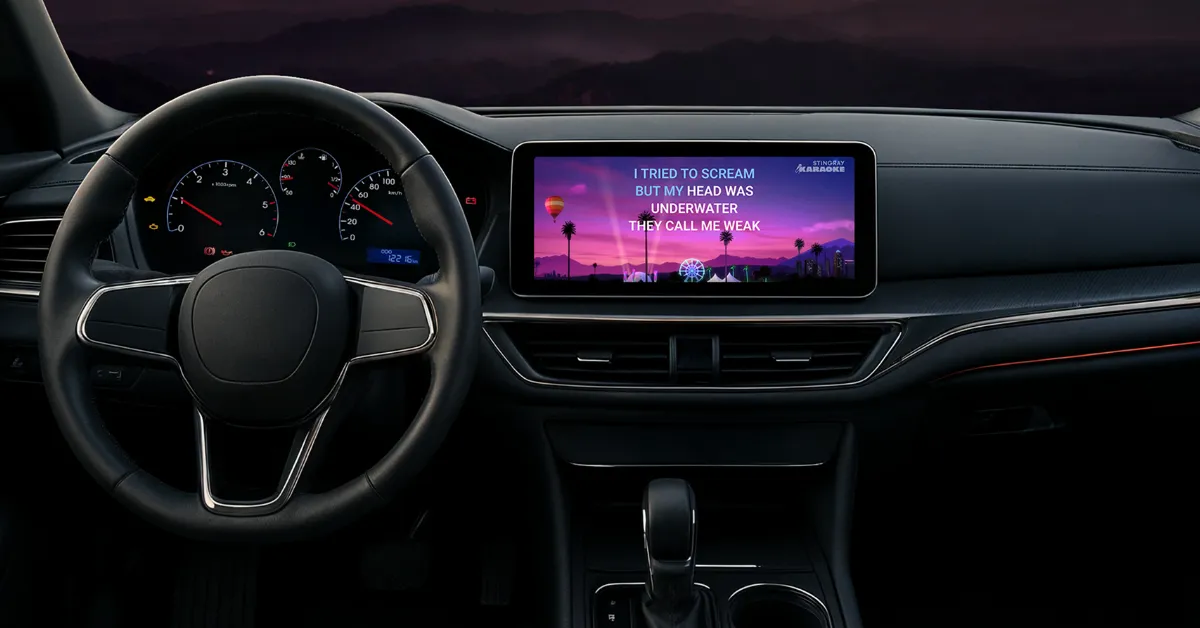
The next battleground for digital entertainment might not be the television in the living room — it could be the dashboard.
Stingray, the Montreal-based media company best known for music channels and audio services, is pushing deeper into automobiles with karaoke, music, podcasts and other interactive entertainment products as car manufacturers increasingly treat the cabin as another connected media environment.
“Karaoke sells cars,” Jim Riley, the U.S. Division President for Stingray, said in an interview with The Desk at the StreamTV Show in Denver earlier this summer.

The comment sounds playful, but Stingray is treating the opportunity seriously: Riley said the company’s karaoke product is available or being introduced across nearly 15 automotive manufacturers, with additional launches planned. The service can be adapted depending on the vehicle, including configurations that restrict the main dashboard screen while a car is moving but allow passengers to keep interacting through their phones.
Some integrations can also work with microphones inside the vehicle, allowing passengers to sing, receive scores and potentially participate in broader interactive experiences. Certain versions of Stingray’s karaoke experience allows passengers to accrue a score and compete against each other; in the future, they may be able to compete with other cars on the road.
The demand is particularly pronounced among Chinese automobile manufacturers expanding into markets outside China, Riley said. Those automakers often enter international markets with an expectation that karaoke will be part of the connected-car experience, creating an opportunity for Stingray because of its ability to license music across numerous countries.
“Rights is one of our superpowers,” Riley proclaimed.
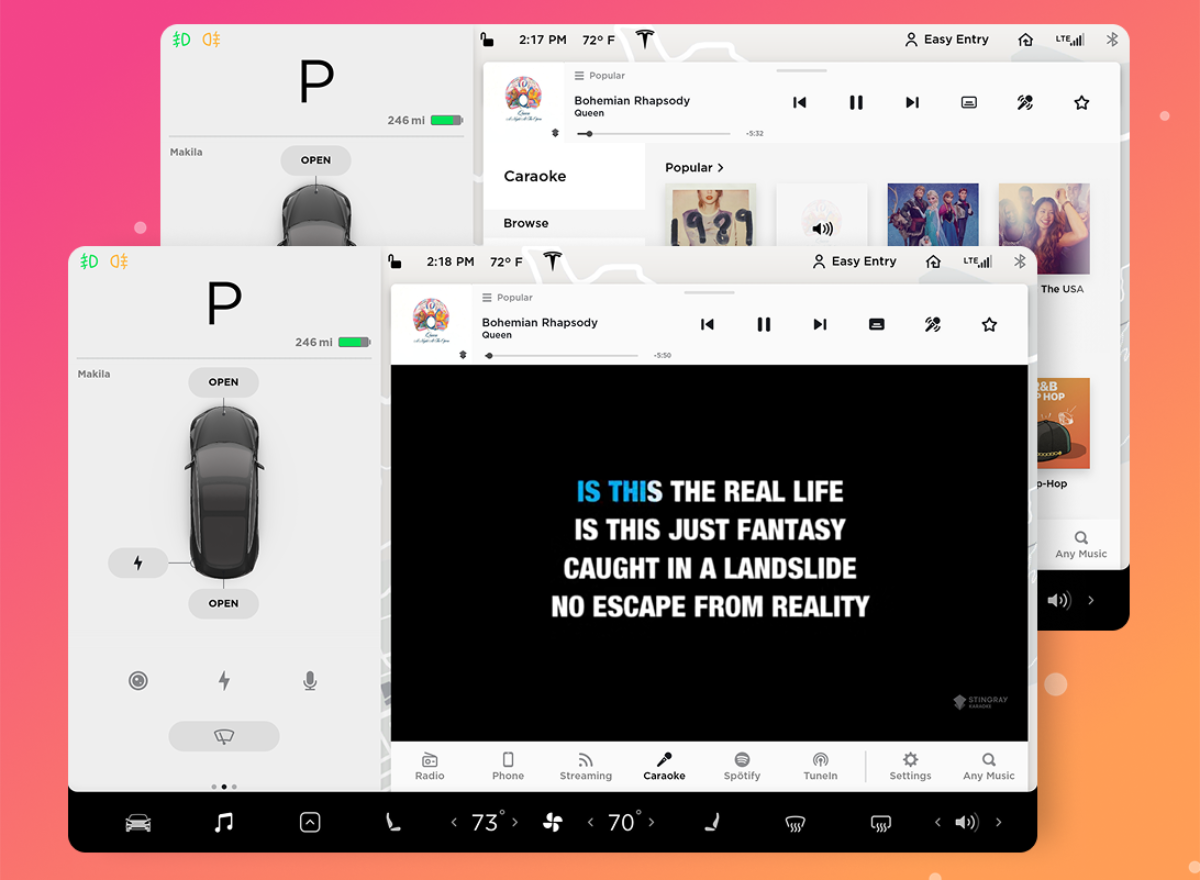
Stingray has built a karaoke library of roughly 100,000 songs and continues adding music, Riley said. Because the company works across international markets, it can develop localized catalogs for places that might be too small or complicated for competitors to address individually.
That means supporting markets ranging from Southeast Asia, where karaoke has long been popular, to Brazil, France, Germany, the United Kingdom and even Uzbekistan.
The strategy extends beyond singing in cars: Stingray has also adapted its Zen Life product for automobiles and is rolling out an OEM Audio platform that combines music, podcasts and radio under a service that can carry an automaker’s branding.
The company’s acquisition of TuneIn adds another piece to that strategy: Riley pointed to TuneIn’s programmatic advertising capabilities, existing automotive relationships and established product as key reasons the service fits Stingray’s broader ambitions.
As TuneIn becomes more closely integrated into Stingray, the company will evaluate where its technology, distribution and extensive catalog of streaming radio stations can complement existing automotive products.
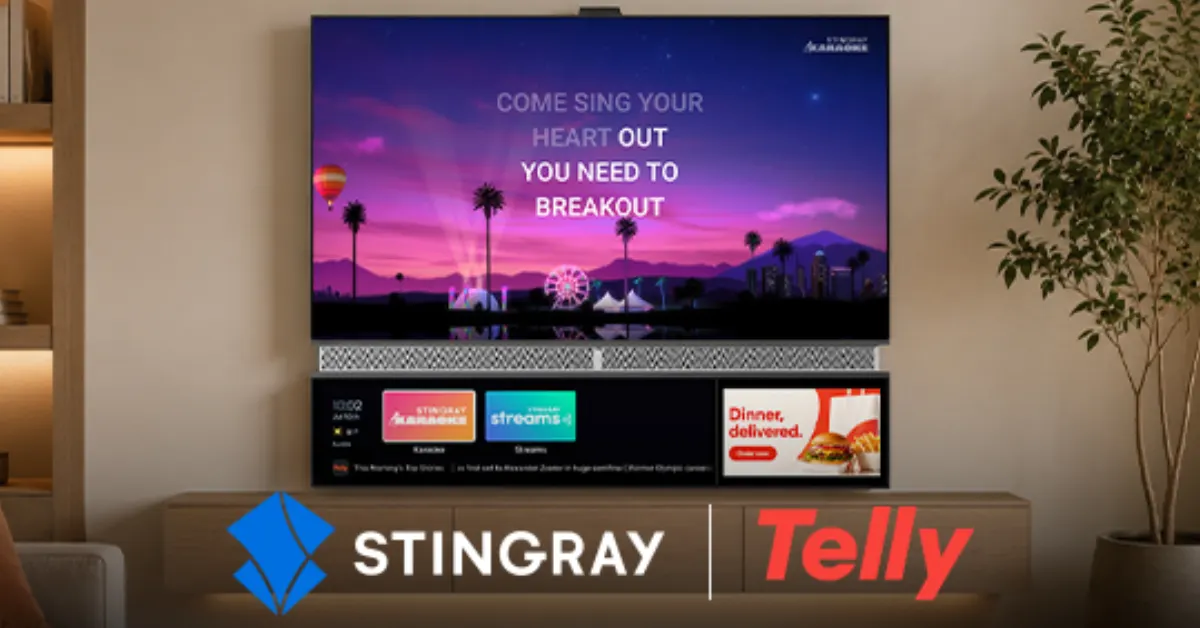
The same thinking already guides the company’s connected television business — Stingray distributes channels and interactive products across smart TV platforms (including a recent announcement to bring karaoke to Telly smart TVs) and has developed offerings such as Moodscapes, which pairs ambient video with music, and Ultimate Trivia, which lets viewers compete through their smartphones while watching television.
For Riley, automobiles represent another extension of that philosophy: Products that began on television can move into cars, cruise ships or aircraft. Products developed for one screen can evolve into something more interactive on another.
And as vehicles become increasingly software-driven, Stingray sees the dashboard as more than a place for maps and radio.