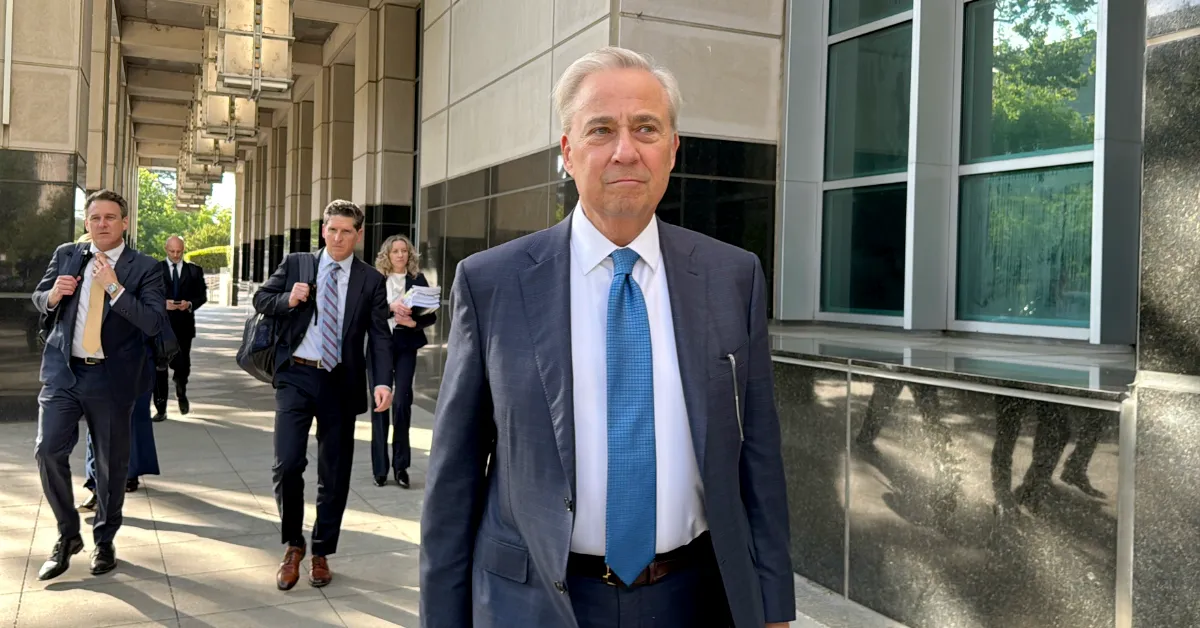
A federal judge in California has approved a request to delay certain procedural deadlines in an ongoing antitrust case brought by DIRECTV and several state attorneys general over Nexstar Media Group’s $6.2 billion acquisition of TEGNA.
In court documents released on Friday, U.S. District Judge Troy Nunley said both sides agreed to push certain deadlines for the disclosure of trial exhibits, evidence and expert reports.
The judge’s order pushes out nine deadlines with respect to those matters, but doesn’t change the date of a jury trial, which is still tentatively scheduled to begin in July 2027.


Nexstar received fast-tracked approvals from federal regulators to close on its acquisition of TEGNA in March, one day after DIRECTV and the state attorneys filed separate but near-identical antitrust lawsuits seeking to block the deal.
While the case proceeds, Nexstar owns TEGNA on paper and operates it as a subsidiary business, but isn’t allowed to influence its business decisions or manage the company due to an injunction signed by Nunley in April.
The injunction is the subject of an appeal filed by Nexstar to the Ninth Circuit Court of Appeals, which is scheduled to hold a hearing on the matter in November, The Desk previously reported.
Nexstar says its acquisition of TEGNA is lawful because federal regulators approved the deal after carefully scrutinizing it for months. Those sign-offs include approvals by the U.S. Department of Justice on antitrust grounds and more than 30 waivers granted by the Federal Communications Commission (FCC) to its ownership rules that would ordinarily prohibit a broadcast merger of that size.
Opponents say the approvals were rushed to prevent their legal challenge, which claims Nexstar’s acquisition of TEGNA concentrates too much power with a single broadcast entity. Nexstar was already the largest independent operator of broadcast TV stations in the country, using loopholes in FCC rules to directly own broadcast TV licenses that reach more than 40 percent of the country and inking agreements with companies like Mission Broadcasting and White Knight Broadcasting to bankroll and control their stations through shared services agreements.

The transaction involving TEGNA was a testing of the waters by Nexstar and its founder-CEO Perry Sook, who joined other broadcasters in advocating for an elimination of federal broadcast ownership rules last year. The FCC moved on from the ownership cap through a vote in August that was codified earlier this month, opting instead to review broadcast-related transactions on a case-by-case basis.
Nexstar and other broadcasters say consolidation is needed to ensure local TV stations can fund their journalistic endeavors by competing against deep-pocketed tech companies like Google, Amazon and Apple, who have increasingly poached premium TV and sports rights, with viewers and advertising dollars following in kind.
DIRECTV says allowing Nexstar to grow larger will only embolden the broadcaster to charge more for its channels, leading to disputes that deprive Americans of accessing their local ABC, CBS, Fox and NBC affiliates when Nexstar uses those channels as bargaining chips to extract higher distribution fees.