

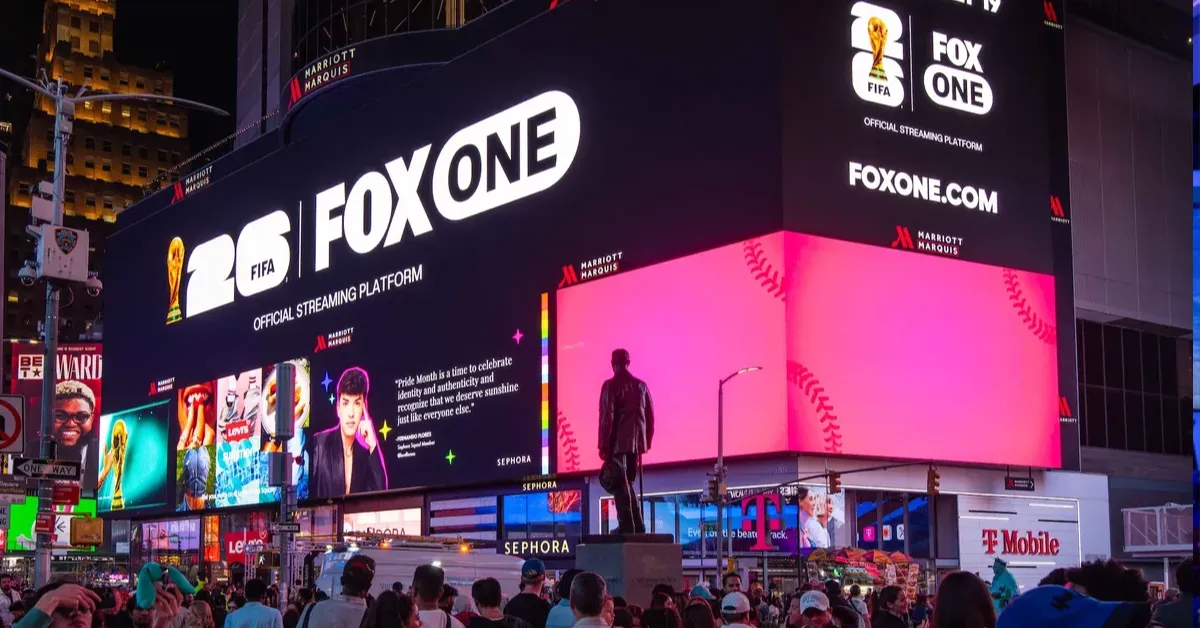
Fox Corporation is not ready to let go of the FIFA World Cup tournament just yet — and it isn’t letting the sports organization’s determination to sell English- and Spanish-language rights as a single package get in its way.
On Thursday, Fox submitted a unique bid for the right to continue broadcasting the tournament through 2030, joining forces with Univision, which is expected to sub-license the games from Fox and carry them with Spanish-language commentary.
The joint bid was first reported by John Ourand of the newsletter Puck.

Fox currently holds English-language World Cup rights, while Telemundo carries Spanish-language coverage. NBC Universal reportedly declined to submit a bid for the 2030 tournament, despite showing early interest in the event.
Netflix, Amazon and YouTube are other contenders for the 2030 World Cup tournament, which will take place in Spain and Portugal. Among those three, Netflix has emerged as a strong contender, having already secured the rights to FIFA’s Women’s World Cup tournament in 2027 and World Cup television rights in Spain and Andorra.
Fox and Univision are reportedly the only bidders proposing a traditional broadcast television partnership; if they are successful, games are expected to be carried on the Fox One streaming service as they were earlier this summer, with Univision offering some or all games through its Vix platform. Both companies also have secondary and cable sports networks that can serve as spillover channels.
An arrangement to bring the games to Netflix, Amazon or YouTube could also involve some match-ups involving Team USA and other high-profile events, like the semi-final and final matches, on broadcast TV. Typically, games aired on broadcast networks have experienced stronger overall viewership compared to those relegated to a pay TV platform like cable or streaming.
The last World Cup tournament took place across North America, with most of the games played in the United States, allowing Fox and Telemundo to broadcast the matches live. The next two tournaments — the next one scheduled for Spain and Portugal, and the 2034 tournament in Saudi Arabia — will present significant scheduling issues for stateside broadcasters who typically offer the matches live instead of on a tape-delay.

Still, the stateside tournament helped drive strong interest in professional soccer, which has trickled down to localized franchises and teams over the past few months. It also brought significant revenue to Fox and Telemundo through commercial ad spots and broadcast sponsorships, something the networks are hoping to replicate during the next two tournaments.
The tournament also helped boost the visibility of each network’s streaming platform. Fox One saw sizable sign-ups during the tournament, according to data from Antenna, while NBC Universal reported a similar trend for its platform Peacock.
Univision has another reason to want the FIFA World Cup rights: With audiences tuning into Telemundo during the World Cup last summer, Univision saw a strong drop in viewership while the tournament was played — and advertisers shifted their budgets accordingly. During the second quarter (Q2) of the year, which included the first half of the tournament, U.S. advertising revenue fell 29 percent to $323.3 million — and things were not much better during Q3, with U.S. advertising revenue falling 23 percent to $327.5 million.