



Most Americans believe it is important to stay informed about major civic and policy issues, but far fewer say they are highly knowledgeable about those topics themselves, according to a study released last week by the Pew Research Center.
The study highlights a gap between the public’s shared interest in news and the degree to which Americans feel confident in their ability to understand major issues that are shaping their daily lives and the broader political and public policy scenes.
Pew found that U.S. adults overwhelmingly view several news topics as highly important for people to understand. Eighty-two percent of respondents said it is extremely or very important to stay informed about the health care system, while the same share said that about voting and election processes. Another 80 percent said Americans should be highly informed about what the president can and cannot do.
The survey, conducted in March, asked U.S. adults about 11 news and policy topics. Majorities said it was extremely or very important for individuals to stay informed about nearly all of them.
Still, respondents were far less likely to describe themselves as highly informed. On economic and tax policies, for example, 75 percent of adults said it is extremely or very important for Americans to understand the issue, but just 24 percent said they personally feel extremely or very informed. Another 51 percent said they are somewhat informed, while 24 percent said they are not too informed or not informed at all.
For news organizations, the study offers an opening for outlets to deepen their engagement with audiences beyond the typical run of headlines and breaking news alerts. The Pew study supports investments made by some local TV station groups and national news outlets to offer more cross-platform explanatory journalism — from TikTok videos that offer a behind-the-scenes look at the piecing together of a story, to long-form, self-hosted and YouTube-distributed explainers that take a deeper dive into a particular topic.
News organizations rank as the top source for information in several areas, including U.S.-foreign policy matters, immigration and citizenship topics. On other sources, including information about Social Security, voting and the election process, government sources are leaned on by Americans, Pew’s survey showed.
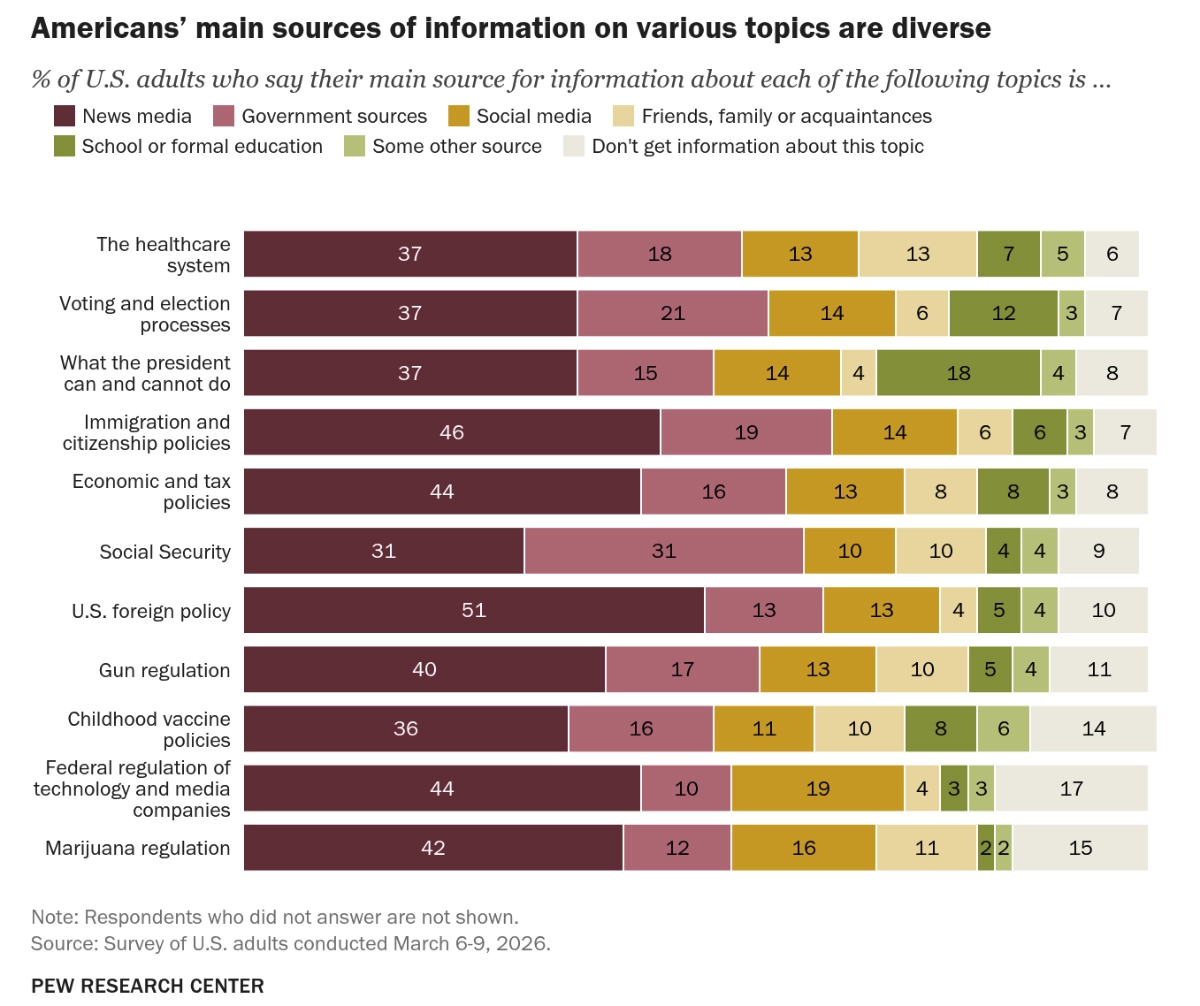
The diversity of information sources points to an increased fragmentation of the news and information environment, where audiences rely on a mixture of “official” information from public agencies and the interpretation of news outlets, along with other institutional sources like schools, universities, think tanks and public interest groups.
Readers, viewers and listeners say they want to be informed about consequential issues, but many may need clearer, more accessible coverage to feel confident in their understanding, Pew notes.
The full study is available to read by clicking or tapping here.