

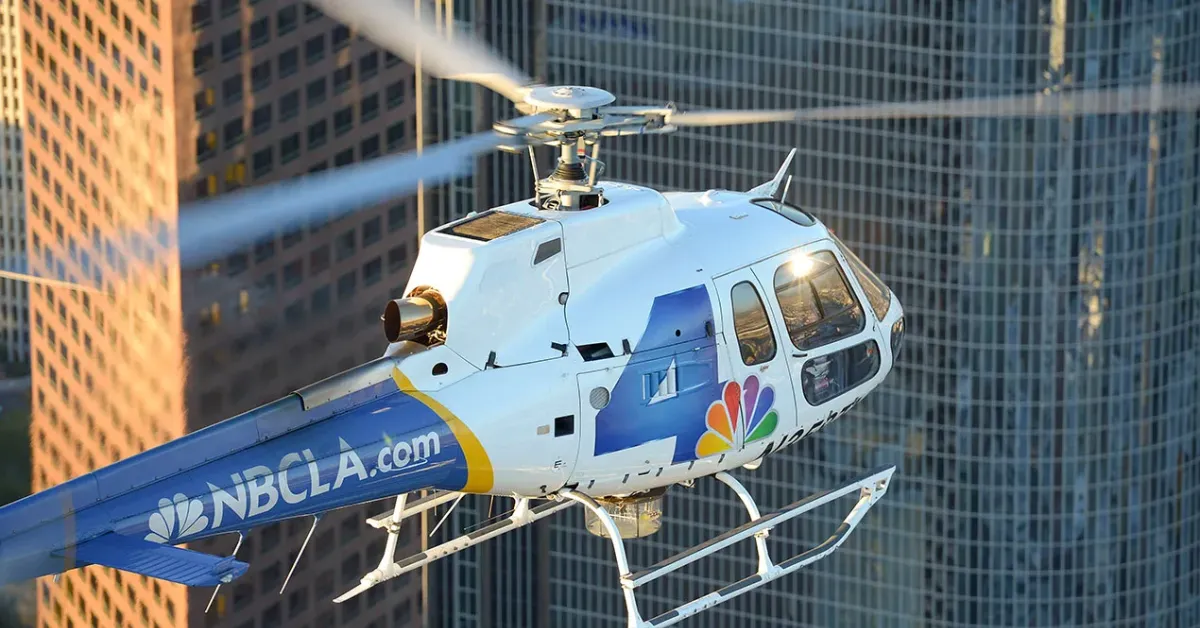
The Federal Aviation Administration (FAA) and Airbus issued a safety bulletin warning of possible loss of power to engines aboard some Airbus helicopters nearly one week before a helicopter used by KNBC-TV for its news reporting crashed in Los Angeles, The Desk has learned.
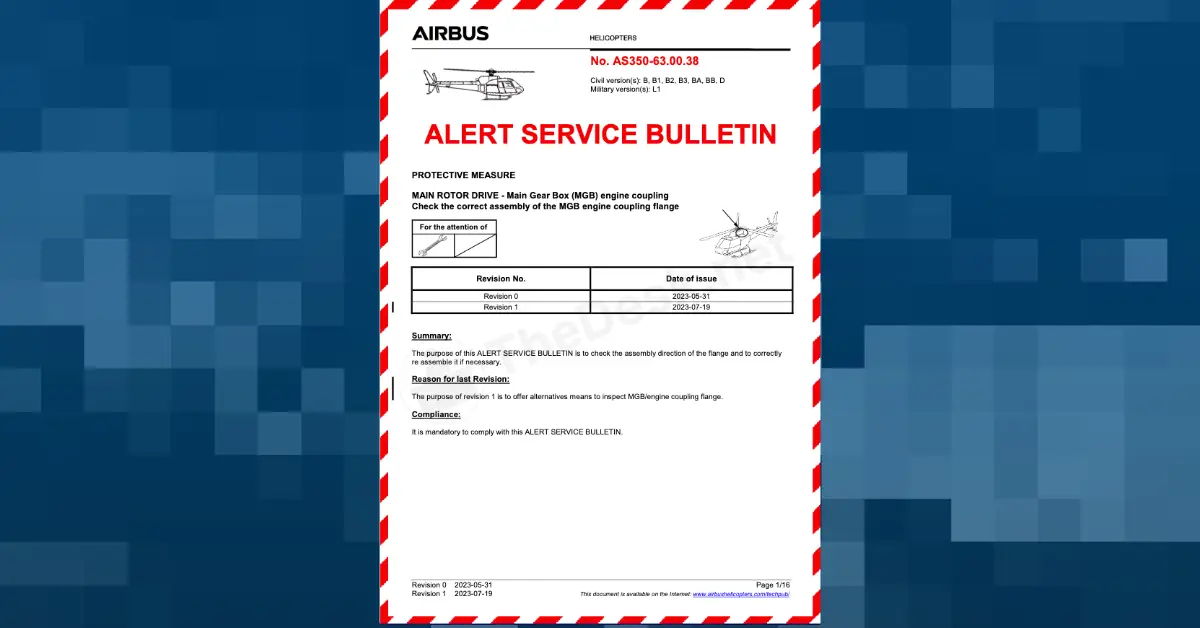
The bulletin was issued on September 10 and warned operators of the Airbus AS350 helicopter that an incorrectly-installed engine flange could cause a pilot to lose control of the helicopter.
According to safety documents obtained by The Desk, the FAA said a manufacturing issue involving Airbus AS350 helicopters led to some engine flanges being installed backwards. The issue had the potential to cause a disruption in power going from the engine to the main gearbox and rotor.
Airbus notified the FAA about the issue three years ago. A safety bulletin was first proposed by the agency in May and became effective this month, covering more than 4,000 helicopters that were manufactured before 2023.
The model is the same aircraft used by KNBC-TV (Channel 4) before it crashed on Tuesday. Video footage captured by the helicopter and transmitted to the station show at least one audible warning siren was heard seconds before the helicopter fell out of the air.
On Wednesday, NTSB Air Safety Investigator Fabian Salazar said the video footage is “probably the most-important evidence that we have discovered so far,” and that the sounds on the tape are consistent with the helicopter’s engine stalling.
It will take more than a year before the NTSB is able to release a report that points to a definitive or possible cause for the crash, Salazar said. A preliminary report will be released by the agency next month.
#BREAKING: New surveillance video from a warehouse in Los Angeles captures the moment KNBC-TV's helicopter crashed to the ground.
— Matthew Keys (@MatthewKeysLive) September 18, 2026
The FAA issued a safety bulletin several days earlier about possible engine issues with that type of aircraft. https://t.co/dZmwancDX1 pic.twitter.com/wKL9QJjmCA
The helicopter used by KNBC was owned by Angel City Air, a Los Angeles-based aviation company that leases aircraft to news organizations and entertainment studios. It wasn’t clear if Angel City Air complied with the directive issued by the FAA, which required owners of affected aircraft to inspect their engine flanges and correct any issues found by next year or within 165 flight hours, whichever came first.
Two Angel City Air employees aboard the downed helicopter, reporter Eliana Moreno and pilot George Marciniw, were killed in the crash on Tuesday, as was a 29-year-old man who was on the ground at the time.
Moreno and Marciniw were covering a story involving a collision between a sports utility vehicle and a municipal bus prior to the crash. The helicopter had been in the air for more than two hours, flight data information reviewed by The Desk showed.
According to one aviation expert who spoke with The Desk, pilots are trained to use a technique called “autorotation” in the event of a power loss. That practice allows a pilot to use the momentum of the already-spinning rotors to effectively glide the helicopter to a safe landing.
But the technique only works if a pilot is above a certain altitude and if the blades continue to spin. The safety bulletin issued by the FAA doesn’t specify whether a pilot who loses engine power because of the flange issue would be prevented from executing an autorotation landing, but the source said it could make autorotation difficult, if not impossible, if the mechanical issue caused the rotors to seize mid-flight.
Making the situation more complicated is a common practice by TV news helicopters to fly as low as practical to get the best possible video footage. In Los Angeles, news aircraft fly typically fly between 1,000 and 3,000 feet in altitude, but can dip down to as low as 500 feet, depending on the circumstance.
Flight data logs showed KNBC’s helicopter was hovering around 1,800 feet above sea level moments before falling out of the sky, but its actual distance above ground was less than 1,000 feet when taking into account the elevation of the terrain in the neighborhood where the aircraft was flying. Performing an autorotation maneuver becomes difficult, if not impossible, the lower an aircraft flies.
Investigators are currently gathering video evidence and witness statements to determine what caused the helicopter to drop and catch fire after the crash. One source who spoke with The Desk earlier this week said one key area of focus is whether the helicopter impacted a shipping container, which could have caused its fuel tank to rupture.
Following a string of incidents in the mid-2000s, Airbus shifted its manufacturing to include a fuel system that utilizes a crash-resistant tank with the hope of limiting post-crash fires.
—
Editor’s note: An earlier version of this story reported KNBC’s altitude to be 1,800 feet above ground at the time of the crash. The altitude recorded by flight data logs is relative to sea level; the helicopter was actually flying lower to the ground when taking into account surface elevation.