


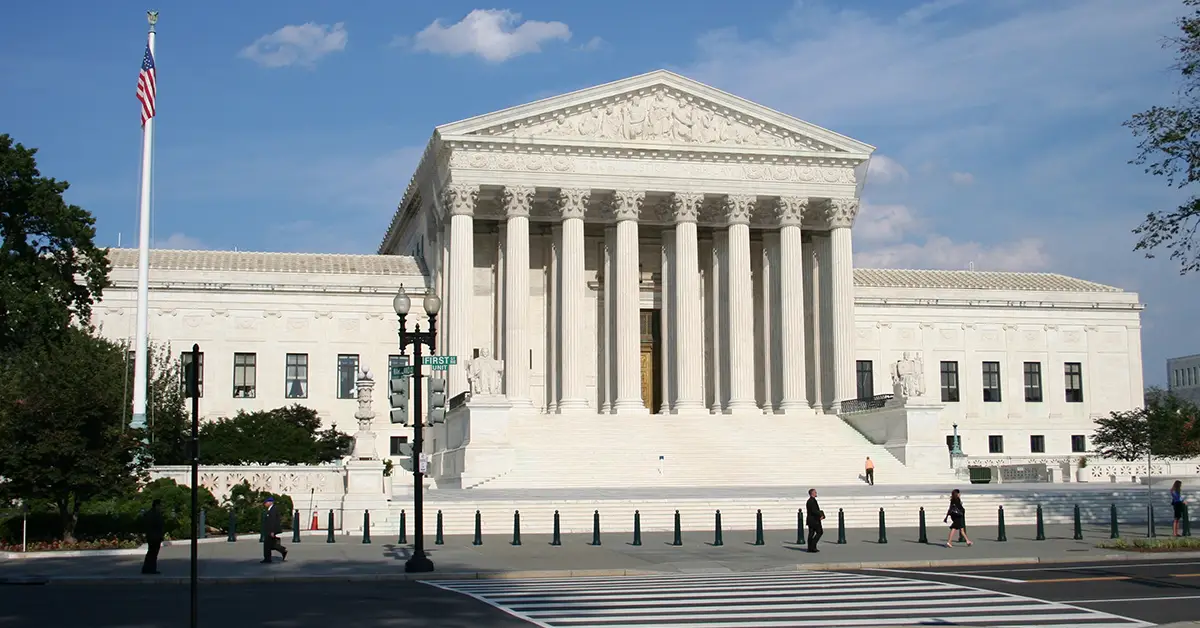
The U.S. Supreme Court on Friday temporarily cleared the way for political party committees and certain joint fundraising committees to receive broadcasters’ lowest advertising rates ahead of the midterm elections, staying a lower-court ruling that had blocked an policy from the Federal Communications Commission (FCC) expanding access to those rates.
On Friday, The court granted an emergency application from the National Republican Congressional Committee and National Republican Senatorial Committee, which appealed a lower court’s ruling that effectively blocked the FCC’s policy directive from taking effect.
The dispute centers on the FCC’s lowest unit charge requirements, which generally require broadcasters to offer legally qualified political candidates favorable advertising rates during specified periods before primary and general elections.

On March 30, the FCC’s Media Bureau issued a public notice stating that the lowest unit charge could also apply to authorized joint fundraising committees and advertisements purchased as coordinated expenditures between political parties and candidates.
Four Democratic congressional candidates challenged the notice: Senator Jon Ossoff of Georgia, former Senator Sherrod Brown of Ohio, former North Carolina Governor Roy Cooper and Representative Kristen McDonald Rivet of Michigan.
The candidates first sought review from the full FCC on April 29, then filed a petition for judicial review with the Fourth Circuit while that application remained pending. A divided Fourth Circuit panel set aside the Media Bureau notice on August 25.
The Supreme Court did not resolve the underlying question of who is entitled to the lowest unit charge. Instead, it concluded the Fourth Circuit likely lacked statutory jurisdiction to hear the case before the FCC had acted on the candidates’ application for review. The Court said the Communications Act generally requires parties challenging delegated FCC action to complete that administrative review process first.
The Court also said the Republican committees had shown likely irreparable harm because broadcasters were already withdrawing favorable rates following the Fourth Circuit ruling, requiring the committees to spend more on advertising during the final weeks before the midterms.

FCC Commissioner Anna M. Gomez criticized the decision, describing the underlying Media Bureau guidance as unlawful and warning the stay could disrupt broadcasters and campaigns just as discounted political advertising rates take effect.
“This stay throws the final stretch of the midterms into chaos,” Gomez said. She argued that allowing political parties and joint fundraising committees to qualify for the lowest unit charge could significantly expand the amount of discounted political advertising broadcasters are required to accept.
“Just months ago, the Supreme Court lifted all limits on how much political parties can spend in direct coordination with candidates; now that same money can also buy campaign ads at the lowest price the law requires broadcasters to charge only to individual candidates,” Gomez said in a statement e-mailed to The Desk on Friday. “That opens the door to a flood of dark money that will let a handful of wealthy donors pool unlimited contributions.”
Gomez also said local stations could bear much of the financial impact because more advertising inventory may have to be sold at reduced rates during a period when political spending typically intensifies.
“Ultimately, the ones who will be left to foot the bill are these local stations and the voters who depend on them for accurate information ahead of this election,” she said.
Justice Ketanji Brown Jackson dissented, saying she would have denied the stay because she was not persuaded the Republican committees were likely to succeed on their argument that the Fourth Circuit lacked jurisdiction.
The stay will remain in effect while the party committees seek Supreme Court review of the Fourth Circuit ruling.