
Key Points

- FCC Chairman Brendan Carr defended his warning about fabricated election polls, saying the agency’s broadcast rules do not prohibit legitimate reporting on polling data.
- Democratic FCC Commissioner Anna Gomez accused Carr of using regulatory threats to discourage broadcasters from reporting election information unfavorable to the Trump administration.
- Carr said the FCC has not reached a decision on its investigation involving Disney and the accelerated license renewals of eight ABC-owned television stations.
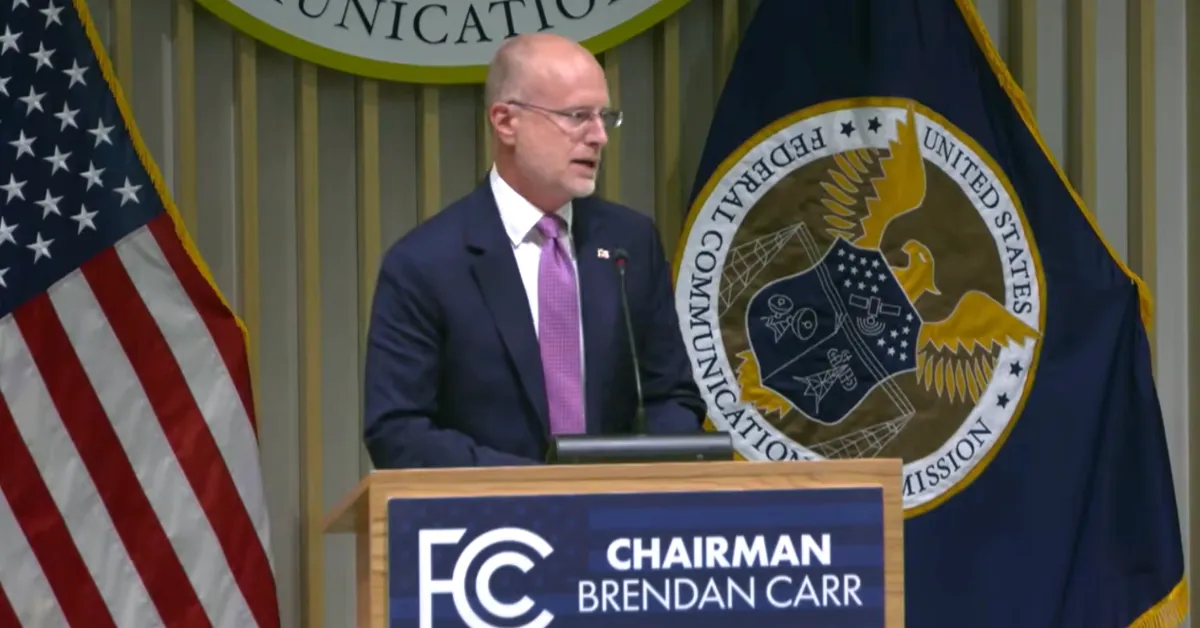
The head of the Federal Communications Commission (FCC) on Thursday defended his recent threat to television and radio broadcasters that attempted to discourage their news-producing stations from airing reports about fabricated election polls.
During the agency’s open meeting, FCC Chairman Brendan Carr and Commissioner Anna Gomez, who sit on opposite ends of the political spectrum, issued clashing statements on the matter, with Carr upholding his prior comments that appeared to threaten licensed TV and radio stations who run polls that are not aligned with the political desires of President Donald Trump.
“Some people were saying the FCC is going to punish anybody that publishes a poll that’s negative for one politician. No, that wasn’t what we said,” Carr told reporters, adding that the warning did not concern good-faith reporting on existing polls.

Carr did not identify any specific broadcaster currently under investigation over election polling. Asked whether stations had aired fabricated surveys, he said he would consult FCC staff about any complaints received.
Gomez, the commission’s lone Democrat, disputed Carr’s characterization of the agency’s authority, arguing that the warning was part of a broader effort to pressure broadcasters over political coverage.
She said the FCC’s news distortion policy requires evidence that a broadcaster deliberately misrepresented a significant factual matter, while its broadcast hoax rule applies to knowingly false reports about crimes or catastrophes that cause immediate public harm.
“Reporting on a poll this administration dislikes does not come close to meeting either standard,” Gomez said. “I suspect the goal here is the threat itself, a way to spook stations into self-censoring.”
To some degree, that has already occurred: Two politically-motivated investigations against ABC and its licensed broadcast stations have influenced how the network approaches political news reporting, to include offering interviews with leading candidates ahead of the midterm election, the network said in regulatory and legal filings.

One of those investigations is rooted in a February broadcast of ABC’s “The View,” which featured an interview with Texas Representative James Talarico, who is running for an open U.S. Senate seat. The View has long been considered a news program that largely exempts the show from an FCC rule requiring licensed TV stations to set aside equitable airtime for competing candidates.
The FCC’s Media Bureau warned ABC affiliates across Texas to include Talarico’s appearance in their public inspection files, but Gomez said the agency never extended the same opportunity to KTRK (Channel 13), the ABC-owned station in Houston. Gomez said the lack of warning was deliberate, not an oversight, meant to give the FCC fodder for an investigation that involved KTRK but was really directed at ABC and its parent company Disney.
Another investigation involves Disney’s purported use of diversity, equity and inclusiveness (DEI) programs in its internal hiring and promotional practices. The FCC has ordered KTRK and seven other Disney-owned ABC stations to file early applications to renew their broadcast licenses, with Carr suggesting that the broadcaster may be punished for running DEI programs that Trump does not like.
Disney sued the FCC in August, alleging the accelerated renewals were part of a retaliatory campaign connected to the agency’s investigation of the company’s diversity, equity and inclusion policies. Carr said the commission was still reviewing documents and petitions opposing the stations’ license renewals, with no decision reached on the investigation or its timetable.
“We haven’t made a decision about when we’re making a decision,” Carr said.
Gomez said she supported Disney’s decision to challenge the agency in federal court and believed the company would prevail on constitutional grounds
On the matter of election-related polls, Gomez said she was unaware of any FCC investigations involving election polls and questioned whether an inaccurate survey, absent deliberate misconduct, could warrant enforcement action.
The commissioner previously raised her concerns in an October 22 letter to National Association of Broadcasters (NAB) CEO Curtis LeGeyt, urging the trade organization to defend its members against what she described as political pressure. After The Desk reported on the letter, a spokesperson for the NAB responded by saying the organization will work with all stakeholders to ensure broadcasters are able to exercise their First Amendment rights.