

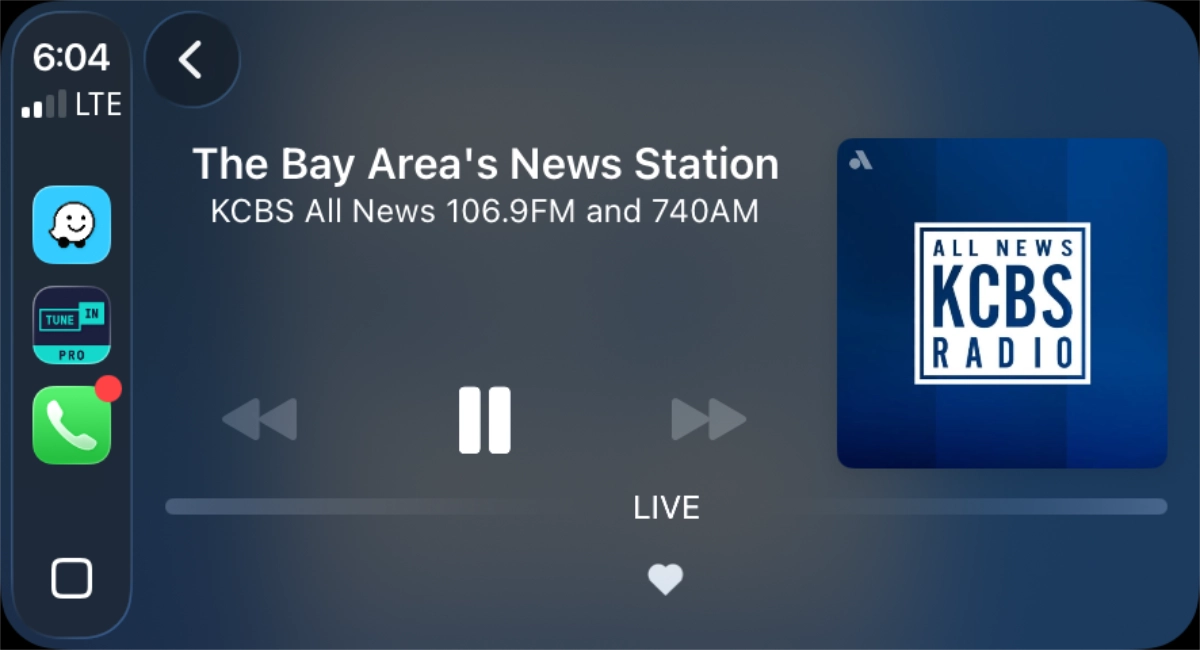
Just before the start of Thursday’s evening rush hour, drivers listening to KCBS-AM in San Francisco heard something they might not have expected: Top-of-the-hour headlines delivered by ABC News Radio.
When the clock struck 3 p.m. local time, it was the first time in more than nine decades that top story headlines were provided by a news outlet not affiliated with CBS News, marking the end of an era in American radio broadcasting.
A similar story played out at former CBS-owned radio stations in Chicago, Minneapolis and Los Angeles, where CBS News headlines were pushed aside for national news programming from ABC.
Gone is the hourly chime that some used to set their clocks by, replaced with the familiar tune of the ABC News fanfare and with different news presenters offering the top stories of the day.
The change comes about two months after Paramount announced it was winding down its news radio division, a decision executives claimed was purely financial.
At a time when fewer Americans are tuning in to traditional AM and FM radio, news executives at CBS said there were no long-term, viable options to continue operating in the radio industry.
“Radio is woven into the fabric of CBS News and that’s always going to be part of our history,” CBS News Editor-in-Chief Bari Weiss said in an e-mail to employees in March. “I want you to know that we did everything we could, including before I joined the company, to try and find a viable solution to sustain the radio operation.”
CBS News Radio will shut down on Saturday. Already, hundreds of CBS News Radio affiliates have signed programming agreements with other syndication services, including Fox News Radio, NBC News Radio, ABC News Radio and Salem Radio Network News.
At KCBS (740 AM, 106.9 FM), the switch was bittersweet: Like its sister-stations in Los Angeles, Chicago and Minneapolis, the outlet was owned by CBS itself until 2017, when the company’s radio division was acquired by Entercom, which operates today as Audacy. (KCBS in San Francisco and another station in Los Angeles that uses the same call sign will be required to change them in 2037 as part of the sale.)
Since March, executives at Audacy weighed the possibility of having each local station produce its own top-of-the-hour headlines, according to a person familiar with the arrangement. Another plan that was considered involved having a major Audacy-owned news station in Los Angeles or New York City producing hourly headlines that were distributed to other stations owned by the company.
Ultimately, ABC News Radio won the Audacy contract after executives determined it was the most-financially sound approach. The agreement with Audacy runs less than five years, during which the broadcaster will look at different ways to create and distribute hourly headlines. Financial terms oft the deal weren’t available.
In addition to hourly headlines, Audacy’s all-news stations will be able to broadcast other programming from ABC News Radio. Some former CBS News Radio shows, like audio simulcasts of “CBS Evening News” and “60 Minutes,” are expected to be swapped with comparable programming from ABC News Radio in the coming months.