


Key Points

- At a hearing on Capitol Hill, federal lawmakers examined whether leagues like the NFL should retain antitrust exemptions as more games move to paid streaming platforms.
- The hearing highlighted partisan divides, with Republicans criticizing streaming exclusivity and Democrats focusing on media consolidation and rising consumer costs.
- Some sports leagues, including the NBA and MLB, have followed the NFL’s lead in forging streaming-specific deals for their games and events.
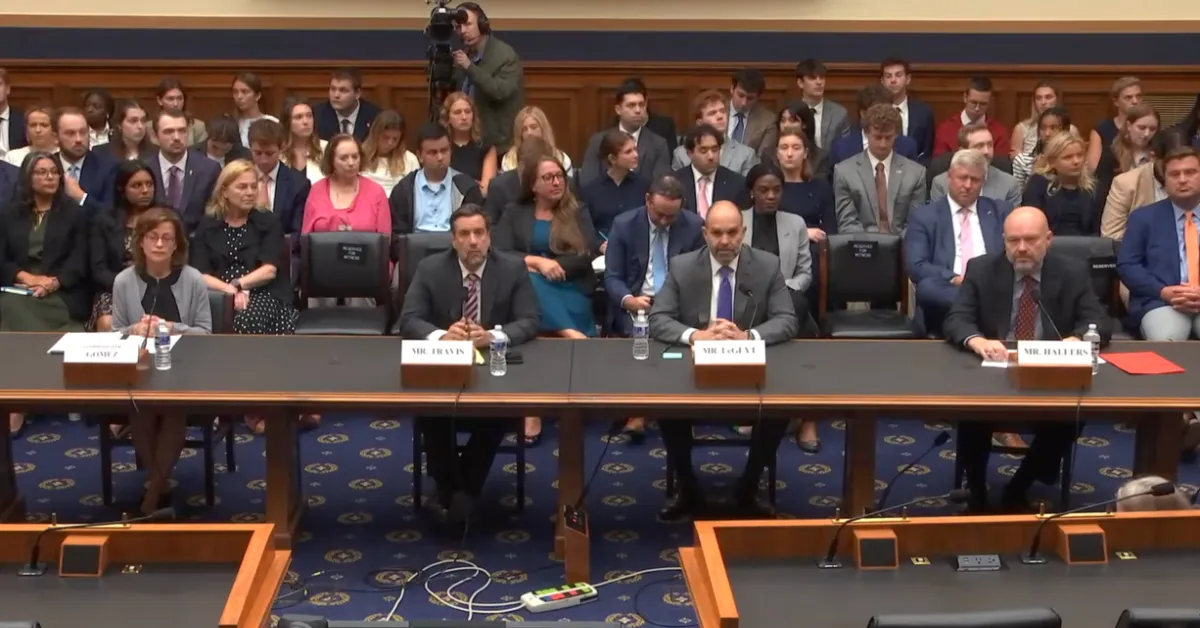
Lawmakers on Capitol Hill assembled on Wednesday to hear testimony from four witnesses on sports broadcasting deals in the era of streaming, with a specific focus on whether certain sports leagues who have enjoyed an exemption to federal antitrust laws for decades should continue to enjoy that privilege while they move more of their games off free-to-air television.
The hearing, held by the House Judiciary Committee, did not include the participation of National Football League (NFL) Commissioner Roger Goodell, though the league enjoys the broadest privileges under the Sports Broadcasting Act of 1961. Goodell, through a league attorney, said he was unable to attend the hearing because his business is currently embroiled in ongoing litigation that centers in part on the topic at hand.
Instead, lawmakers heard testimony from Anna Gonez, the lone Democratic commission member at the Federal Communications Commission (FCC); Clay Travis, a contributor to Fox Sports and Fox News Media who founded, and later sold, the pop culture website OutKick to Fox; Curtis LeGeyt, the Chief Executive Officer of the commercial broadcast industry’s core lobbying group, the National Association of Broadcasters (NAB); and Jim Hallers, a Houston restaurateur who founded a chain of sports-themed restaurants called Tailgaters.
Some lawmakers walked into the hearing with preconceived notions: Representative Scott Fitzgerald of Wisconsin wasted no time criticizing the NFL for its recent media deals that regulate some of its highly-anticipated, regular-season and playoff games to streaming services like Netflix, Amazon’s Prime Video and Google-owned YouTube, the latter of which also has the exclusive rights to sell the NFL Sunday Ticket.
Democrats, on the other hand, used the hearing as an opportunity to opine about media consolidation and its effect on how much consumers will have to pay for the privilege of watching entertainment, news and sports programming on cable, satellite and streaming cable-like services.
“For years I have been warning this committee about the dangers of unchecked consolidation in the American media industry,” said Representative Jerrold Nadler of New York, the committee’s ranking member. Nadler argued that while the Sports Broadcasting Act deserves review, lawmakers should also consider recent mergers that have reduced the number of media companies competing for sports rights and other programming.
Representative Jamie Raskin of Maryland similarly questioned why Republicans were focusing narrowly on the NFL’s antitrust exemption while larger consolidation issues continue across the media industry.
LeGeyt used his opening remarks to push for the NAB’s ongoing “Keep the Game On” campaign, which advocates for maintaining the broadcast status quo at a time when more games are being relegated to premium streaming services.
“The stakes for Americans are high and extend beyond sports,” LeGeyt said. He argued that revenue generated from sports programming helps support local journalism, emergency coverage and public affairs programming provided by local television stations.
Rather than eliminating the Sports Broadcasting Act, LeGeyt urged lawmakers to clarify that the law applies only to league-wide negotiations involving broadcast television distribution.
“In 1961, Congress was right to put fans first,” LeGeyt said. “But this Committee should reaffirm that the SBA applies only to league-wide negotiations with media companies that will distribute games through broadcast television, not lock games behind streaming paywalls.”
At the same time, the NAB has encouraged lawmakers to extend a favorable hand to consolidation among local broadcast station groups, including Nexstar’s acquisition of TEGNA and similar transactions. Doing so favors broadcasters in an era where more premium programming is moving to streaming services, and allows them to scale and effectively compete against that trend, advocates note.
Gomez, the FCC’s lone Democratic commissioner, focused on the growing fragmentation of sports viewing.
“There are few things left in American life that cut across every line of division the way sports does,” Gomez said. While praising the growth in sports programming, Gomez encouraged lawmakers to pay closer attention to how subscription costs and exclusive distribution arrangements affect everyday sports fans.
While the NFL’s media rights deals were the core focus of the hearing, the league is hardly alone in forging streaming-specific deals: Other sports organizations, including the National Basketball Association (NBA), Major League Baseball (MLB) and the National Hockey League (NHL) have also signed deals with tech companies to bring their games and events to streaming platforms — and some of those deals have earned those leagues more money compared to the NFL’s one-off arrangements with streamers.
The hearing on Wednesday coincided with a higher level of scrutiny from Congress and the U.S. Department of Justice, which continue to examine whether the Sports Broadcasting Act remains suited to a marketplace increasingly dominated by streaming services, subscription platforms and rapidly escalating sports rights fees.
No legislation emerged from the hearing, though lawmakers from both parties indicated that further review of the law is likely.
More Stories
- Justice Department probes NFL deals with streaming services
- NFL goes big on streaming’s future with new broadcast distribution deals (March 2021)
- SNL Kagan: NFL to get $110 billion from TV deals through 2032
- Congress asks NFL’s Goodell to testify on broadcast TV deals
- Network affiliates to FCC: Sports antitrust exemption should apply to broadcast TV only