



Key Points

- Cascade PBS has launched Local Public as a standalone public benefit subsidiary; the company provides branded streaming app technology for PBS member stations across connected TVs, mobile devices and the web.
- The company was created from technology originally developed by Cascade PBS for its own digital platforms.
- Executives say the platform is designed to help local stations maintain their role as community-focused public media providers in the streaming era.
Cascade PBS, the non-profit television station serving western Washington state, has spun out its technology division into a separate company that will help similar public broadcasters carve out their own streaming and digital identities.
The new company, Local Public, will help develop streaming applications for connected TVs, mobile devices and the web, allowing public television stations to offer locally branded streaming experiences featuring their own programming alongside national PBS content.
Cascade PBS, which is based out of KCTS (Channel 9) in Seattle, said Local Public originated as an internal effort to improve its own digital strategy before evolving into a business serving stations nationwide.
Unlike national streaming platforms that offer standardized experiences, Local Public allows stations to curate programming tailored to their communities, highlight locally produced content and create direct pathways for viewers to support their local public media organization.
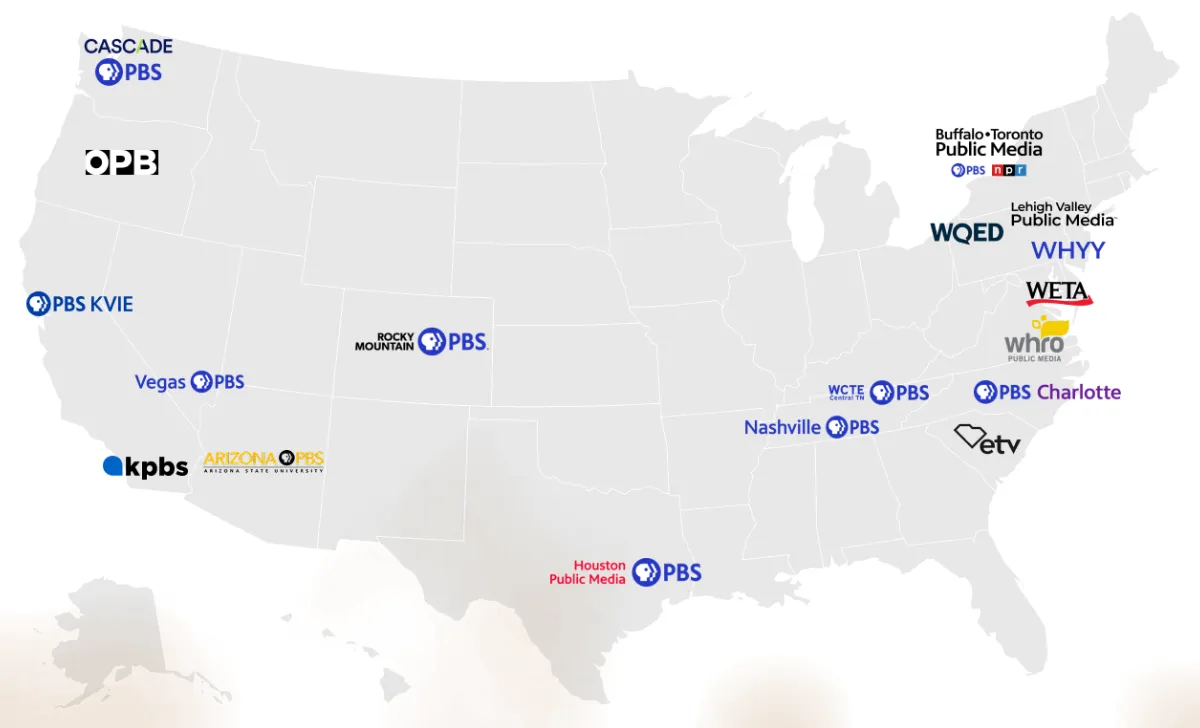
More than a dozen PBS member stations are participating in Local Public, Cascade PBS said, including the following outlets:
- KAET (Channel 8) in Phoenix
- KCTS (Channel 9) in Seattle
- KLVX (Channel 10) in Las Vegas
- KOPB (Channel 10) in Portland, Oregon
- KPBS (Channel 15) in San Diego
- KRMA (Channel 6) in Denver
- KUHT (Channel 8) in Houston
- KVIE (Channel 6) in Sacramento
- WCTE (Channel 22) in Cookeville, Tennessee
- WETA (Channel 26) in Washington, D.C.
- WHRO (Channel 15) in Norfolk, Virginia
- WHYY (Channel 12) in the Philadelphia market
- WLVT (Channel 39) in Allentown, Pennsylvania
- WNED (Channel 17) in Buffalo
- WNPT (Channel 8) in Nashville
- WQED (Channel 13) in Pittsburgh
- WRLK (Channel 35) in Columbia, South Carolina
“Public media has always been strongest when it is deeply rooted in the communities it serves,” Cascade PBS President and Chief Executive Officer Rob Dunlop said in a statement. “Streaming shouldn’t diminish that connection — it should strengthen it. Local Public gives stations the tools to create digital experiences that reflect their communities, deepen audience engagement and build a more sustainable future for public media.”
Some of Local Public’s partners have already shipped new connected TV apps that complement the offerings of PBS Passport, which is available to most viewers with a recurring donation. In Sacramento, KVIE relaunched its PBS KVIE streaming TV app as KVIE Plus (stylized as KVIE+) earlier this year. KVIE Plus offers free access to KVIE’s broadcast multiplex over streaming, along with local programming and acquired shows, movies and documentaries.
The KVIE Plus app also allows the station’s staff members to produce curated lists with local and national programming, making the experience feel more local and personalized for the station’s audience. Other stations, like KRMA (Channel 6) in Denver, have also relaunched their connected TV apps through Local Public with many of the same benefits.
Public media organizations that want to develop their apps through Local Public must pay on-boarding and annual fees, which are set depending on the number of donors a station or outlet has. A station with less than 15,000 Passport-eligible members will pay an on-boarding fee of $8,000 and an annual subscription of $60,000, with those rates locked in for three years. Larger stations with more than 40,000 Passport-eligible members will pay an on-boarding fee of $20,000 and an annual subscription of $100,000, with the same three-year price lock guarantee. During those three years, Local Public said prices may decrease, but they won’t go up.
If a member decides to develop a connected TV app with Local Public, and later decides to break away from the program, the company says they’ll be allowed to continue using and modifying the code that powers their connected TV app in perpetuity, so long as they participated in Local Public for 12 months. Severing ties with the program could allow a station to deploy its own content management system connected to its in-house tech stack — effectively controlling the entire experience — but Local Public provides back-end technical support for all members, which is one of the selling points of its technology and services.
There are a number of other benefits to working with Local Public, including access to a centralized content management system that allows participating stations to publish programming to their apps and cross-collaborate with other partner broadcasters; a smart carousel builder that puts featured content in front of viewers; a real-time analytics feed; in-app member and prospective member messaging; and full support for PBS PassPort and PBS Media Manager.
Amanda Mountain, the President and Chief Executive Officer of Rocky Mountain Public Media at KRMA, said the initiative demonstrates how public media organizations can collaborate on technology that serves local audiences.
“Local Public represents the possibilities when local public media organizations work together to build better products, faster, that meet the needs of our audiences and reflect what’s most important to our communities,” Mountain said.