
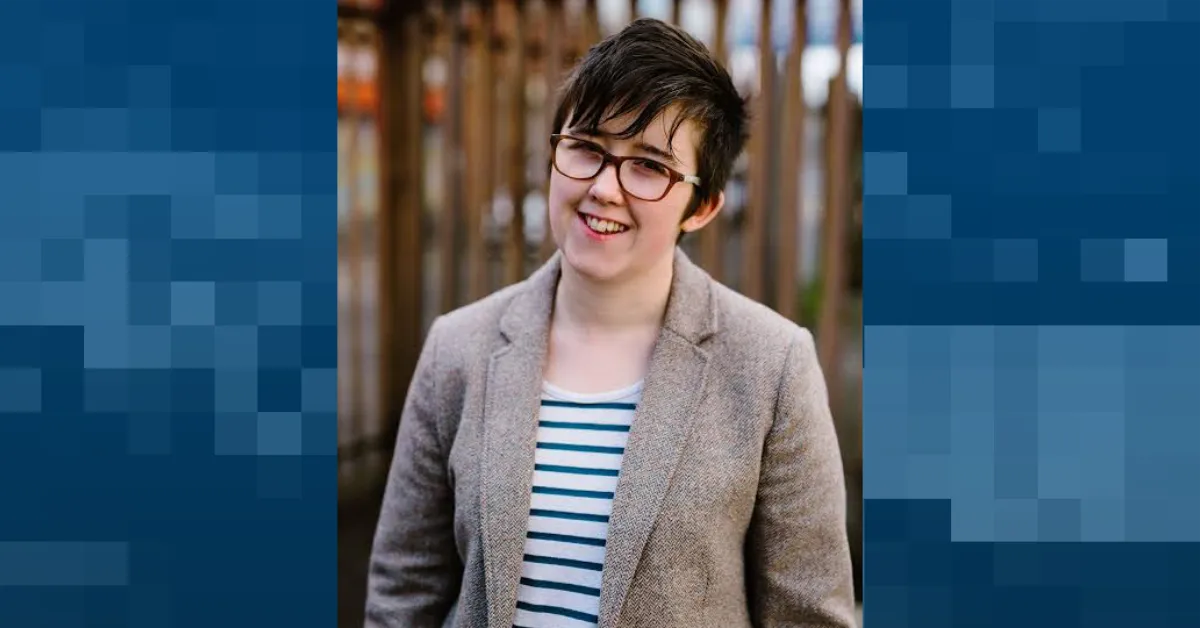
Three men have been found not guilty court in Northern Ireland in connection with the fatal shooting of journalist Lyra McKee in 2019.
The order was handed down Friday in the criminal cases involving Peter Cavanagh, Jordan Gareth Devine and Paul McIntyre, who were members of the paramilitary group New Irish Republican Army (New IRA) when McKee was wounded a protest in the town of Derry.
The New IRA admitted responsibility for the killing, saying McKee was “tragically killed” while standing next to individuals it described as “enemy forces.”
Video that circulated online showed a masked person dressed in black firing a handgun around a corner where McKee was embedded with members of the public. At least one shot was fired, which fatally struck the young journalist in the head.
Police later recovered the firearm used in the killing, and determined it had been used in other crimes. Cavanagh, Devine and McIntyre were arrested and charged with murder.
McIntyre shared news about McKee’s death on Facebook shortly after it happened, according to social media posts reviewed and reported on exclusively by The Desk. An attorney later raised doubts about McIntyre’s direct involvement in the killing, saying photographs and video evidence of the gunman pointed to a person who was taller and thinner than his client.
McIntyre was being targeted simply because he collected bullet casings from the scene of the shooting, the attorney claimed, and not because he actually fired the fatal shot.
While a judge allowed the case to proceed, defense attorneys representing all three charged men continued to note flaws in the evidence against their clients. They argued the evidence was circumstantial, pointing to the involvement of all three individuals in the New IRA but not directly connecting them to McKee’s murder.
Prosecutors argued that the men were culpable in McKee’s killing because they accompanied the gunman, whose identity is still unknown, and removed evidence in an attempt to obstruct a law enforcement investigation.
All three men were subjected to a “bench trial,” one where the full case was heard before a judge, with no jury involvement. The trial began in 2024, but the order clearing them of murder was not issued until Friday.
In her ruling, Judge Patricia Smyth said on Friday that the evidence accusing the three men of co-conspiring with a gunman ultimately fell short of the burden of proof needed to convict them of the charged crimes.
“Lyra McKee’s murder was an act of senseless violence,” Smyth said. “The gunman has never been brought to the court and the evidence against those accused of assisting or encouraging has fallen short of that required for conviction.”
Smyth acknowledged that the order was likely to bring “little comfort or relief” to McKee’s loved ones and friends, some of whom spoke outside the courthouse to reporters after the verdict was read.
“The system has completely failed Lyra, and has failed our family, and has failed Northern Ireland,” McKee’s sister, Nichola Corner, expressed on Friday.
In a statement, Reporters Without Borders called on law enforcement officials to apprehend those directly responsible for McKee’s murder and bring them to justice.
“The authorities must continue to pursue all legal avenues to establish accountability and ensure that those responsible for Lyra’s death are brought to justice,” the organization said. “Journalists cannot work freely and safely if those who kill members of the press can do so with impunity.”
McKee was a promising young journalist with a number of accolades to her name. In 2006, Sky News named McKee their Young Journalist of the Year. Her life was also the subject of a short film in 2014 after she publicly revealed her coming out story in a blog post. The National Union of Journalists called McKee one of the most-promising young journalists from Northern Ireland.
While McKee’s work was internationally-recognized, she remained committed to telling the stories of the people from her home country. She was particularly involved in documentary the aftermath of the Troubles, a period of domestic conflict in Northern Ireland from the 1960s to the late 1990s, and was working on a book about the subject at the time of her death.
—
Editor’s note: Lyra McKee was a personal friend of the author of this story.