


By Michael Goodman, Parks Associates

The U.S. television market is entering a phase where consumers continue to value sports, news, and events but increasingly reject the traditional large-channel bundle.
After years of steady decline, penetration from pay television (cable, satellite, Internet Protocol TV, virtual Multi-Video Programming Distributors) is stabilizing in the low- to mid-50s, while subscription video on-demand (SVOD) penetration is holding in the low-90s. Consumers are managing larger streaming portfolios without materially increasing overall entertainment spending, creating intense competition for share of wallet. On average, subscription TV household pay for an average of 6.3 video services (pay TV with SVOD).
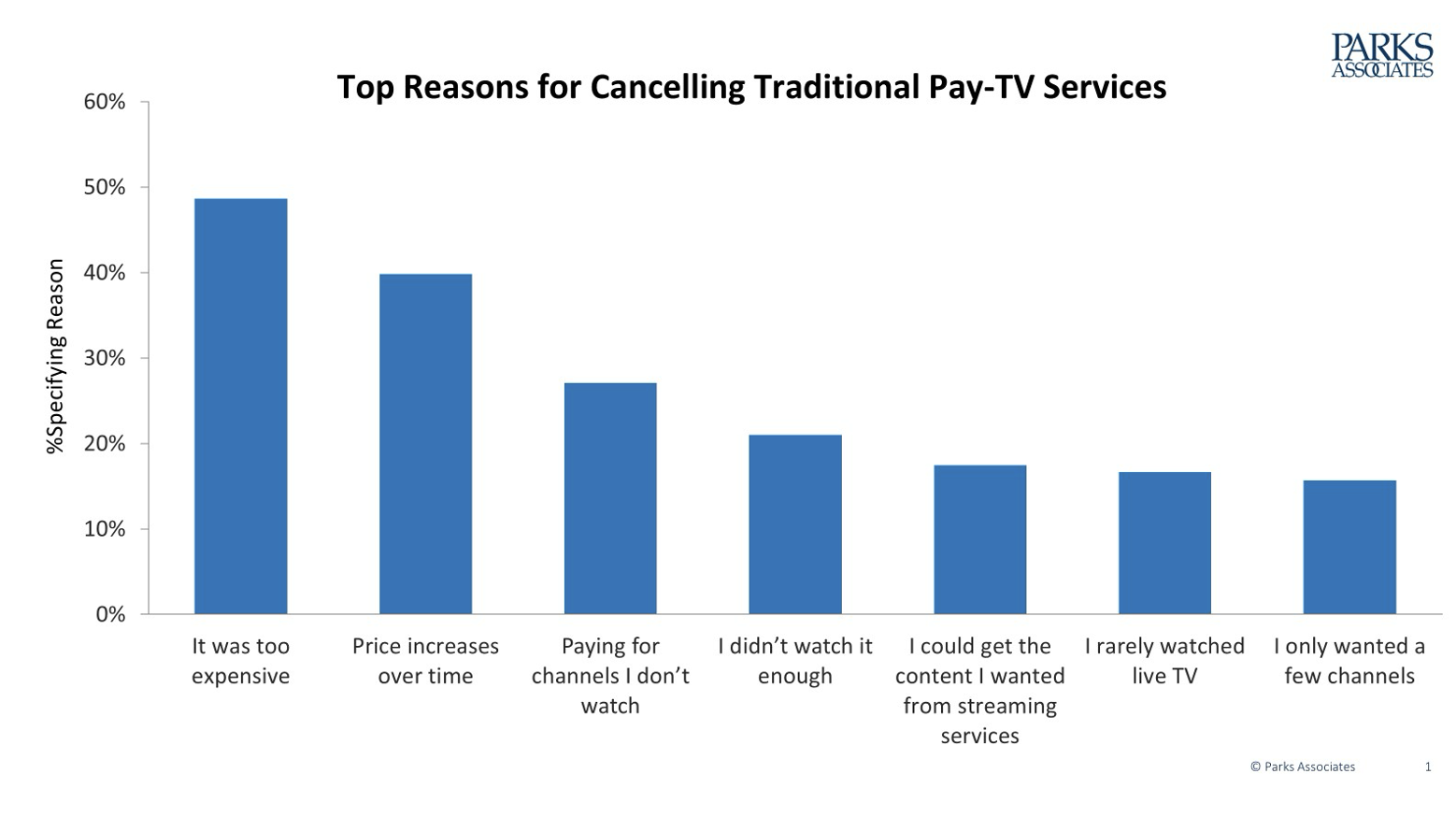
The primary reason pay television subscribers cut the cord is price: Nearly half (49 percent) of former pay TV subscribers say their service was simply too expensive, while 40 percent cite ongoing price increases as a key reason for canceling. Consumers also increasingly question the value of traditional channel bundles, with 27 percent saying they were paying for channels they never watched and 16 percent indicating they only wanted a few channels.
While streaming alternatives do influence some decisions, consumers are primarily rejecting the economics and inefficiency of the traditional pay TV bundle rather than abandoning live television altogether.
Consumers increasingly prefer services that allow them to pay only for the content they value while avoiding large, expensive channel packages. This creates pressure on traditional pay TV providers to rethink pricing, packaging, and bundling strategies by introducing smaller channel bundles, integrating streaming services, and delivering a more personalized entertainment experience.
Skinny bundles represent one of the strongest opportunities to reshape the live TV market by aligning pay-TV offerings with modern consumer expectations.
More than half (53 percent) of U.S. internet households find the concept of skinny bundles appealing, demonstrating that consumers have not abandoned live television, rather they are rejecting the high cost, complexity, and inflexibility of traditional channel bundles.
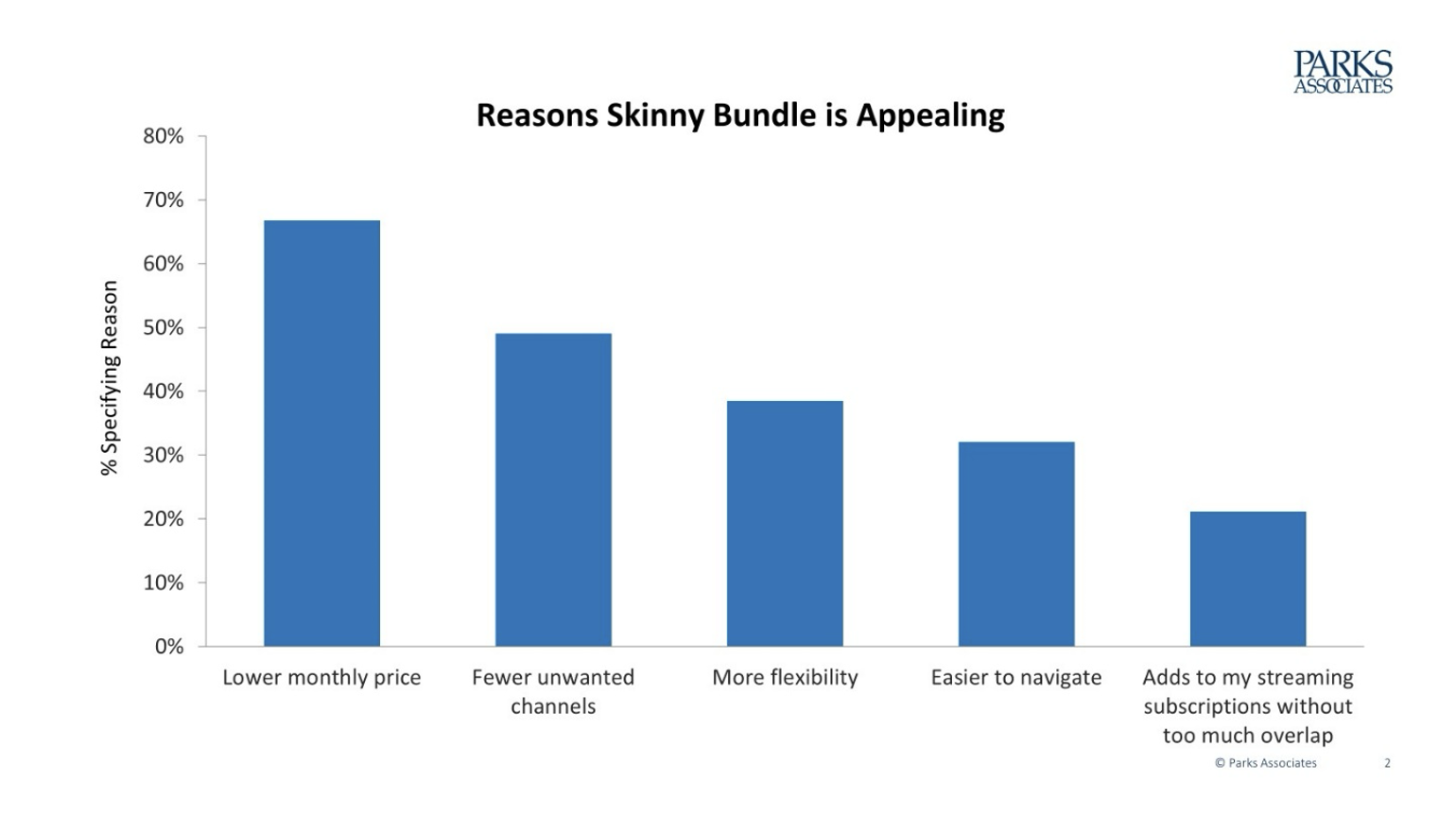
Skinny bundles directly address these concerns by offering curated packages focused on high-value content such as sports, news, or entertainment at a significantly lower monthly price. Among U.S. pay TV subscribers interested in skinny bundles, 67 percent cited a lower month price as a reason for their interest, followed by fewer unwanted channels (49 percent) and greater flexibility (39 percent).
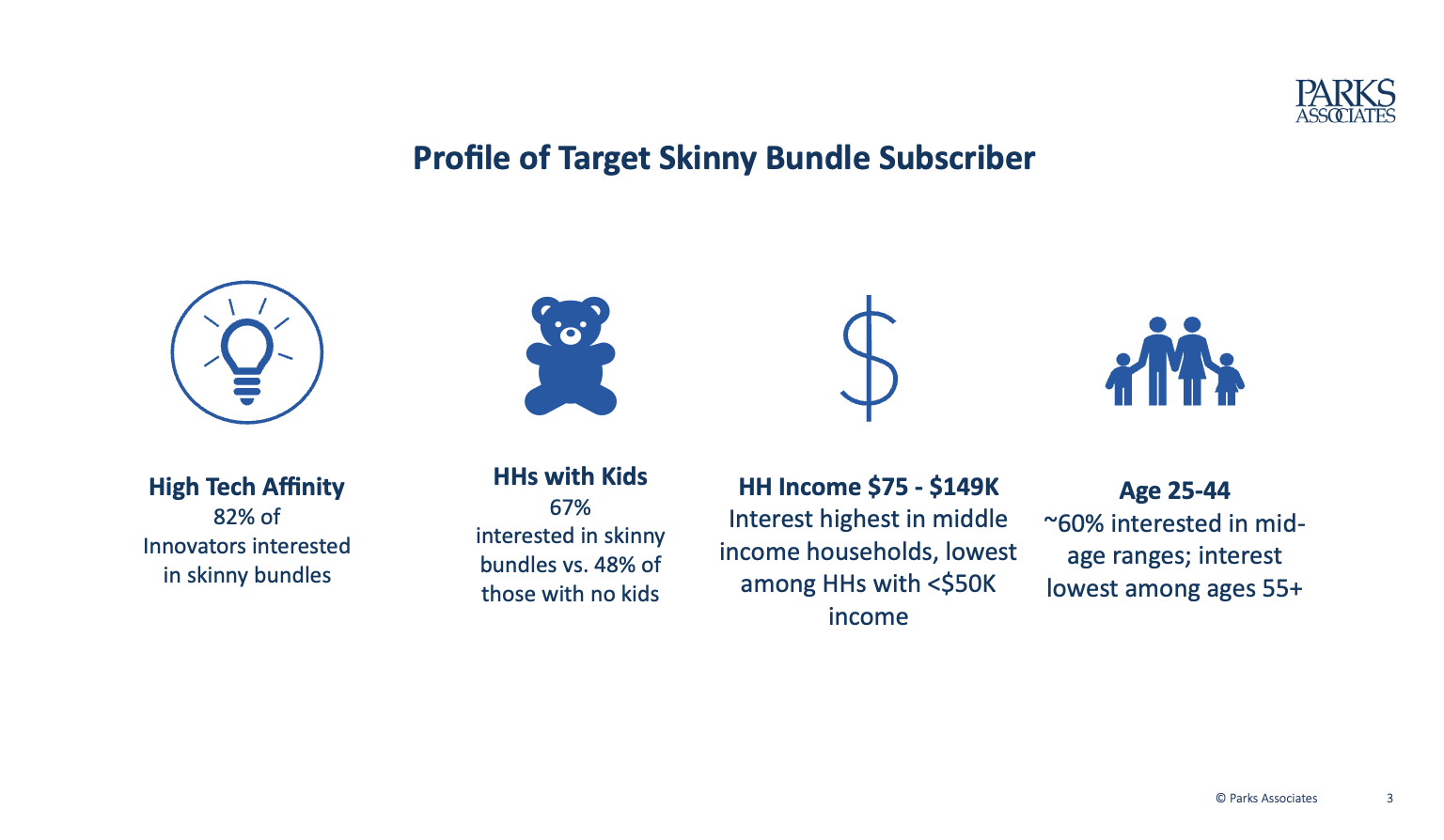
The strongest opportunity for skinny bundles lies among younger, affluent, technology-forward households, particularly families with children. These consumers are already highly engaged with streaming services but continue to value live sports, local programming and broadcast television.
Rather than replacing streaming subscriptions, skinny bundles are viewed as a complementary service that simplifies access to essential live content while avoiding unnecessary channels and excessive costs. This positions skinny bundles as an attractive acquisition and retention strategy for digitally savvy households with high long-term customer value.
Traditional Pay-TV Providers
Skinny bundles represent both a challenge and an opportunity for traditional pay TV providers: While consumer demand for smaller, lower-cost packages reflects dissatisfaction with legacy channel bundles, it also demonstrates that demand for live television remains strong. Cable, satellite, and telco operators have an opportunity to reposition video as a flexible, curated service centered on the live content consumers value most, rather than continuing to compete on channel count. Providers that proactively introduce affordable, targeted bundles can retain households that might otherwise leave the category entirely, preserving valuable customer relationships while slowing subscriber declines.
Traditional pay TV operators must evolve from video distributors into entertainment aggregators. Consumers increasingly want a single destination that combines live television with streaming services, unified search and discovery, personalized recommendations, and simplified billing. Skinny bundles provide a foundation for this transition by allowing operators to integrate linear channels with premium SVOD services; free, ad-supported streaming TV (FAST) channels and genre-specific offerings into a cohesive experience. This aggregation strategy simultaneously strengthens the value of broadband and wireless bundles while creating new cross-selling opportunities that extend beyond traditional video. This of course will put pay TV operators into direct competition with TV operating system (TVOS) vendors but give them something the TVOS vendors are lacking — skinny bundles.
Perhaps most importantly, skinny bundles will help traditional pay-TV providers attract younger, higher-value households that have largely bypassed conventional pay TV. Interest is strongest among consumers between the ages of 25 and 44, households with children and technology-forward consumers — segments that are under-represented among traditional subscribers but highly engaged with streaming. Offering flexible, affordable packages centered on sports, local news, and entertainment gives operators an opportunity to reconnect with these consumers before they become permanently embedded in streaming-only ecosystems.
But embracing skinny bundles will require operators to rethink long-standing business models: Smaller channel packages will pressure affiliate fee economics and require difficult negotiations with programmers that have historically depended on broad distribution. Success will depend on balancing consumer demand for flexibility with sustainable content economics while differentiating through superior aggregation, user experience and integrated service offerings.
Virtual MVPDs
As for virtual multi-video programming distributors (MVPDs), skinny bundles represent the next stage in their evolution rather than a disruption to it. Virtual MVPDs pioneered the concept of smaller, streaming-based live TV packages, but many have gradually evolved into full-featured channel bundles with prices approaching traditional pay TV services. Consumer interest in skinny bundles, combined with strong demand for lower prices, fewer unwanted channels, and greater flexibility, represent an opportunity for virtual MVPDs to return to their original value proposition.
Virtual MVPDs should position themselves as streaming aggregators rather than simply digital replacements for cable television. To achieve this pricing discipline will be critical. Consumers expect skinny bundles to cost approximately $20 to $27 per month, substantially lower than the pricing of many current virtual MVPD offerings.
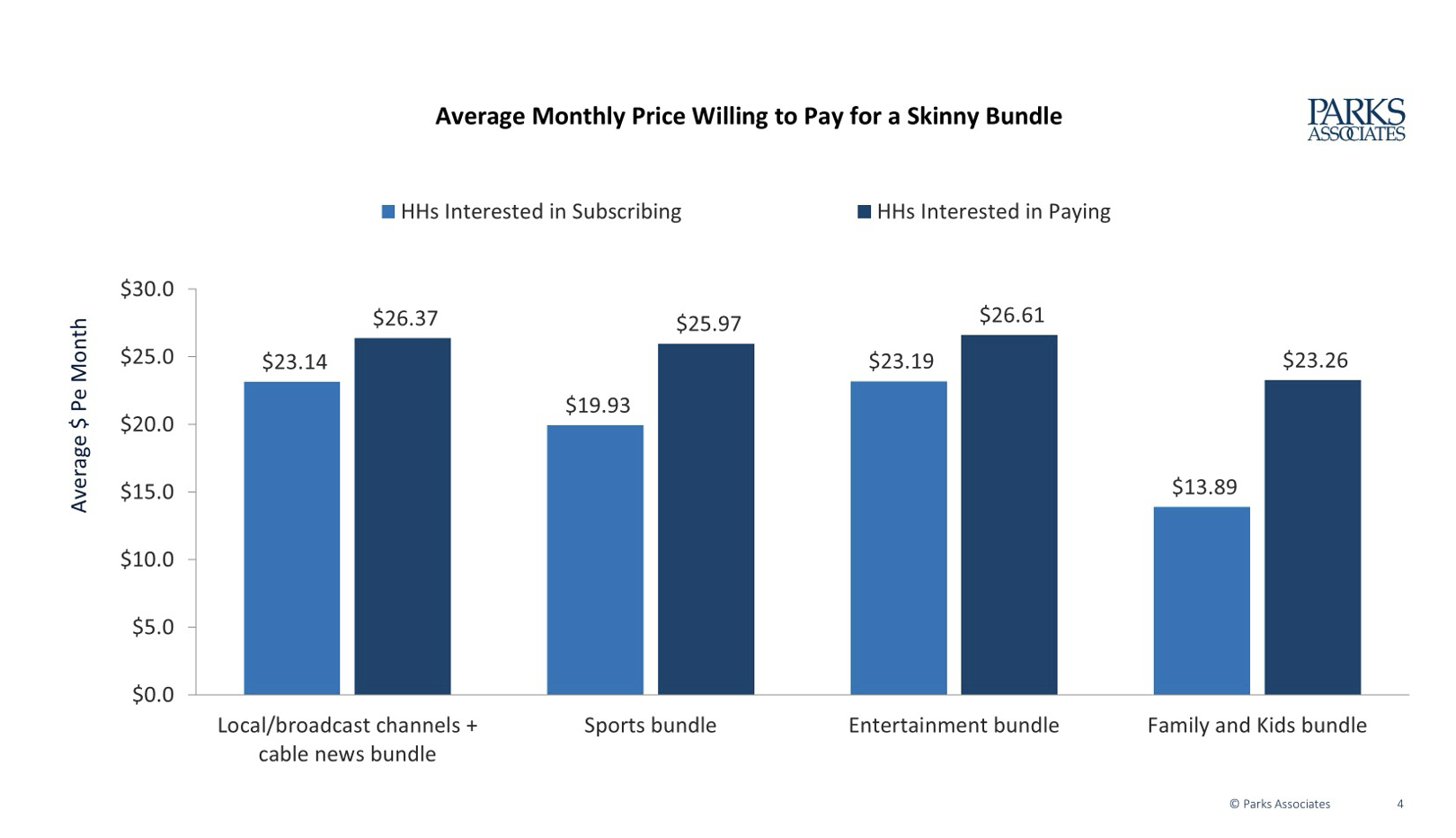
Ultimately, skinny bundles provide vMVPDs with an opportunity to differentiate themselves from both traditional pay TV services and standalone SVOD services. Rather than competing solely on channel breadth, successful providers will compete on flexibility, affordability, and user experience. Those that can deliver premium live content through modular, personalized packages while integrating into the broader streaming ecosystem will be well positioned to improve subscriber acquisition, reduce churn, and strengthen their role as the primary gateway for live television in an increasingly streaming-centric entertainment market.
SVOD Services
Although the skinny bundles predominantly affect pay TV services, they also have several important implications for SVOD services. Consumers are increasingly assembling personalized entertainment portfolios. With subscription TV households averaging 6-plus SVOD services, while keeping overall spending relatively stable, SVOD providers have an opportunity to position themselves as essential components of a broader entertainment bundle rather than standalone services. Partnerships with pay TV operators, virtual MVPDs and broadband providers that integrate SVOD subscriptions into curated skinny bundles could improve customer acquisition, increase retention, and reduce churn by simplifying the consumer experience.
As traditional operators and virtual MVPDs evolve into entertainment aggregators, compete with TVOS vendors, SVOD services that participate in bundled offerings, unified search, and integrated billing will likely gain greater visibility and engagement. Rather than viewing skinny bundles as competitive products, SVOD providers should see them as additional distribution channels that can increase share of wallet while helping consumers navigate an increasingly fragmented streaming landscape.
Finally, pricing dynamics reinforce the growing importance of value and differentiation for SVOD providers: With consumers demonstrating clear budget sensitivity and seeking lower-cost entertainment options, SVOD services face continued pressure to justify their place within increasingly crowded subscription portfolios. Exclusive original programming, premium sports rights, ad-supported tiers, and strategic bundling will become even more important competitive differentiators. As skinny bundles make live television more affordable, SVOD providers will need to ensure their content complements rather than duplicates those offerings, creating compelling entertainment packages that maximize consumer value while strengthening long-term subscriber loyalty.
Programmers and Content Owners
As skinny bundles gaining traction, programmers will face growing pressure to rethink the economics of wholesale channel distribution, which has historically depended on broad carriage across large channel packages; as distributors introduce genre-specific and smaller bundles, programmers will need to demonstrate the unique value of individual networks and may increasingly rely on direct-to-consumer offerings, strategic bundling partnerships, and flexible licensing models to maintain reach and revenue.
Skinny bundles reinforce the industry’s transition from selling television packages to selling personalized entertainment experiences. Providers that successfully combine affordable pricing, curated live content, streaming integration, and intuitive discovery will be best positioned to capture the next generation of subscribers. Those that continue to rely on legacy packaging and pricing models risk accelerating subscriber losses as consumers increasingly expect the same flexibility, transparency, and personalization from live TV that they already receive from streaming services.
—
This data is from Parks Associates latest research study, “The New Live TV Model: Skinny Bundles, Sports, News,” which is based on a survey of 8,000 consumer households in the United States. The research explores shifting preferences for live TV delivery, including virtual MVPDs, direct-to-consumer services, and hybrid bundles.
Parks Associates is the producer of the annual Future of Video conference and networking event; the next iteration takes place from November 17 to November 18 in Marina Del Rey, California. The Desk is an editorial partner of Future of Video.