


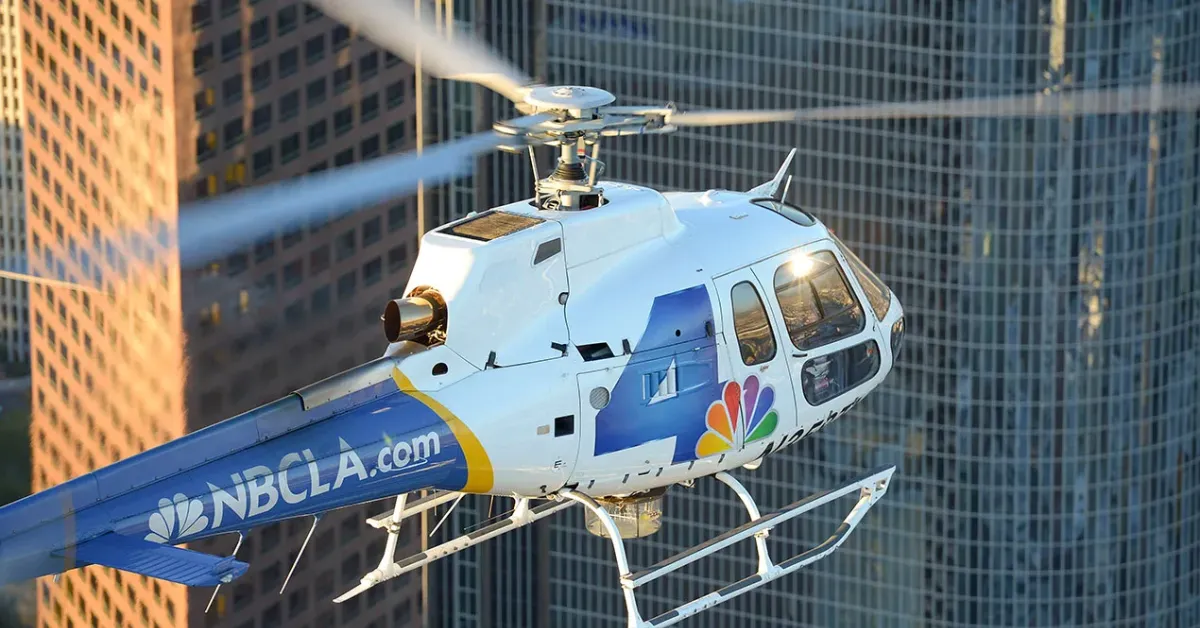
A helicopter used by Los Angeles television station KNBC started to experience a malfunction nearly a half-minute before it crashed last month, according to a preliminary report issued by federal investigators on Tuesday.
In its report, the National Transportation Safety Board (NTSB) said it was able to review a four-minute video that was captured by KNBC (Channel 4) reporter Eliana Moreno that was recorded while the station was covering a crash involving a city bus and passenger vehicle in the Chatsworth neighborhood.
Around 29 minutes before the crash, the helicopter began making noises that were indicative of a malfunction, with the video picking up sounds associated with changes to the aircraft’s rotor.

The helicopter crashed in an industrial area, bursting into flames after it impacted the side of a shipping container, the NTSB said, confirming a report first published by The Desk in September. Moreno and the helicopter’s pilot, George Maciniw, were killed.
Aviation experts said a trained pilot would have tried to execute a maneuver called “auto-rotation,” which allows the aircraft to essentially glide into a safe landing using the momentum of the rotors after the engine stalls.
But the maneuver requires a certain amount of altitude to be performed effectively, with most experts agreeing that the aircraft should be at least 1,000 feet above the ground. KNBC’s helicopter was flying at around 800 feet above ground before it dropped from the sky, the NTSB’s report said.
Low altitude flights for news helicopters are not uncommon: Pilots often drop below 1,000 feet in order to help a photographer on board get better video of a scene. But the desire to capture good footage can be a deadly trade-off in the event of a malfunction, aviation experts say, because it gives a pilot an extremely small window of opportunity to land safely.
The NTSB’s preliminary report does not specify a cause for the malfunction and doesn’t assign blame to anyone for the crash. A final report could take more than a year for the NTSB to produce and publish.

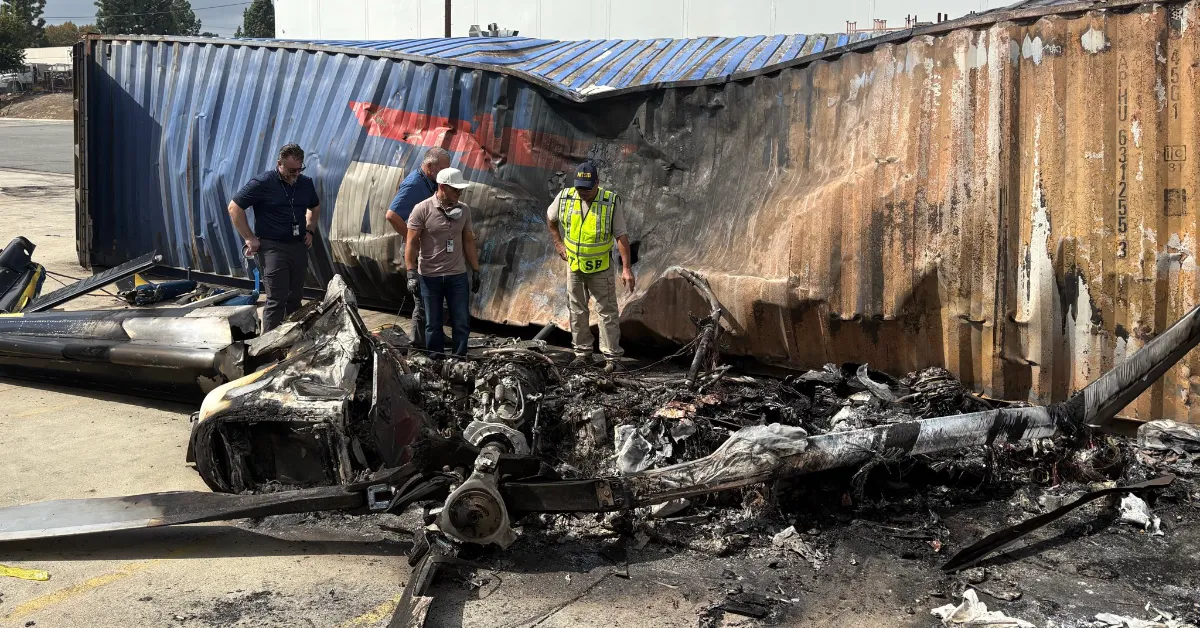
Investigators said the helicopter mostly stayed intact after it crashed, but parts of the aircraft were significantly damaged by the post-crash fire. The fuselage, where Moreno and Maciniw were seated, was “mostly reduced to ash and thermally damaged metal,” a strong indication that the post-crash fire made surviving the impact almost impossible.
It wasn’t clear from the report if Moreno and Maciniw’s bodies were able to be recovered after the fire, or even if there was anything left to recover. What remains of the wreckage has been stored in a secure facility for further examination.