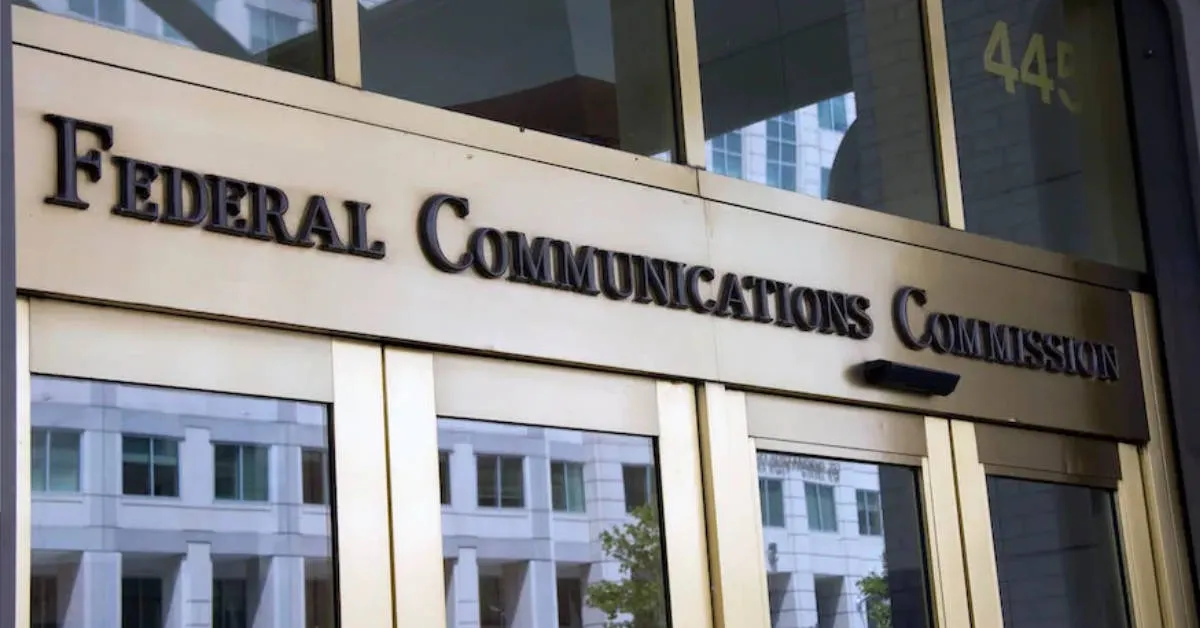
The Federal Communications Commission (FCC) has launched the first substantial step toward refreshing or pulling some of its rules and regulations.
In a public notice issued by the agency on Wednesday, FCC Chairman Brendan Carr said the agency was now soliciting comments from the public with guidance on which of the agency’s rules need refreshing or deleting entirely.
Specifically, Carr is seeking insight on marketplace and technology changes that may render certain FCC rules “unnecessary or inappropriate” given the changing media and technology landscape, as well as guidance on rules that create “barriers to entry” for “different types and sizes of companies.”

“Rules do not exist in isolation, but operate against a backdrop of other FCC rules, other federal rules and requirements, relevant state and local laws, and industry self-regulatory efforts including the adoption of technical standards or best practices,” Carr wrote. “We seek comment on whether changes in the broader regulatory context demonstrate that particular Commission rules are unnecessary or inappropriate.”
The public notice offers just a few suggestions of the types of rules and regulations the agency wants feedback on. Essentially, it is open season on any and all regulations under the FCC’s purview, according to the public notice.
The official title of the public notice — “Delete, Delete, Delete” — strongly indicate the feedback received through the period of public comment will lead Carr and others at the agency to revoke some of its current rules entirely.
“Through a series of Executive Orders, President Trump has called on administrative agencies to unleash prosperity through deregulation and ensure that they are efficiently delivering great results for the American people,” Carr wrote. “By this Public Notice, (the FCC) is taking action to promote the policies outlined by President Trump in those Executive Orders.”
Carr has long opined that the FCC’s current rules create inequity between local broadcasters — which are regulated because they use publicly-owned radio spectrum and are licensed by the agency accordingly — and major technology companies that face few restrictions in their business and are allowed to grow without barriers.
By comparison, local TV broadcasters are not allowed to own stations that reach more than 39 percent of the American viewing audience, and are subject to in-market ownership restrictions that can impede their business in a given territory. Commercial radio station operators are afflicted with similar ownership rules.
Additionally, while local broadcasters are allowed to negotiate fees for the carriage of their signals on cable and satellite TV services, the FCC lacks the authority to impose the same requirement on streaming cable-like services and similar connected TV platforms, which some TV broadcasters say creates further inequity in the space.
Some have already pitched Carr and the FCC on substantial steps that the agency should take moving forward. In February, the CEO of the National Association of Broadcasters (NAB) — the commercial radio and TV industry’s main lobbyist — said the FCC should work promptly to remove the ownership cap that prevents local TV stations from buying up competitors and growing larger.
“Local broadcasting is a highly regulated business in a rapidly evolving sector of the economy,” LeGeyt said. “Rapid evolution and government regulation are words that historically do not go together. As broadcasters, we have lived through that disconnect.”
Nearly a week after those comments were made, the NAB submitted a brief to the FCC urging the agency to create a plan to wind down the current ATSC 1.0 broadcast standard in favor of ATSC 3.0, also known as “NextGen TV.” The new standard allow broadcasters to implement a mixture of traditional over-the-air and Internet-driven technology to deliver enhanced video and datacasting signals to American homes. Most Americans live in an area where at least one NextGen TV station is available, though concerns remain over whether most homes have TV equipment that can receive those signals.
The FCC addressed no specific idea or mandate in its public notice on Wednesday, but Carr’s comments that accompanied the review order indicated the broadcast industry in particular was being heard, and their concerns would be addressed pretty soon.

“For too long, administrative agencies have added new regulatory requirements in excess of their authority or kept lawful regulations in place long after their shelf life had expired,” Carr said. “This only creates headwinds and slows down our country’s innovators, entrepreneurs, and small businesses. The FCC is committed to ending all of the rules and regulations that are no longer necessary. And we welcome the public’s participation and feedback throughout this process. The American people expect and deserve a government that will efficiently deliver great results. We are committed to doing exactly that at the FCC.”
Public comments can be submitted to the FCC electronically through Docket Entry number 25-133. Initial comments are due by April 11, and reply comments are due by April 28.