


By Michael Goodman, Director of Research, Parks Associates

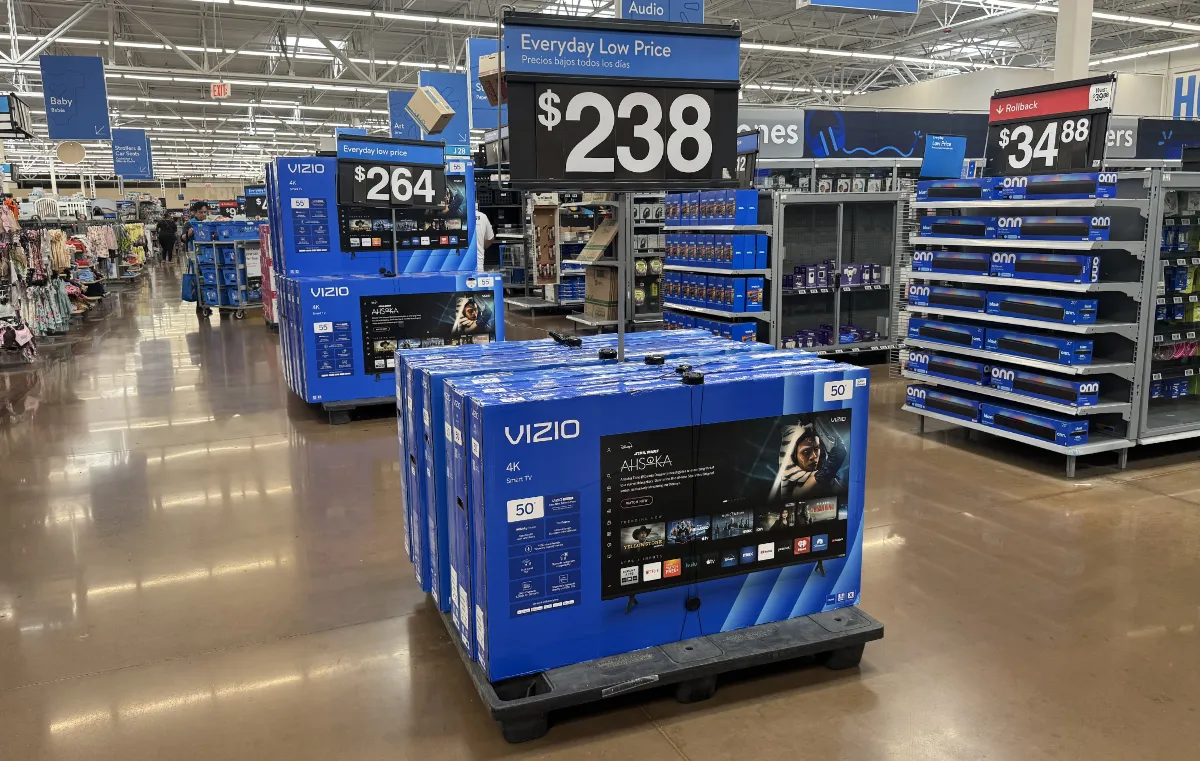
Walmart hosted its NewFront presentation on March 23, where it reaffirmed its vision of repositioning the company as a technology-driven, omnichannel retail platform rather than just a traditional store-based retailer. At the forefront of this transformation sits TV manufacturer Vizio, which Walmart acquired for $2.3 billion in December 2024.
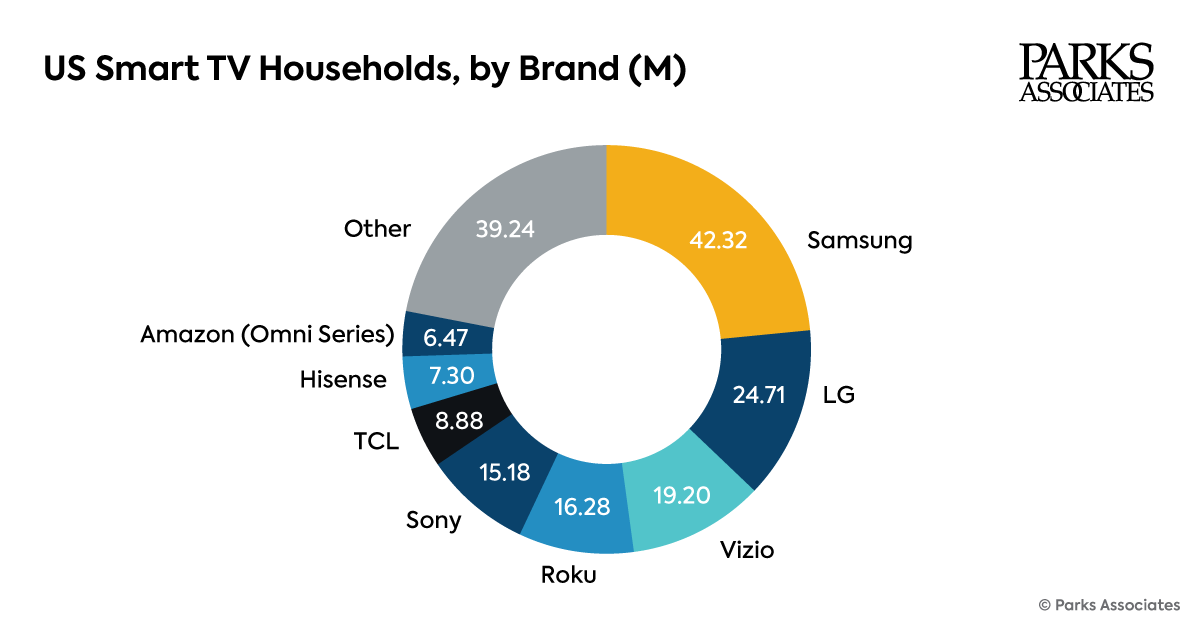
Vizio is central to Walmart’s vision of transforming from a retail media network into a full “content-to-commerce” ecosystem, able to finally compete head-to-head with Amazon. The companies emphasized how Vizio’s connected TV (CTV) platform extends Walmart’s reach into the living room, combining Walmart’s massive first-party shopper data with Vizio’s 19.2 million smart TV household footprint. This integration enables advertisers to connect streaming engagement directly to retail outcomes, effectively linking ad exposure on TV to product discovery and purchase within Walmart’s ecosystem.
Through formats like home screen ads, WatchFree Plus (WatchFree+) content, and new interactive placements, Walmart can now offer a closed-loop, full-funnel advertising model powered by Vizio. Building brand awareness (traditionally TV’s strength) alongside performance-driven retail media. Vizio also provides Walmart with owned-and-operated inventory and identity capabilities, such as unified logins across devices, that allow for more precise targeting and measurement. This positions Walmart to better compete with Amazon, Roku and other CTV platforms while expanding into non-endemic advertising categories like automotive and insurance.
Walmart’s integration of Vizio signals a broader shift in retail toward owning the full advertising and commerce stack, and it has several important market implications:
FIRST, Walmart is positioning itself as a serious competitor in the converging retail media plus CTV ad market, going head-to-head with Amazon (Fire TV plus ads) and Roku. By combining Vizio’s TV operating system and viewership data with Walmart’s shopper data, Walmart can offer advertisers closed-loop attribution, showing not just who saw an ad, but who actually bought the product. This raises the bar for the entire advertising industry, pushing more budgets toward platforms that can prove direct sales impact rather than just impressions or reach.
SECOND, this move accelerates the blurring of content, advertising, and commerce into a single experience. With Vizio, Walmart can make TV ads interactive and shoppable, effectively turning streaming into a retail channel. If successful, this could reshape consumer behavior, moving product discovery away from traditional search or in-store browsing and into passive viewing environments. Competitors (retailers, streaming platforms, and brands) may be forced to invest in similar integrations or partnerships to stay relevant.
FINALLY, Walmart’s strategy strengthens its push into higher-margin, non-retail revenue streams, particularly advertising and data monetization. Retail media already delivers significantly higher margins than core retail, and Vizio expands Walmart’s owned inventory and audience. Over time, this could improve Walmart’s overall profitability and valuation multiple, making it look less like a low-margin retailer and more like a hybrid of retail, media, and tech. The broader implication is that scale retailers without strong media ecosystems may fall behind, while platforms that can connect identity, content, and commerce will capture disproportionate growth.
Walmart’s move with Vizio puts direct pressure on Amazon’s long-standing advantage in closed-loop advertising, especially as it extends that capability into the TV screen. Amazon has built its edge through Fire TV, Prime Video, and its retail data, but Walmart is now replicating — and in some ways strengthening — that model by pairing Vizio’s large smart TV footprint with its own shopper data. This means advertisers will have a credible alternative to Amazon for full-funnel campaigns with measurable outcomes, which could lead to more competition for ad dollars and potentially fragment budgets that have historically concentrated with Amazon.
It also intensifies competition in the CTV ecosystem, where Amazon has been investing heavily through Prime Video ads and Fire TV inventory. Walmart’s ownership of Vizio gives it direct control over TV-level distribution (OS, home screen, free content like WatchFree Plus), rather than relying solely on third-party partnerships. This reduces Amazon’s differentiation and could force it to accelerate innovation in ad formats, pricing, and measurement, especially around making ads more interactive and commerce-enabled within streaming environments.
Last, Walmart’s strategy raises the stakes in the broader battle to become a hybrid retail-media-tech platform. Amazon has long led this convergence, but Walmart’s scale in physical retail combined with Vizio’s in-home presence creates a different kind of ecosystem, one that tightly links store, online, and TV behavior. For Amazon, this means defending not just e-commerce share but also its growing, high-margin advertising business. In response, Amazon may need to deepen integration across Prime Video, Alexa, and its retail marketplace to maintain its lead in data, identity, and seamless shopping experiences.
Walmart’s Vizio-driven strategy, however, doesn’t just affect Amazon, it raises the competitive bar for everyone operating at the intersection of retail, media, and streaming.
For retailers, it reinforces that retail media alone is no longer enough, owning or controlling premium media inventory (especially CTV) is becoming critical. Companies like Target, Kroger, and Instacart have built strong retail media networks, but they lack owned TV platforms. This could push them toward partnerships (i.e., with Roku, Disney, Netflix) or even acquisitions to stay competitive. Without closed-loop measurement across upper- and lower-funnel channels, these players risk losing ad dollars to Walmart and Amazon, who can prove full-funnel ROI.
For streaming platforms and CTV players, Walmart’s move is disruptive because it tightens the link between ad exposure and actual purchase behavior. Platforms like Roku, Samsung, and even Netflix or Disney will face increasing pressure from advertisers to provide better commerce integration and attribution. If Walmart can show superior performance (i.e., ads that directly drive sales), budgets may shift away from pure-play media platforms toward commerce-enabled ecosystems. This could accelerate partnerships between streamers and retailers or force streamers to build their own commerce capabilities.
For brands and advertisers, the landscape becomes both more powerful and more complex. On one hand, they gain new ways to run highly targeted, measurable campaigns across the full funnel, especially in traditionally hard-to-measure channels like TV. On the other hand, the market may consolidate around a few dominant “walled gardens” (Amazon, Walmart and possibly Google/YouTube), making it harder to maintain transparency and flexibility across channels. As a result, brands will likely need to rethink media strategies, balancing performance-driven retail media with broader brand-building channels, while navigating increasing fragmentation in data, measurement, and platform control.
Vizio is the bridge between media, data and commerce, enabling Walmart to build a “flywheel” where content drives engagement, engagement drives shopping and shopping feeds back into better targeting. The long-term vision is to make TV ads more actionable, turning passive viewing into shoppable moments while embedding Walmart deeper into consumers’ daily lives. In this sense, Vizio is not just a hardware acquisition but a strategic asset that accelerates Walmart’s evolution into a vertically integrated retail plus media platform.
—
Learn more about Parks Associates by clicking or tapping here.
The views expressed by the writer are entirely their own. Neither the author nor the publication received compensation for this guest column.
More Stories
- Walmart to convert Vizio into private label brand
- Walmart to shift from Roku to Vizio SmartCast for Onn smart TVs
- Roku exploring other retail partnerships after Walmart buys Vizio, CEO says
- Walmart begins selling Onn TV powered by Vizio operating system
- Walmart completes acquisition of smart TV maker Vizio