




Key Points

- A report from Bango found that while sports streaming has gone mainstream, growing fragmentation across platforms is making it harder and more expensive for fans to follow live games.
- The study shows 64 percent of consumers now subscribe to at least one sports streaming service, often driven by specific leagues such as the NFL, which prompted 38 percent of respondents to sign up.
- The complexity is already impacting engagement, as nearly half of consumers said they have missed games due to confusion over where they were streaming, while 41 percent were unsure where to watch the 2026 FIFA World Cup.
Fans are growing frustrated with the complexity of paying for subscription services simply to stay on top of their favorite sport, and are coming around to the idea of bundling apps together in order to save costs and ensuring they have access to the live games from the teams they want to follow, according to a new report released by Bango on Tuesday.
The report comes ahead of several discussions about bundling and the broader subscription economy that Bango executives will undertake at the StreamTV Show, which kicks off in Denver on Tuesday and lasts through the week.
The company’s “Subscription Snapshot: Sports SVOD” report found that nearly two-thirds of consumers now pay for at least one sports streaming service, yet many say the rapid fragmentation of sports rights across platforms is making the viewing experience more confusing and expensive.

According to the survey, 64 percent of consumers subscribe to a sports streaming service, most often to follow a specific league, tournament or team. The National Football League (NFL) remains the strongest driver of subscription purchases, with 38 percent of respondents saying it prompted them to sign up for a service they otherwise would not have used. The National Basketball Association (NBA) ranked second at 27 percent, followed by Major League Baseball at 19 percent and college football at 17 percent.
As more leagues distribute rights across multiple streaming platforms, however, viewers are struggling to keep track of where games are available.
Half of respondents said they want a single app that provides access to all the sports they watch. More than one-quarter said they need at least three paid subscriptions to follow all of their favorite sports, while nearly one-third subscribe for a season and cancel once it concludes.
Nearly half of consumers said they have missed a game because they could not determine where it was streaming, while a similar percentage reported missing part of a game for the same reason. Notably, 41 percent said they do not know where to watch the 2026 FIFA World Cup.
“Sports streaming was supposed to make live sport easier to access. Instead, many fans now find themselves juggling multiple subscriptions and platforms just to follow the teams and games they care about,” Giles Tongue, the Vice President of Marketing at Bango, said in a statement. “While live matches remain hugely important, they are no longer the only way that young fans engage with sport. As streaming becomes more fragmented, many are turning to highlights, clips and social content to stay connected, transforming sport from a single live viewing event into an always-on digital experience.”
The confusion appears to be changing fan behavior: According to Bango, 46 percent of consumers now follow games through clips, highlights and social media updates instead of watching full broadcasts. More than one-third believe highlights are beginning to replace live viewing altogether, particularly among younger audiences. Among viewers aged 18 to 24, nearly half said they replace full games with clips, while 58 percent regularly use a second screen while watching live sports.
“This isn’t necessarily a sign that younger fans care less about live sport; it’s more of a reflection of how sports consumption is evolving,” Tongue said. “When viewers are juggling multiple subscriptions, struggling to find where games are streaming and missing matches altogether, it’s no surprise that highlights and social content are becoming a bigger part of the sports experience.”
The report also points to growing piracy concerns. Thirty percent of respondents said they do not pay for sports streaming because piracy represents the best way to watch sports, while an equal percentage believe they already subscribe to too many sports services.
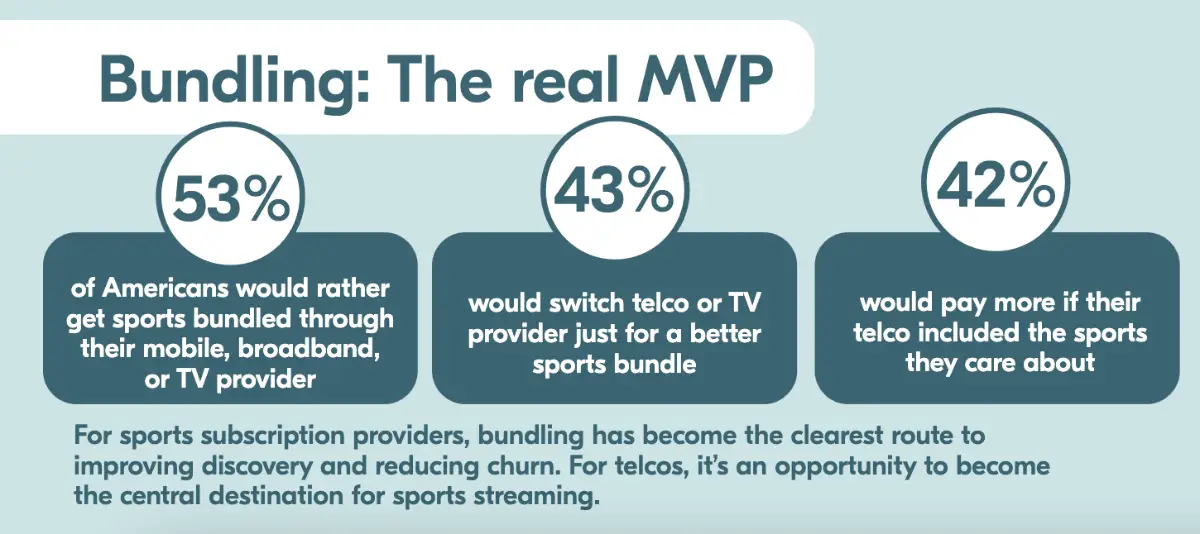
Naturally, Bango sees an opportunity for telecom providers to step in and bridge the gap between sports fans and media-backed subscription streaming services — as do many sports fans. More than half of consumers said they would prefer a mobile, broadband or television provider to manage their sports subscriptions on their behalf. Fifty-two percent said they trust telecom providers more than streaming services to bring together sports content in a single bundle, while 43 percent said they would switch providers if another company offered a better sports streaming package.
Bango offers a product called the Digital Vending Machine, which allows service providers to sell and bundle different subscription-based products to their customers, with native billing options. Some companies like Verizon and Comcast have taken advantage of Bango’s Digital Vending Machine technology to offer unique subscription bundles at discounted rates compared to the individual price of each service — which not only saves customers money, it ensure they have access to the programming, including live sports, that they want to watch without having to juggle different subscriptions.
“As sports content becomes spread across more services, the brands that simplify access and bring fragmented sports experiences back together will be best placed to engage the next generation of sports fans,” Tongue said.
Bango will discuss the findings of the sports survey and their various subscription solutions for service providers during the StreamTV Show, which runs from June 16 to June 19 in Denver. The Desk is an editorial partner of the event.