


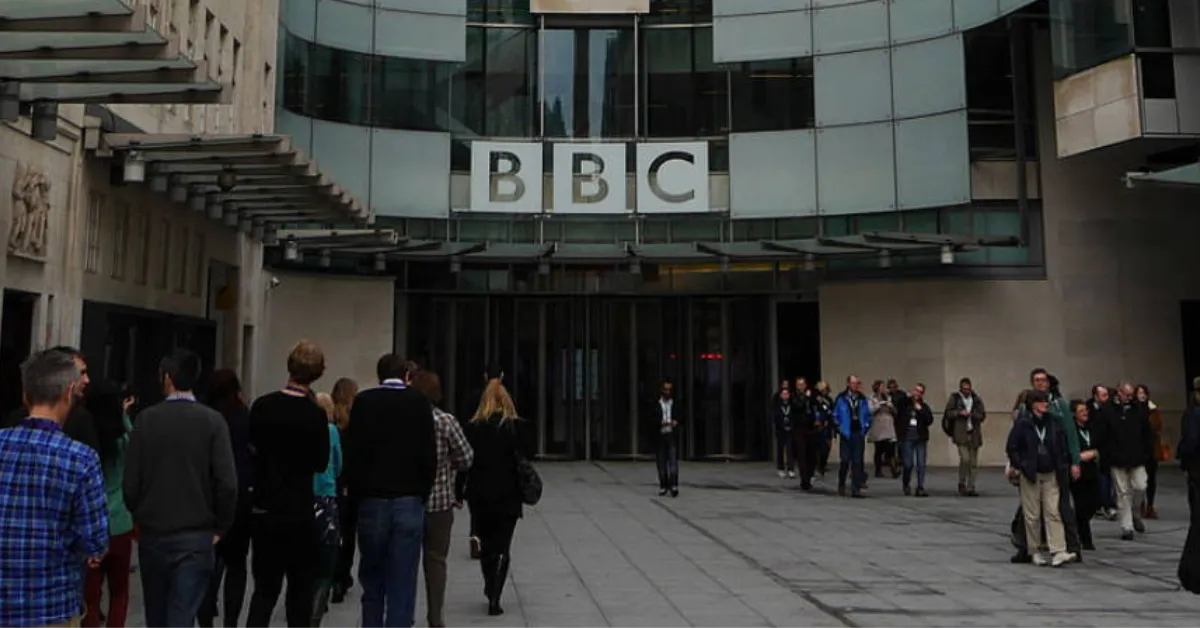
The British Broadcasting Corporation and Britain’s main commercial public service broadcaster Channel 4 have discussed the possibility of a streaming-focused partnership in order to better compete against foreign-owned streaming services.
Those discussions were revealed this week by BBC Director-General Matt Brittin during an appearance before the House of Commons Culture, Media and Sport Committee, which focused on the BBC’s broader efforts to sustain itself at a time when its long-term domestic revenue pipelines face challenges.
Brittin said the conversations pre-dated Comcast’s announcement that its subsidiary business Sky Group reached a deal to acquire the linear channels and streaming platforms of ITV, one of the country’s other public service broadcasters, for more than $2.1 billion.

“We have had an approach and have had a discussion with Channel 4,” Brittin told lawmakers this week. “In the world of the ITV-Sky merger, Channel 4 looks very sub-scale.”
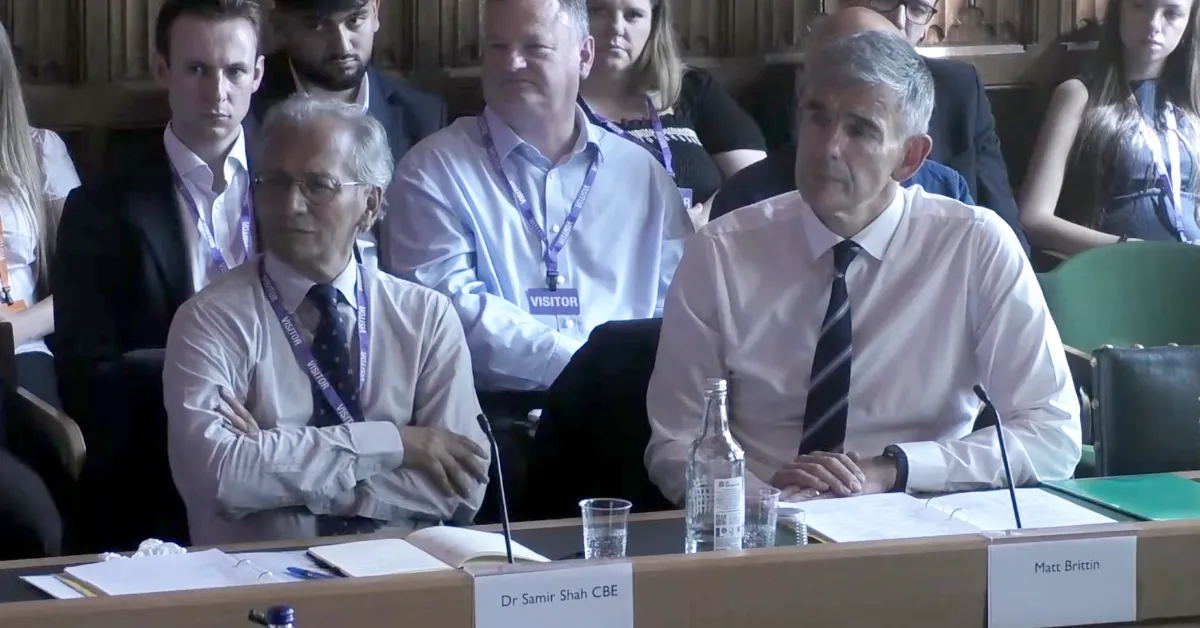
Consolidation across the media industry has heightened the need for broadcasters to achieve greater scale, Brittin noted, adding that one option would be for Channel 4 to distribute its programming through BBC iPlayer while continuing to operate its advertising-supported business model.
Brittin cautioned that significant commercial, technical, audience and public service issues would need to be resolved before any agreement could move forward, but said the broadcasters intend to explore the proposal as quickly as possible.
Ordinarily, the BBC is forbidden from airing advertisements across its linear or streaming content because British households fund its television and radio activities through a mandatory viewership tax, called a TV license. The license costs more than $210 per year, though some households receive discounts if they use black-and-white TV sets or have elderly residents at an address.
Channel 4 was established to produce and distribute alternative programming reflecting a variety of interests, serving as a counter to the BBC’s more-mainstream shows, news and documentaries that was intended to have a broader appeal. While publicly-owned, Channel 4 receives no funding from taxpayers; instead, it sustains its operations through advertising and partnerships with other commercial broadcasters.

The BBC and Channel 4 are among Britain’s five public service broadcasters who have faced stronger competition from foreign-owned streaming services like Netflix, Amazon’s Prime Video and Disney Plus, which have siphoned viewership over the past few years. In addition to impacting ad budgets at Channel 4 and ITV, the situation has also invited criticism as to whether a TV license is the best way for the BBC to continue sustaining its operations, since fewer people are watching its channels.
“This is a moment of real jeopardy, because of the scale and because of the influence of a handful of U.S. and Chinese tech players which will dominate the creation and distribution of content,” Brittin said this week.
A partnership between BBC iPlayer and Channel 4 would represent one of the most significant collaborations yet between British public service broadcasters. While the companies already cooperate on initiatives such as Freely, the streaming platform backed by the country’s major public service broadcasters, integrating Channel 4’s programming into iPlayer would mark a deeper level of content distribution.
No timeline for a potential agreement between the BBC and Channel 4 was disclosed, and neither broadcaster has announced formal plans beyond the exploratory discussions.
During his committee appearance, Brittin also renewed his call for reforms to the television license fee, arguing that the current funding model has not kept pace with changing viewing habits.
He said there is “a compelling argument” for requiring households that watch BBC programming exclusively through streaming platforms to contribute toward funding the broadcaster, describing the existing license fee structure as “yesterday’s model” that is “no longer fit for purpose.”

More Stories
- Comcast’s Sky makes ITV acquisition official, will spend $2.16 billion to buy broadcaster
- Forecast: Streaming revenue to overtake pay TV in U.K. by 2029
- Comcast works with British broadcasters on Universal Ads product
- Channel 4 expands Google partnership with new audience-targeting marketplace
- Everyone TV: Freely now reaches 500,000 British users
- Comcast spinning out NBC Universal, Sky Group into separate company