

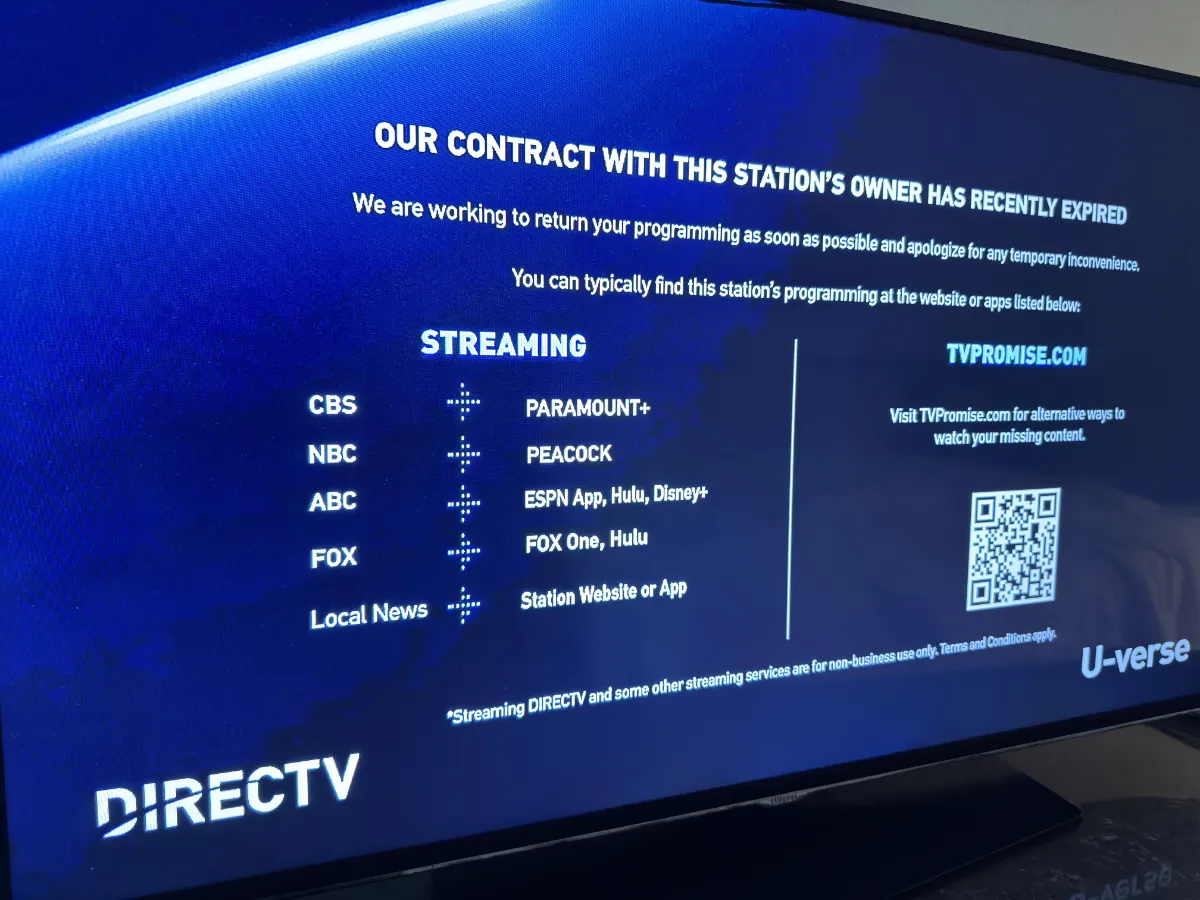
Dozens of local television stations owned by the E. W. Scripps Company have returned to DIRECTV’s satellite and streaming platforms after a months-long distribution dispute ended with a new agreement on Friday, according to sources who spoke with The Desk.
The channels — more than 50 in total — were initially dropped at the end of May after DIRECTV accused Scripps of charging significantly higher fees for its channels, purportedly to offset stronger financial investments made by the local broadcaster in pursuing regional sports rights for some of its stations.
Scripps executives denied they were seeking a rate increase based largely on sports, but didn’t dispute that the company demanded higher fees for its channels. Broadcasters commonly adjust the rate charged to cable and satellite companies when their contracts are nearing expiration, with the higher fees meant to offset lower advertising revenue.

It wasn’t clear if DIRECTV avoided any rate increases through its new agreement with Scripps. Financial terms of the deal were not disclosed.
“We’re grateful to our customers for their patience. Like them, we are frustrated that broadcasters use blackouts as a tool to force us to accept unwarranted rate hikes that consistently exceed normal, inflationary increases, and by a lot,” said Rob Thun, the Chief Content Officer at DIRECTV. “At a time when affordability matters more than ever, families are too often asked to pay more while receiving less.
Thun continued: “Local broadcasters were entrusted with serving their communities through local news, weather, emergency information and hometown sports. But as ownership becomes concentrated among a handful of ever-larger broadcasters gaining stations across new and within their existing markets, those expanded stations become increasingly powerful and further unbalanced negotiating tools. The more markets and major network affiliations a broadcaster controls, the greater its ability to withhold programming from the very communities it is meant to serve. Consumers should never lose access to essential local television because of a carriage dispute. It’s time to modernize the system so it rewards service to local communities — and not consolidated market power — by returning to the original purpose of broadcasting of putting viewers’ interests first.”
Discussions toward a new agreement inched closer on Thursday, according to sources familiar with the matter, with final terms hammered out on Friday.
The DIRECTV dispute was one of two involving Scripps and a distributor of its channels, a situation that is becoming more common in the cable and satellite industry. Earlier this year, Scripps-owned stations were pulled from Comcast’s Xfinity TV systems for about five weeks, mirroring the length of time it took for Scripps and DIRECTV to come to an agreement.
Scripps is currently negotiating a new contract with Echostar’s Dish Network that could lead to another impasse before the end of the year, according to two sources familiar with the discussions. It wasn’t immediately clear when the channels might disappear, and there is still a chance both sides could hammer out an agreement that avoids a dispute altogether.