A meeting scheduled by the Federal Communications Commission (FCC) to approve the lifting of a long-standing restriction on broadcast TV ownership coincides with the date that several affected broadcasters will release their financial earnings, according to information reviewed by The Desk.
The vote will take place during the FCC’s next open meeting, which is scheduled for August 6. That date will also see a number of broadcasters release public reports on their second quarter financial earnings, including some that have pending business-related deals that the FCC’s Media Bureau is scrutinizing or has approved in the past.
Nexstar Media Group, the E. W. Scripps Company and Fox Corporation are scheduled to disclose their financial earnings a short time before the FCC’s three-member commission votes on the broadcast ownership rule. One other broadcaster, Sinclair, will disclose their financial earnings a day earlier.

The FCC’s open meetings are typically held toward the end of any given month, though the agency’s meetings in August are often scheduled earlier. Over the past six years, the FCC’s August meetings were held during the first week of the month, according to a schedule provided by an agency spokesperson.
The timing of the August 6 meeting was placed on the FCC’s calendar one year ago, and officials did not know that some broadcasters who have engaged in transactions requiring the agency’s approval had also scheduled their financial earnings to be released on the same day, the spokesperson affirmed.
The matter was placed on the calendar for the August 6 meeting by FCC Chairman Brendan Carr, who has expressed a willingness to help broadcasters engage in further acquisition-related transactions by easing rules considered onerous to them.
That includes the broadcast ownership cap, which prevents an individual company from holding direct ownership of a group of licensed TV stations that reach more than 39 percent of the American viewing audience.
Nothing required the FCC to place the broadcast ownership matter on its August agenda, and it isn’t clear why Carr did so. Broadcasters say the ownership restriction keeps them from scaling up their operations to better compete against streaming services that are owned by deep-pocketed technology companies, which are largely unregulated.
Last year, the National Association of Broadcasters (NAB), the main lobbying group representing commercial radio and TV station owners, sent a letter to Carr and others at the FCC urging them to eliminate the ownership cap, saying the restriction inhibited a broadcaster’s ability to commit more resources to local news and community-oriented programming. The NAB also complained that unregulated tech companies were siphoning much-needed advertising dollars away from local TV and radio, necessitating the need for local broadcasters to scale their operations through consolidation.
“Continued marketplace trends over the past seven years make clear there is simply no good reason to keep any artificial limits on TV station groups’ audience reach,” the NAB wrote in its letter. “With Google and Facebook gobbling up local advertising revenues and stations competing with unconstrained streaming platforms for viewers’ time and attention, the FCC must end this limitation and allow broadcasters to better serve the public interest.”
In February, pollsters working with the NAB issued a veiled threat to federal lawmakers, saying there was “both a political reward and a price to pay for members of Congress, depending on how they address the issue of local TV station owners to compete.”
Congress set the stage for ownership restrictions years ago, passing federal laws that require the FCC to impose some type of limitation on the amount of TV and radio stations a broadcasters may possess while largely leaving the actual limitation up to the agency to decide. The FCC is required to review its ownership rules once every four years, though the agency has been inconsistent on meeting that legal obligation.
Some question whether the FCC has the authority to eliminate the broadcast ownership cap entirely, as the agency will do next month. Earlier this year, Newsmax founder and CEO Christopher Ruddy said the agency is required to enforce some type of limitation on broadcast ownership because Congress explicitly wrote the cap into the law. He threatened to sue the agency and relevant stakeholders if the FCC lifted the ownership cap.
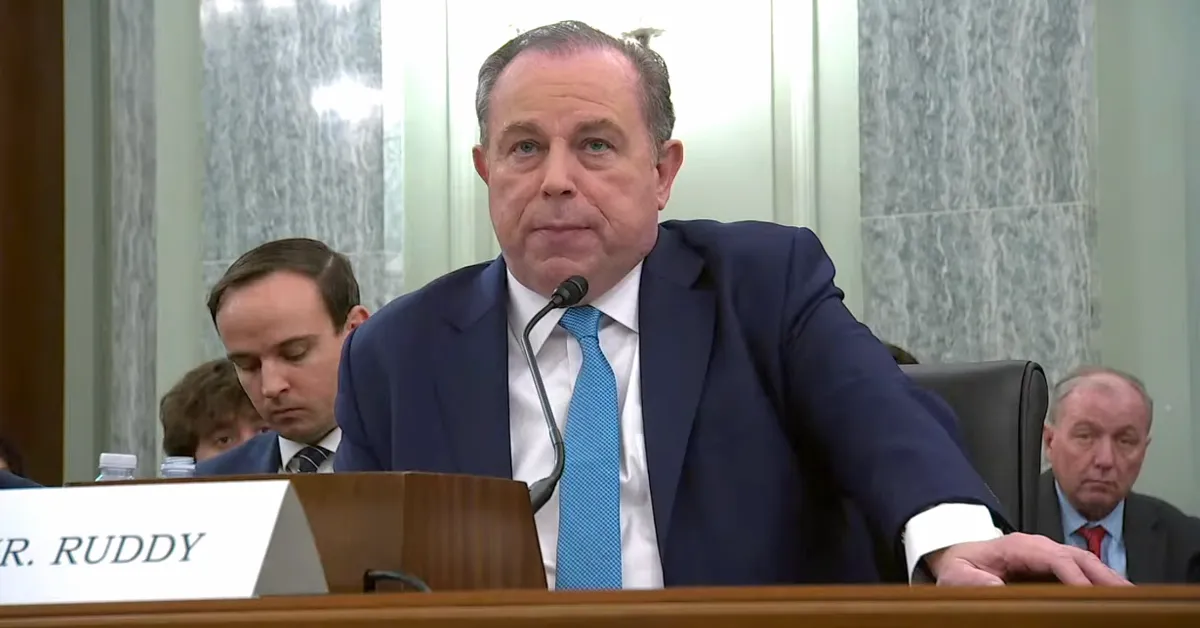
Newsmax competes in the cable news space against Nexstar which received FCC approval to acquire local TV stations owned by peer broadcaster TEGNA in March. The combination of TEGNA and Nexstar was paused by a federal judge in April while an antitrust lawsuit plays out. Newsmax is not a party to that case, but Ruddy has complained in the past that carriage of his channel on cable and satellite platforms is threatened by Nexstar on the belief that the broadcaster will pressure pay TV providers to carry Nexstar-owned NewsNation in order to offer its local network-affiliated stations. In doing so, Ruddy is concerned that Newsmax will be pushed off pay TV platforms at a time when the network has considerable momentum.
A spokesperson for Newsmax did not return an e-mail from The Desk inquiring if Ruddy is willing to move forward with his lawsuit.