


Key Points

- Newsmax CEO Christopher Ruddy said he would sue if the FCC moves to eliminate the 39 percent broadcast ownership cap, arguing only Congress can repeal the rule.
- Ruddy warned lifting the cap would boost large station groups like Nexstar and further disadvantage smaller cable news channels in distribution negotiations.
- Broadcasters and the NAB counter that ownership limits are outdated and prevent local TV operators from competing with global streaming platforms.
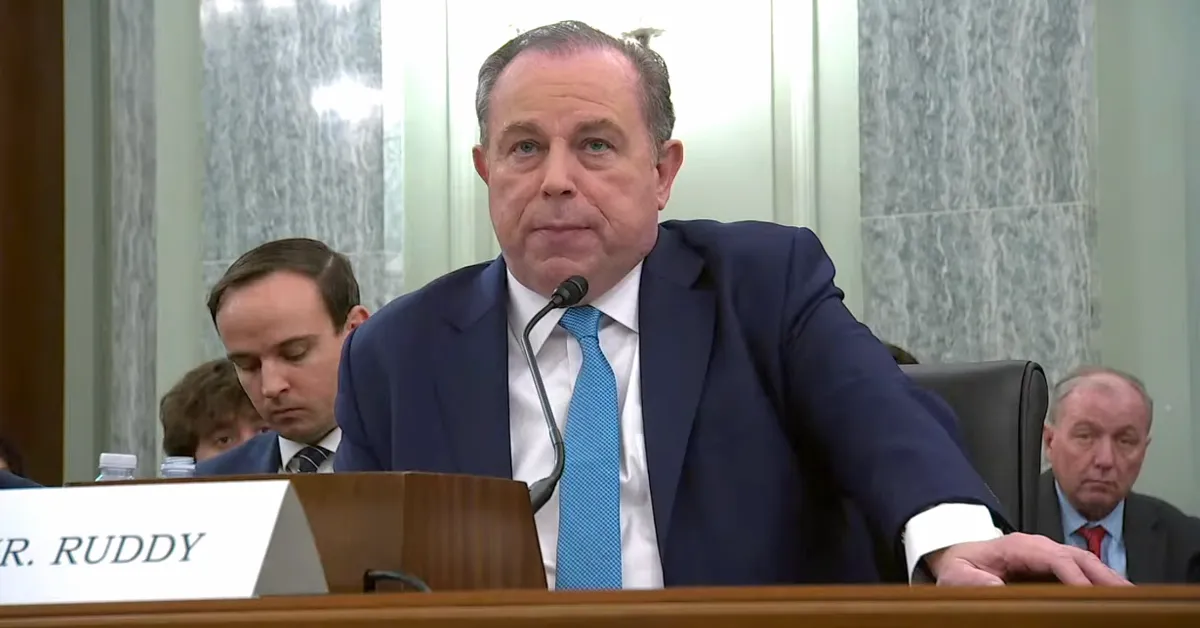
Newsmax founder and Chief Executive Officer Christopher Ruddy said on Tuesday he is prepared to sue if the Federal Communications Commission (FCC) eliminates a long-standing rule that limits the amount of local TV stations a company may directly own at one time.
In prepared remarks before the U.S. Senate Commerce Committee, Ruddy said he was “prepared to litigate the matter” after previously expressing the view that the FCC lacks the authority to eliminate a rule that prohibits corporate broadcasters from owning licensed TV stations that reach more than 39 percent of the American viewing audience.
The FCC is currently weighing a proposal that could see the lifting or elimination of the ownership rule, following an intense wave of lobbying from the National Association of Broadcasters (NAB) and several of its members, including Nexstar Media Group.

In prior public comments and in his remarks on Tuesday, Ruddy said the 39 percent ownership cap was codified through the Communications Act, which was passed by Congress, and only federal lawmakers can eliminate the rule.
“I believe that it’s a blatant violation of congressional law, and I think it is a very dangerous thing that an industry group which stands to make billions of dollars can just circumvent what Congress has said,” Ruddy opined.
Ruddy’s Newsmax is widely distributed on cable, satellite and streaming pay TV platforms, having converted its business model from one that sought free distribution in favor of one where Newsmax receives compensation for distribution.
That model is similar to one employed by Nexstar and other broadcasters, who receive distribution fees from pay TV platforms in exchange for the legal right to offer their subscribers access to local broadcast stations and national networks.
Nexstar is the largest independent owner and operator of local TV stations in the country. It controls more than 200 local TV stations from coast to coast and in Hawaii. The broadcaster’s own marketing materials say its local TV stations reach more than 200 million Americans.
Over the past few years, Nexstar has bundled its local TV stations with its upstart cable channel NewsNation, which competes with Newsmax for viewers, advertising dollars and distribution fees. Ruddy complained that Newsmax has five times as many viewers as NewsNation, but is hamstrung by the amount it can charge for distribution fees because Nexstar already squeezes cable and satellite operators of cash for its local broadcast channels.
By bundling NewsNation with its network-affiliated TV stations, Ruddy says Nexstar is able to charge considerably higher fees than he can. Newsmax does not own or operate local TV stations.
“One of the reasons why we had the cap was to reduce the leverage so they couldn’t overpower the cable operators,” Ruddy complained. “This is why cable bills are up over 100 percent in recent years, because of the immense power.”
Senator Ted Cruz of Texas, the lawmaker who organized the hearing on Tuesday, appeared sympathetic to Ruddy’s plight. He took those concerns to NAB CEO Curtis LeGeyt, who tried to assure lawmakers that broadcasters were small players compared to larger tech companies like Google, Amazon and Netflix.
LeGeyt said he wasn’t sure if Ruddy’s data on viewership or fees were correct, but agreed to stipulate to them if he had supporting documentation. Later, when questioned by another lawmaker, LeGeyt downplayed the market prowess of local broadcasters like Nexstar.
“We are competing against global behemoths,” LeGeyt asserted. “No broadcaster has market power in this media landscape.”
Pay TV platforms beg to differ. Many, including DIRECTV, have complained that broadcasters like Nexstar hold viewers hostage by pulling their local stations unless the platforms agree to higher distribution fees, which have become the lifeblood of their stations. DIRECTV and others have filed numerous complaints with the FCC against Nexstar over its negotiating tactics, some of which involve distribution of NewsNation.
Still, broadcasters complain that streaming services backed by major tech companies like Google and Amazon are allowed to scale their operations without government restraints, while broadcasters who use frequencies owned by the public are hamstrung in their ability to compete.
LeGeyt and others say broadcasters are among the few entities that commit local news resources in the communities where their programming is transmitted, and the viability of local news is threatened unless broadcast corporations are allowed to grow larger.
“These are artificial restrictions on a broadcaster’s ability to gain national scale and local scale that don’t exist on other competitors in the media landscape,” LeGeyt said.