

Key Points

- Former FCC Commissioner-nominee Gigi Sohn criticized California’s settlement with Paramount over its Warner Bros Discovery acquisition, calling the agreement inadequate and focused too heavily on behavioral conditions.
- Sohn said the agreement lacks structural remedies, meaning Paramount and WBD are not required to divest any assets.
- Her comments came a day after California Attorney General Rob Bonta announced a settlement resolving the state-led antitrust challenge to the merger.
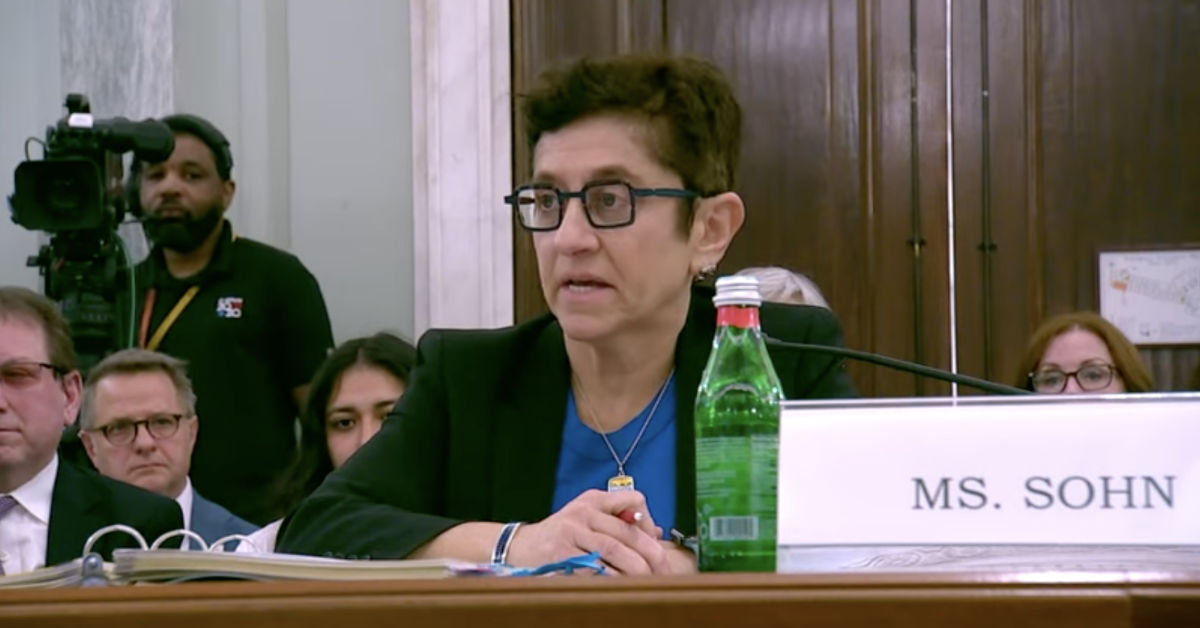
Former Federal Communications Commission (FCC) nominee Gigi Sohn this week criticized California’s settlement with Paramount over its acquisition of Warner Bros Discovery (WBD), saying the agreement relies too heavily on behavioral promises and does not require the combined company to give up any assets.
In a social media post on Tuesday, Sohn called the Paramount-WBD merger “terrible” and described the settlement as a “disaster,” while saying she would leave deeper analysis to others.
“Behavioral conditions rarely, if ever, work,” Sohn wrote. She said she was “shocked” that the settlement did not include any structural remedy, meaning Paramount and WBD would not be required to relinquish any properties.
Sohn, a long-time telecom and media policy advocate, said she had not commented sooner because she had been focused on litigation against the FCC over what she described as violations of statutory authority and the First Amendment.
Sohn argued that behavioral conditions require future enforcement and can weaken over time as political leadership and enforcement priorities change. She pointed to the settlement’s film output commitment, which requires 30 feature films annually for the first two years and 32 in later years, as an example of the kind of promise that must be monitored.
She was also critical of California Attorney General Rob Bonta, saying the way he settled the case gave her “little confidence” that he would be a strong enforcer of the agreement.
Sohn said layoffs are likely despite the settlement. She pointed to the $6 billion fund for laid-off workers as evidence that job losses are expected after the merger closes.
“I’ll give the merging parties some credit — at least they didn’t claim that the merger would lead to more jobs,” Sohn wrote.
Bonta’s office took an aggressive stance against Paramount’s proposed $111 billion acquisition of WBD when it filed its lawsuit in July, saying the deal violated federal antitrust laws by consolidating too much control over theatrical films, cable television and other media businesses within a single entertainment giant.
Since then, Bonta has faced pressure to settle the case from Hollywood unions and Paramount itself. Paramount threatened to relocate its office to a tax-friendly state like Georgia, Tennessee and Texas; executives were scouting for office space in some of those states, according to reports published over the past month.
Unions representing thousands of Hollywood workers were split on the matter, with some expressing concern that losing Paramount to another state would cost jobs primarily in Southern California, where Paramount and WBD have production facilities and administrative offices.
According to the New York Times, Bonta and California Governor Gavin Newsom were ultimately convinced that a settlement was in the best interest of the state, largely based on concerns that Paramount would pack up and head east. The deal already received sign-offs from federal regulators, including the FCC last week.
Paramount has agreed to some concessions in order to end the lawsuit: The company said it will install an independent board to oversee the editorial direction of WBD’s CNN and its own CBS News, and will commit to maintaining a free streaming service for the foreseeable future.
Sohn said those guarantees aren’t good enough, because Paramount’s board will ultimately select the ombudsmen for CNN and CBS News. By allowing Paramount to appoint the editorial board members, Sohn expressed concern that the board will ultimately be influenced by the executives whom they are meant to check.
“This condition gives me hives,” Sohn wrote.