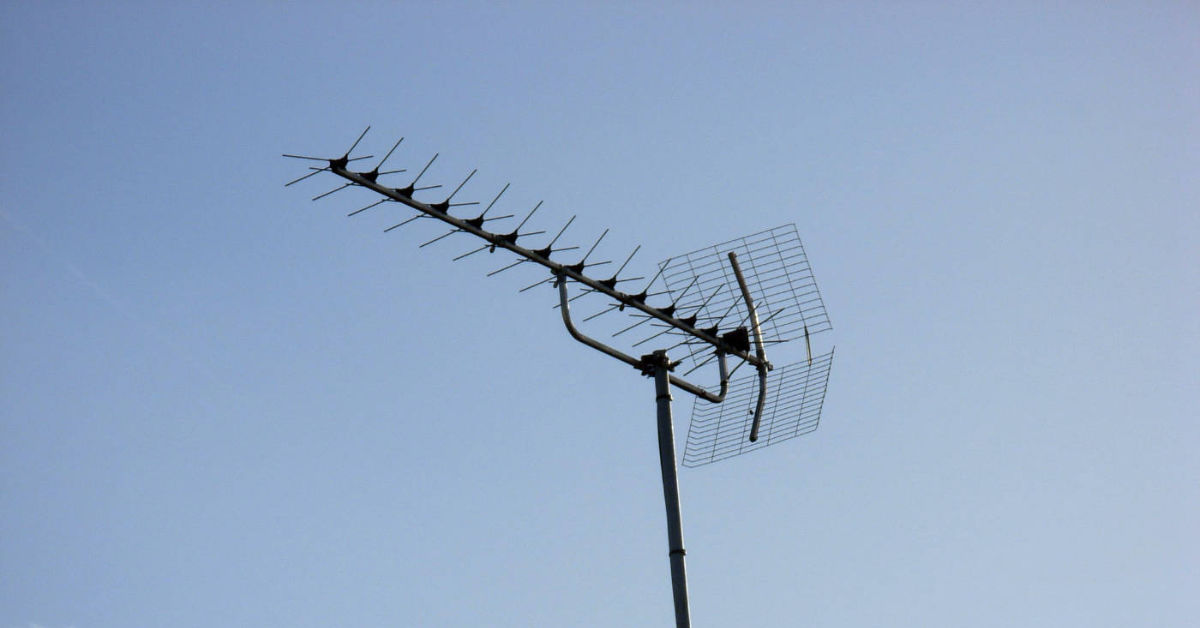
An organization representing low-power television (LPTV) broadcasters continues to urge the Federal Communications Commission (FCC) to exempt smaller television stations from any future mandate involving the transition of the country’s TV broadcast standard from ATSC 1.0 to the newer standard called NextGen TV.
In a letter submitted to the FCC last week and made public on October 30, the LPTV Broadcasters Association (LPTVBA) said the FCC should allow low-power television, Class A and translator stations to determine independently when to adopt newer broadcasting technologies, warning that a mandatory transition could threaten the financial viability of smaller operators.
The filing followed an October 22 meeting between Sinclair Senior Vice President of Global Public Policy and Communications Patrick McFadden and FCC officials, including representatives from Chairman Brendan Carr’s office and the agency’s Media Bureau.


According to a subsequent disclosure, McFadden urged the FCC to accelerate the transition to ATSC 3.0 by establishing an organized timetable for shutting down ATSC 1.0 transmissions.
Sinclair argues that a coordinated transition would allow broadcasters to take greater advantage of ATSC 3.0 capabilities, including improved picture and audio quality, better reception, interactive services and advanced emergency alerts. The broadcaster also cited the Broadcast Positioning System, a technology that could provide positioning, navigation and timing services through terrestrial television transmissions.
The National Association of Broadcasters (NAB) has separately proposed a two-phase transition requiring full-power stations in the nation’s 55 largest television markets to complete their conversions by February 2028, with remaining full-power and Class A stations following by February 2030.
Under the NAB proposal, low-power television and translator stations would not face mandatory conversion deadlines.
The LPTVBA supports that exemption but argues Class A stations should also be excluded, despite their inclusion in the NAB’s proposed timetable. In its letter to the FCC last week, the organization said Class A stations operate under different economic conditions than full-power broadcasters and should retain the ability to choose their transmission standards.

“LPTVBA is strongly opposed to any mandate for translators, LPTV, or Class A stations,” the organization wrote.
The association, led by Chairman and Founder Frank Copsidas, said many low-power broadcasters operate as small businesses serving rural communities, specialized audiences and geographic areas that may receive limited service from larger television stations. Requiring those stations to replace transmission equipment could impose substantial costs that some operators would be unable to afford, potentially resulting in station closures and reduced access to free over-the-air TV.
The association also raised concerns about television viewers who continue using receivers that support ATSC 1.0 but cannot decode ATSC 3.0 signals without additional equipment: Citing industry estimates, the organization claimed approximately 85 percent to 90 percent of television viewers do not currently have access to ATSC 3.0-compatible receivers.
Keeping low-power stations on ATSC 1.0, will preserve free television service for those households even if full-power broadcasters eventually discontinue the older transmission standard, the organization said.
The LPTVBA said it supports ATSC 1.0, NextGen TV and alternative technologies such as 5G Broadcast, but believes individual licensees should determine which standard best serves their communities. The association urged the FCC to limit any mandatory ATSC 3.0 conversion requirements to full-power television stations, leaving low-power, Class A and translator operators free to continue using existing technology.
As of early November, the FCC is still considering, but has not required, a transition from the current broadcast standard to NextGen TV. Broadcasters have advocated for a hard-switch from one standard to another, citing enhanced video signal delivery, hyper-local advertising and emergency message functions and the ability to repurpose some spectrum currently reserved for video use, which could allow broadcasters to lease bandwidth for wireless phone connections, GPS applications and other uses.
Opponents say a mandatory transition will cause chaos, requiring Americans to purchase new TVs or expensive converter boxes, depriving viewers in broadband deserves of the ability to regularly receive encrypted channels and allowing broadcasters to reallocate spectrum that is intended for broadcast TV use on an almost-exclusive basis.
More Stories
- SiliconDust: Broadcasters already know about NextGen TV emergency alert limits
- NAB says SiliconDust’s concerns about scheduled EAS test are overblown
- SiliconDust urges NextGen TV stations to drop encryption during EAS test
- Pearl TV claims “major progress” on NextGen TV affordability, but announcement light on details
- ATSC advances Broadcast-to-Everything technology with new Candidate Standard
- LPTV group wants FCC to green-light 5G broadcasting