

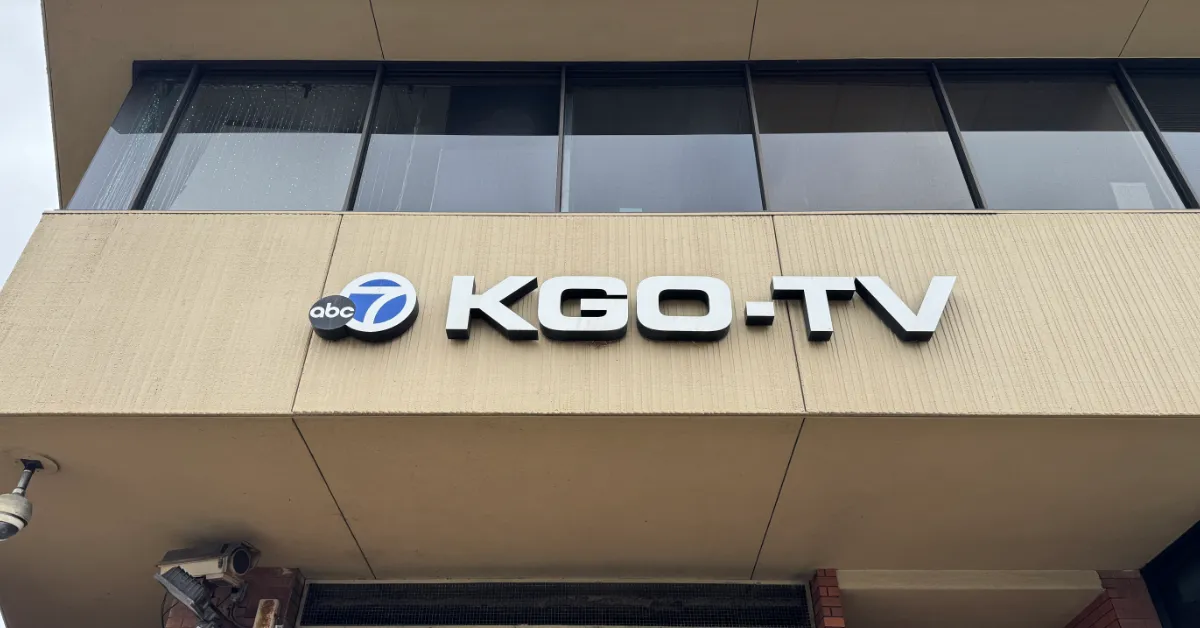
A Trump-appointed Supreme Court justice has joined a growing group of conservatives who have raised concerns about the Federal Communications Commission’s (FCC) ongoing probes against the Walt Disney Company and its ABC broadcast network as politically-motivated.
On Monday, the Supreme Court held, in a 6-3 ruling, that President Donald Trump and future presidents may unilaterally remove officials at federal agencies like the FCC, the Federal Trade Commission (FTC) and the U.S. Securities and Exchange Commission (SEC), effectively overturning a century-old precedent that was meant to limit the ability of the Executive Office to act in that manner.
The overall ruling was rooted in Trump’s decision to fire FTC Commissioner Rebecca Slaughter without cause. Slaughter challenged the dismissal, citing the 1930s-era case of Humphrey’s Executor v. United States, which reigned in the president’s ability to fire certain officials.
In a concurring opinion, Justice Neil Gorsuch wrote that Trump and future presidents “must have the ability to remove principle officers who exercise executive powers in his name” in order to fulfill certain constitutional duties.
But Gorsuch also said he was fully aware of the implications that power will have in the future because independent agencies have been delegated vast law enforcement, legislative and judicial powers by Congress over time, and allowing the president to terminate officials who fail to follow his line of thinking effectively allows him to exercise those same abilities by proxy.
Perhaps nothing illustrates this best than how FCC Chairman Brendan Carr has run his agency since being appointed by Trump last year. After Trump cancelled the federal government’s diversity, equity and inclusiveness (DEI) offices and practices, Carr began sending inquiries to regulated media companies about their own DEI behaviors. Last month, the FCC ordered Disney to renew its eight broadcast licenses after determining ABC failed to fully comply with its investigation.
When Trump criticized late night comedians for making fun of him, Carr wasted no chance to threaten late night comedy programs like NBC’s “Saturday Night Live” and ABC’s “Jimmy Kimmel Live,” the latter of which was placed on a one-week hiatus after Carr encouraged ABC affiliates to pre-empt the show.
And when Trump opined that Nexstar Media Group should be allowed to acquire TEGNA (after earlier criticizing media mergers between major broadcasters as furthering the effects of the “fake news” industry), Carr said his agency would bless the deal and ensure it moved forward.
Gorsuch said his concurrence with the majority’s decision was more procedural than anything — a view at how the law must be applied as written, rather than how it should be applied given recent developments. But he also nodded toward Trump’s weaponization of his authority as proof that the order will cause more problems in the near future than it resolves.
“As we’ve seen, these agencies were never truly independent from politics or even the influence of the President’s appointment powers,” Gorsuch wrote. “But the leadership of these new agencies at least enjoyed protection against at-will presidential removal.”
The order issued on Monday effectively erodes that protection, which means agency heads may now be used as puppets to fulfill certain political wish lists, with the president holding the strings. Even if a company manages to successfully fight one agency (say, the FCC), the president can continue trying until they fail (by bringing an FTC enforcement action or making a similar move).
“It would be one thing if today’s decision afforded the White House more control over the airwaves, or financial markets, or energy — but presidents will now enjoy waxing authority over all these areas and more,” Gorsuch warned. “A business out of favor with the party in control of the White House might be able to stave off an FCC investigation, but can it survive a subsequent FTC ruling declaring unlawful one of its long-standing trade practices?”
Gorsuch offers few remedies to that problem, which appears less hypothetical as time goes on. Congress can reel in some of the power it has delegated to independent agencies over time, and the Supreme Court may rule on future matters by looking to other parts of the Constitution that weren’t in question in this particular case, he suggested.
“We have, then, no shortage of tools,” Gorsuch quipped. “The only real question is whether we will use them.”