

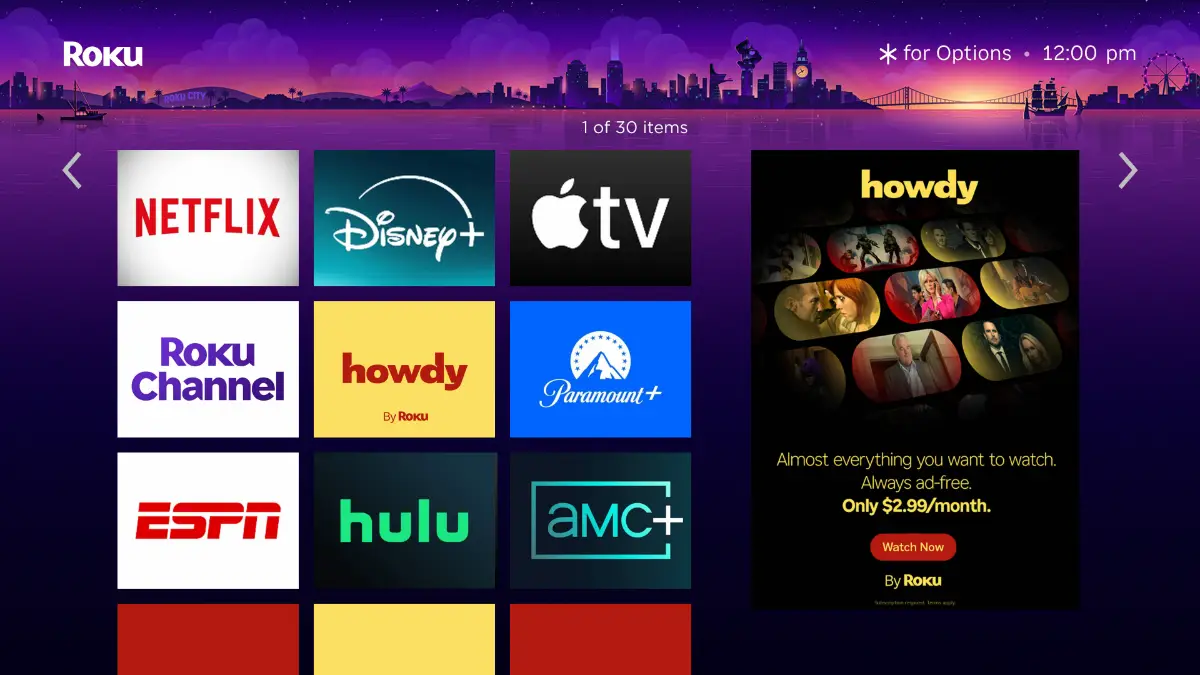
Advertisers can improve the overall performance of their connected television (CTV) campaigns by purchasing home screen inventory in addition to other formats, according to a new report released by Omnicom this week.
The report, conducted in partnership with Roku, examined how consumers interact with advertising when they’re looking for new things to watch across apps on CTV platforms. Researchers surveyed and measured exposure among 900 U.S. streaming viewers, generating more than 2,100 ad exposures across entertainment, automotive and food-and-beverage brands.
According to the report, nearly half of streaming sessions begin with viewers browsing for content, while 48 percent of streamers browse even when they already know what they intend to watch. Gen Z viewers spend the most time browsing and were found to be the most receptive audience for home screen advertising.
Researchers found strong acceptance of home screen ads, with 89 percent of Gen Z viewers and more than 80 percent of most other demographic groups saying they were somewhat or very open to seeing advertising on streaming television home screens.
The study determined home screen advertising alone can drive meaningful brand outcomes: For entertainment brands, home screen ads increased search intent by 11 percentage points. New-to-market brands experienced an 11-point increase in purchase intent after exposure to home screen advertising, while established brands saw aided ad recall increase by 14 points.
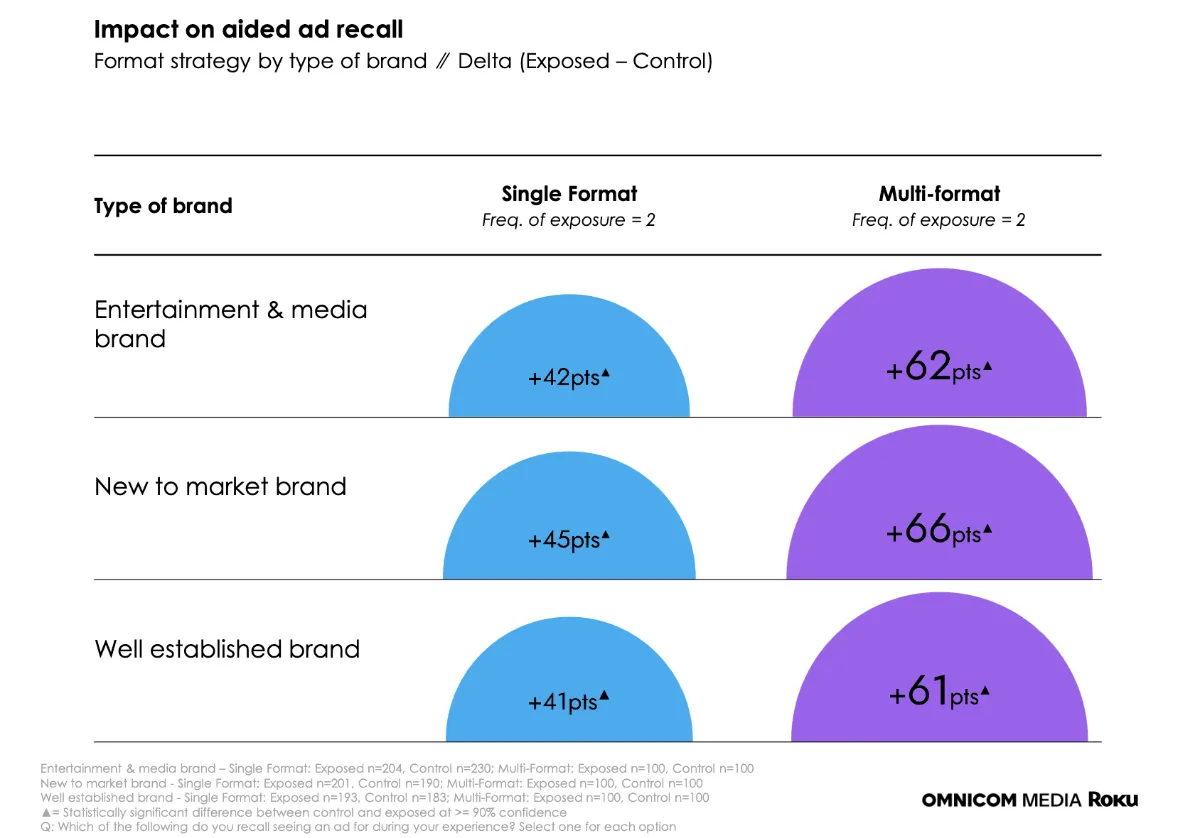
The strongest results came when home screen advertising was paired with traditional video spots: Across all brand categories tested, campaigns using both formats delivered substantially higher aided ad recall than campaigns relying on a single format. Entertainment brands recorded a 62-point lift in aided recall with a multi-format approach, compared with a 42-point lift from single-format campaigns. Similar gains were observed for new and established brands.
The combined strategy also generated stronger full-funnel performance, Omnicom and Roku noted. Multi-format campaigns produced a 15-point increase in aided awareness, compared with a 5-point lift from single-format advertising. Purchase intent rose 14 points with combined campaigns versus 8 points with a single format. Search intent increased 12 points, compared with 7 points for single-format executions.
The overall conclusion of the report is that home screen advertising works as a complement to streaming video spots, rather than a replacement for them. Still, video ads remained the strongest driver of awareness, producing a 32-point lift in unaided ad recall and a 12-point increase in aided awareness. But mixing in home screen placements improved favorability and lower-funnel metrics while reducing the cost to generate search intent by nearly 40 percent.
The full report is available to download for free here.