

Hearst Television and Dish Network have reached a new multi-year agreement that will keep local channels owned by the broadcaster on the satellite TV service for a while longer, a spokesperson confirmed to The Desk late Wednesday evening.
Additional details, including terms of the deal, were not immediately available.
Earlier in the week, Hearst Television said its contractual arrangement with Dish Network was scheduled to end on August 19, after which the satellite provider will lose the legal right to offer its local network-affiliated and independent stations until a new agreement is reached.

The now-avoided dispute had the potential to impact local TV viewers in key markets across the country, including Boston, Baltimore, Fort Myers, Albuquerque, Sacramento, Kansas City, Oklahoma City and Pittsburgh, among other places.
“Hearst has a long history of successfully concluding carriage agreements with cable companies and other satellite distributors with no disruption of service to subscribers,” a spokesperson for Hearst said in a statement.
That history doesn’t necessarily extend to Dish Network, which was forced to drop Hearst-owned stations in 2017 and 2023 after a similar carriage agreement between the two companies expired. The disputes were usually settled without financial terms disclosed, but not before viewers were left without local stations for several weeks.
The avoided dispute would have been especially problematic for viewers in some markets where the local CBS affiliation moved from a Nexstar-owned or operated station to one owned by Hearst earlier this month. That includes Albuquerque, where KOAT (Channel 7) is now airing ABC and CBS programming after KRQE (Channel 13) dropped its CBS affiliation.
The following Hearst-owned channels were at risk of being dropped by Dish before the companies reached a new agreement:
- KCCI (Channel 8, CBS) in Des Moines, Iowa
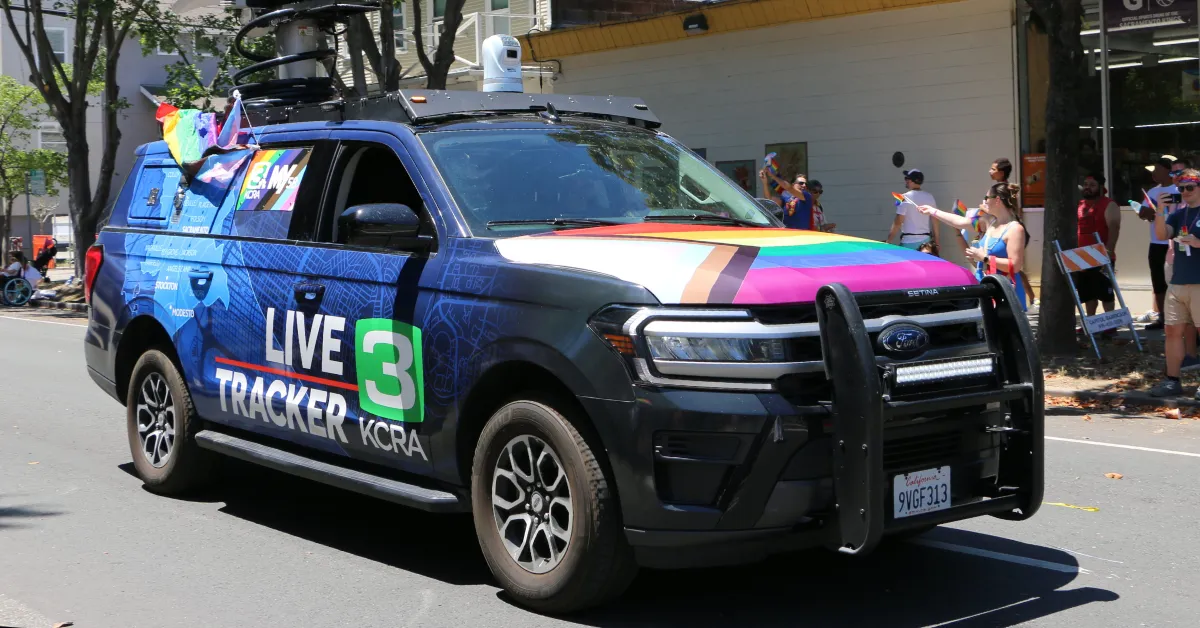
- KCRA (Channel 3, NBC) in Sacramento, California
- KCWE (Channel 29, CW) in Kansas City, Missouri
- KETV (Channel 7, ABC) in Omaha, Nebraska
- KHBS (Channel 40, ABC) in Fort Smith, Arkansas
- KHOG (Channel 29, ABC) in Fayetteville, Arkansas
- KMBC (Channel 9, ABC) in Kansas City, Missouri
- KOAT (Channel 7, ABC & CBS) in Albuquerque, New Mexico
- KOCO (Channel 5, ABC) in Oklahoma City, Oklahoma
- KQCA (Channel 58, CW) in Sacramento, California
- KSBW (Channel 8, NBC) in Salinas-Monterey, California
- WAPT (Channel 16, ABC & CBS) in Jackson, Mississippi
- WBAL (Channel 11, NBC) in Baltimore, Maryland
- WBBH (Channel 20, NBC) in Fort Myers, Florida
- WCVB (Channel 5, ABC) in Boston, Massachusetts
- WCWG (Channel 20, CW) in Lexington, North Carolina
- WDSU (Channel 6, NBC) in New Orleans, Louisiana
- WESH (Channel 2, NBC) in Daytona Beach, Florida
- WGAL (Channel 8, NBC) in Lancaster, Pennsylvania
- WISN (Channel 12, ABC) in Milwaukee, Wisconsin
- WJCL (Channel 22, ABC) in Savannah, Georgia
- WKCF (Channel 18, CW) in Orlando, Florida
- WLKY (Channel 32, CBS) in Louisville, Kentucky
- WLWT (Channel 5, NBC) in Cincinnati, Ohio
- WMOR (Channel 32) in Tampa Bay, Florida
- WMTW (Channel 8, ABC) in Portland, Maine
- WMUR (Channel 9, ABC) in Manchester, New Hampshire
- WNNE (Channel 31, The CW) in Burlington, Vermont
- WPBF (Channel 25, ABC) in West Palm Beach, Florida
- WPTZ (Channel 5, NBC) in Plattsburgh, New York
- WPXT (Channel 51, CW) in Portland, Maine
- WTAE (Channel 4, ABC) in Pittsburgh, Pennsylvania
- WVTM (Channel 13, NBC & CBS) in Birmingham, Alabama
- WXII (Channel 12, NBC) in Winston-Salem, North Carolina
- WYFF (Channel 4, NBC & CBS) in Greenville, South Carolina
Carriage disputes usually involve broadcasters demanding more money from pay TV providers for the legal right to offer their channels on subscription platforms. This situation is no different, with Dish Network accusing Hearst of demanding a significant increase in fees, tens of millions of dollars more, for the same channels you receive today,” according to a note sent to its subscribers on Wednesday and viewed by The Desk.
“We believe these proposed increases are too high and could ultimately lead to higher bills for customers,” Dish Network said in its earlier statement. “That’s why we’re working hard to reach a fair agreement that keeps your service affordable while minimizing the risk of channel disruptions. Discussions are ongoing, and we remain committed to protecting both your viewing experience and your wallet.”
During programming disputes, most viewers are still be able to receive the missing stations by using a conventional over-the-air antenna plugged into the back of their TV sets.
In rural areas where TV signals are hard to come by but broadband Internet access is available, Hearst-owned channels are also offered on streaming platforms like DIRECTV, Fubo, Hulu with Live TV and YouTube TV.
—
Editor’s note: This story replaces an earlier article that was based on warning messages sent by Hearst Television and Dish Network to viewers prior to the new agreement.