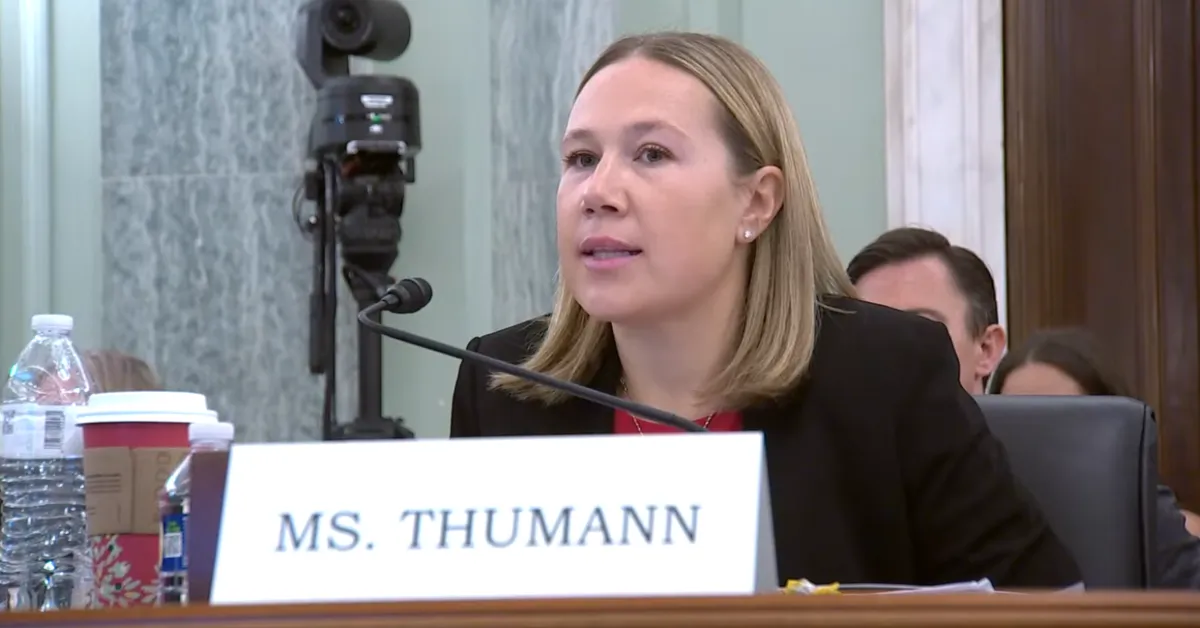
The Senate Commerce Committee will vote next week to confirm a current member of Federal Communication Commission (FCC) Chairman Brendan Carr’s staff to serve a full term as a sitting commissioner within the agency.
On Thursday, Senator Ted Cruz of Texas scheduled the vote for Wednesday, November 18, about a week after the nominee, Danielle Thumann Severs, testified before the same body on a number of matters, including Carr’s politically-motivated attacks against broadcasters and their news organizations.
Cruz, a Republican, scheduled the vote while the Senate Commerce Committee and the broader chamber are under Republican leadership. An election held earlier this month set the stage for Democrats to take control of both chambers of Congress in January.

Some Democratic lawmakers said bringing Thumann Severs’ nomination to a full vote before the Senate Commerce Committee was inappropriate, an attempt to push through a Republican nominee and give the FCC a super-majority before the new Congress takes shape in a few weeks. But confirming a nominee made by a sitting president is a long-standing practice that typically garners support when Democrats are in power and Republicans are not.
During her hearing last week, Thumann Severs pledged to follow precedent and existing law when asked how she intends to vote on matters concerning broadcast TV license transfers and other regulatory matters.
The question, which was posed by Cruz during the hearing, matters, given Carr’s history of carrying out orders demanded by President Donald Trump, who lacks direct oversight of the FCC.
Cruz said the FCC’s significant regulatory powers created opportunities for political interference, citing past attempts to challenge broadcast licenses over news coverage. Last year, he criticized Carr for pressuring ABC to suspend its late night host Jimmy Kimmel over a politically-tinged monologue following the assassination of conservative activist Charlie Kirk, and has denounced efforts to punish broadcasters for engaging in free speech. (In addition to his work as a senator, Cruz is a podcaster, and his criticism of Carr was often delivered on his show.)
At the hearing last week, Cruz was equally critical of politically-motivated investigations during the Biden administration, when the FCC was under the oversight of Chairwoman Jessica Rosenworcel. Then, the FCC agreed to receive public comment on opposition to the renewal of a broadcast TV license by a Fox-owned station, following the company’s settlement with a voting machine manufacturer on comments aired by a co-owned but otherwise unrelated cable network. Rosenworcel dismissed the challenge about a year later, and the station’s license was renewed.
“The First Amendment places important limits on the government’s ability to regulate speech,” Cruz said.
Thumann Severs is filling a seat vacated by former FCC Commissioner Nathan Simington, also a Republican, shortly after Carr’s appointment in 2025. Some groups have urged the Senate to hold off on a confirmation vote until Trump also re-nominates Democratic FCC Commissioner Anna Gomez, whose term expired over the summer.
Under the law, the FCC is not allowed to have more than three commissioners from the same political party. Trump can renominate Gomez to her role, or he can replace her with someone not affiliated with the Republican Party. He does not have to nominate a Democrat. Gomez is allowed to remain at the FCC in a commissioner role until she is renominated or replaced.