

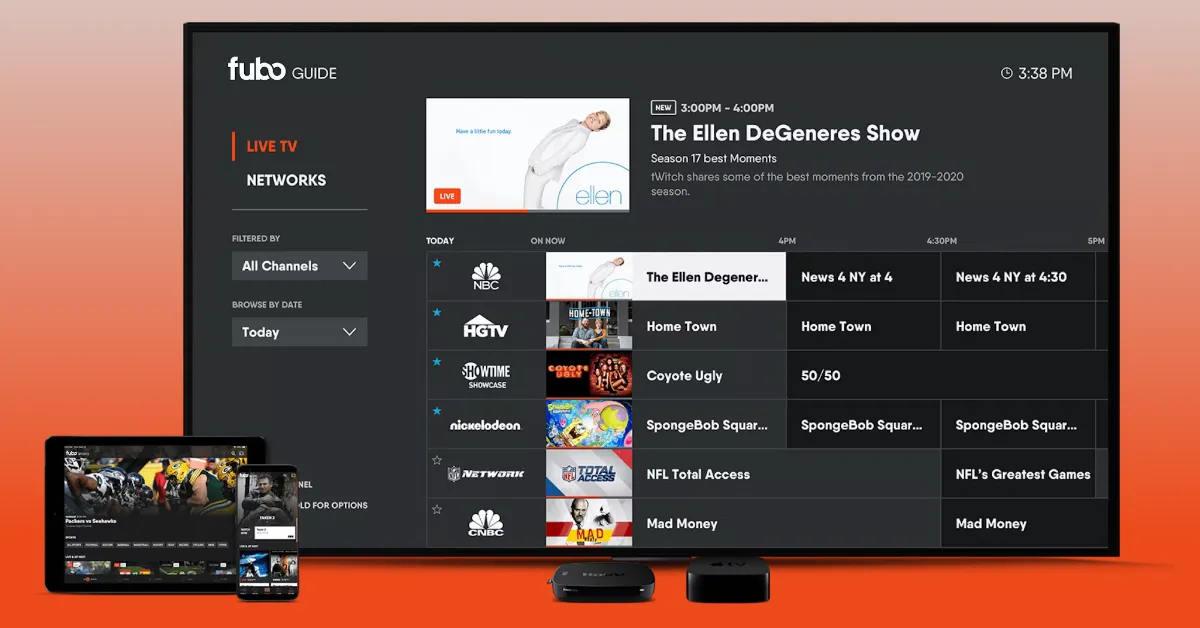
Fubo has long been associated with its mission of delivering sports-inclusive broadcast and cable channels to fans who prefer to stream live events. Now, the company is evolving to become yet another reseller of third party streaming subscriptions.
On Tuesday, Fubo said it will now allow customers to purchase standalone subscriptions to NBA League Pass, Paramount Plus with Showtime and Diamond Sports Group’s FanDuel Sports Network, even if they do not purchase a subscription to Fubo’s core cable-like service.
In a press release sent to reporters, Fubo said the move was intended to give customers greater flexibility in how they access and watch “select live and on-demand content.” It comes several months after Fubo filed a lawsuit against two of its programming partners — the Walt Disney Company and Fox Corporation — over plans to launch their own subscription-based streaming service with access to sports-inclusive plans beyond the cable bundle.
The launch of the Fubo subscription marketplace comes at a time when other pay TV providers are looking at different ways to offer TV fans access to direct-to-consumer streaming services that are owned by the parent companies of the TV networks. Last year, Charter inked a novel distribution agreement with Disney that allows subscribers of most Spectrum TV plans to get free access to the ad-lite tiers of Disney Plus and Hulu, while customers with ESPN in their packages also get ESPN Plus. Charter has similar deals in place with Paramount, Comcast’s NBC Universal, AMC Networks, Allen Media Group and others; DirecTV is following in the same footsteps.
Fubo’s strategy is similar, but not exactly the same. Customers who purchase Fubo’s core TV offering, which starts at $80 per month and goes up from there, will get access to Paramount-owned broadcast and cable channels, including their local CBS station or affiliate in most areas. But they don’t automatically get access to Paramount Plus Essentials — the ad-lite tier of Paramount Plus — the way Charter’s customers do, nor do they get free access to NBA League Pass.
As described, Fubo’s third-party subscription platform — which the company describes as a “Super Aggregation strategy” — appears similar to offerings from YouTube, Roku and Amazon, each of which sell subscriptions to third party streaming video services. (All three of those platforms sell Paramount Plus with Showtime and NBA League Pass.)
One area where Fubo’s offering is unique in that customers who purchase Paramount Plus with Showtime, NBA League Pass or FanDuel Sports Network through the platform will also get access to “Fubo Free,” the company’s free, ad-supported streaming TV (FAST) platform. Fubo FAST includes more than 200 linear content streams, which are available without a subscription. Customers do not need to purchase a third-party streaming service to get access to Fubo FAST, as the platform is also available to current and lapsed subscribers of Fubo’s core service.
In a statement on Tuesday, Fubo CEO David Gandler said the offering of third-party subscriptions within the Fubo platform, but independent of the company’s cable-like service, is meant to give TV fans more “flexible streaming options that let them subscribe to only the content they want to watch.”
Gandler and other Fubo executives have argued the same in the company’s ongoing lawsuit against Fox, Disney and Warner Bros Discovery (WBD), which said the broadcast trio’s plans to launch Venu Sports violate federal antitrust law.
Related: Fubo CEO said company would go bankrupt if Venu Sports launched
Earlier this year, the broadcasters set out to develop and launch Venu Sports as a subscription streaming product that delivered sports-inclusive broadcast and cable channels like Fox, ABC, ESPN, TBS, TNT and Tru TV to TV and sports fans. As described, Venu Sports was not expected to carry non-sports channels like CNN, FX, the Disney Channel and Fox News, which the broadcasters typically force on cable, satellite and streaming-cable like service — like Fubo — as a condition of carrying sports networks.
Fubo argued Venu Sports received more-favorable treatment from the broadcasters than the carriage terms they imposed on Fubo and other services. The company received the backing of executives at Dish Network and DirecTV, who filed affidavits arguing much of the same, but are not actually parties to the lawsuit. The case remains pending in federal court, with a jury trial scheduled for late next year; Fubo was successful in getting a temporary injunction that effectively blocks Venu Sports from launching until the case concludes.
The launch of the subscription streaming marketplace could give Fubo further ammunition in its ongoing lawsuit against the Venu Sports backers. When the case was opened earlier this year, Fubo didn’t sell third-party streaming subscriptions; now, it does. Moving forward, Fubo can now argue that it has the capability of selling subscriptions to Venu Sports and any other standalone streaming sports product through its marketplace, independent of a core cable programming bundle, and that the only thing standing in its way is the opposition of its broadcast partners.
