


Broadcasters and cable network operators are expected to earn less from distribution fees charged to pay television providers through the rest of the decades, as ongoing cord-cutting and consumer shifts toward on-demand streaming platforms chip away at that revenue, according to a new report from S&P Global Market Intelligence.
The report released this week forecasts gross retransmission and virtual subscription revenue to reach $15.4 billion by the end of this year, a figure that will rise to $17.5 billion by 2030 as broadcasters and cable network owners charge higher fees for continued distribution of their channels.
That trend has accelerated cord-cutting over the past decade, as consumers move toward cheaper streaming services in order to avoid higher bills. As channel owners charge more for their programming, subscriber bills continue to climb, which convinces even more pay TV customers to cancel.
Local TV station owners that are affiliated with major broadcast networks are among some of the most-aggressive businesses that have charged more for their channels over the past few years. They’re also the most-likely to be impacted by the trend, since they pay the owners of networks like ABC, CBS, Fox and NBC for the privilege of distributing their national news, sports and entertainment programming.
When factoring in those “reverse compensation” payments to broadcast network owners, S&P Global Intelligence says overall revenue from distribution fees will actually notch downward slightly to $7.27 billion by the end of the year, down 1 percent compared to the prior year, before rebounding slightly to $7.4 billion by 2030.
The key takeaway: While broadcasters and cable network are insistent on charging more for their channels, they’re not pocketing substantially more money at the end of the day.
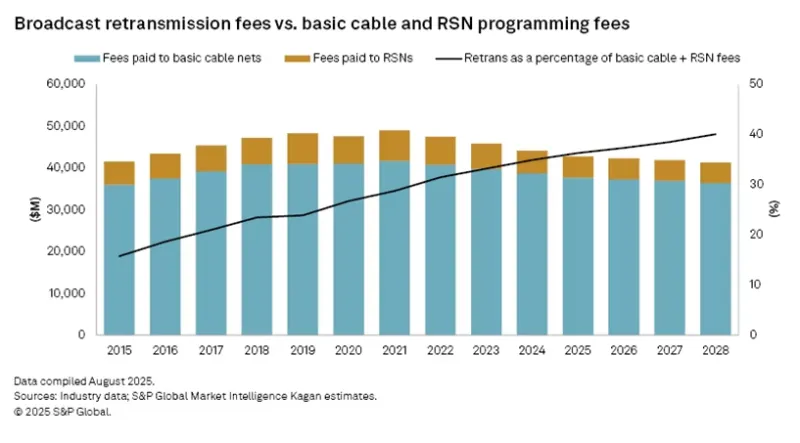
The average monthly retransmission rate per subscriber for Big Four owned-and-operated and affiliate stations is projected to rise to $4.83 in 2025, up 7 percent from $4.52 in 2024. Across all stations receiving retransmission fees, the average rate is expected to climb 6 percent next year.
While broadcasters continue to have a higher slice of the viewership pie, S&P’s Kagan Research says cable, satellite and streaming cable-like services will wind up shelling out more money for sports rights — some of the last programming that Americans tend to watch at the same time.
By 2028, the amount of money pay TV providers will pay for sports rights will climb to nearly $16.6 billion, S&P says. That amount is 40 percent of the costs that cable, satellite and streaming cable-like services pay to channel owners for the privilege of distributing their programming.
—
Read more: