

Key Points

- Streamers are turning to YouTube when they can’t find things to watch on other apps, according to a new consumer survey.
- One big reason: YouTube has a steady stream of fresh content each day, while traditional streaming platforms have to rely on older shows and movies.
- Streaming apps backed by traditional companies can more-evenly compete by tapping into the mood of a viewer and surfacing familiar things to watch.
Despite efforts by major media companies to bulk up their direct-to-consumer online platforms with more television shows and movies over time, most American consumers feel they offer too much content and very little of what they’d actually like to watch — and many are turning to YouTube instead.
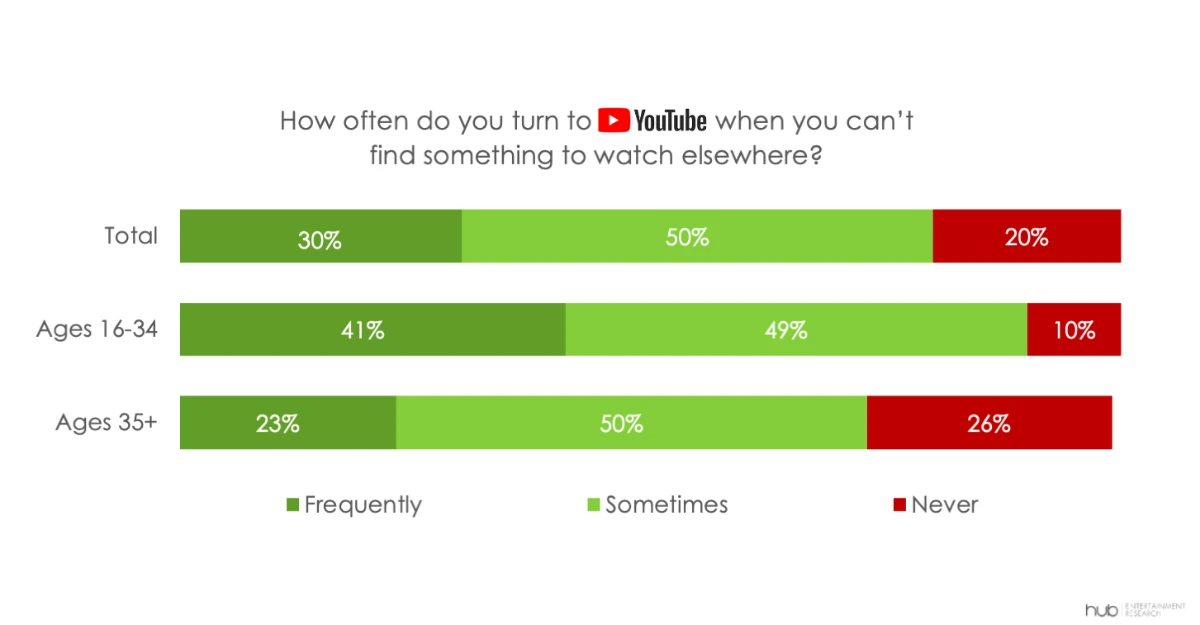
That is one of the key takeaways from a new consumer study released by Hub Entertainment Research on Monday, which found nearly 80 percent of streamers surveyed open the YouTube app on their smart devices when they can’t find something to watch on another service.
Unsurprisingly, the trend is higher among young streamers between the ages of 16 and 34 years old, with 90 percent saying they “frequently” or “sometimes” turn to YouTube when they can’t find a show or movie to watch on another service. The trend is lower among Americans over the age of 35, but it is still significant: 73 percent said they find solace in the YouTube app for their entertainment needs when other apps can’t provide it in an instant.

One of the biggest problems faced by traditional media companies is one that YouTube doesn’t have: Services like Netflix and Amazon’s Prime Video must license content from third parties for their services, acquire content libraries or otherwise develop shows and movies on their own. Other services, like those owned by Disney, have content libraries that stretch back decades — but streamers sometimes want fresh things to watch.
YouTube has none of those problems: The company doesn’t produce any of its own videos. Instead, it relies on content produced by other companies, including major broadcasters, film studios and independent creators. YouTube says there are nearly 20 million videos uploaded to the platform each day — which means the app never has a shortage of new things to watch.
YouTube has also perfected its algorithm over time, favoring personalization over everything else. As streamers watch more content on the platform, the algorithm becomes more in tune with what they like to watch — and it serves them more of it.
Other streamers, like Netflix and Warner Bros Discovery’s (WBD) HBO Max, have made investments in fine-tuning their content recommendation algorithms, but neither has near the same capacity of content uploaded on a daily basis as YouTube. And that may account for why streamers are turning to YouTube when other apps fail: There is always something new to watch.
“With so many choices, matching viewers to programs that fit their taste and mood continues to be one of the toughest tasks for TV providers,” Jason Platt Zolov, a senior consultant at Hub and the author of its most-recent study, said in a prepared statement.
Zolov said traditional streaming platforms can more-effectively compete against YouTube by zeroing in on a streamer’s mood at any given time, and then repurposing familiar favorites like classic TV shows and hit blockbuster films that are aligned with their tastes.
“Viewers love having tons of options and lean into old favorites as a way to keep watching until a new hit breaks through. Streamers that deliver a balance of those old gems with well-timed exclusive new content will breed the strongest loyalties from viewers,” Zolov said.
The full study, “Conquering Content,” is available to view by clicking or tapping here.
—
Editor’s note: An earlier version of this story contained an erroneous calculation of a survey response, based on The Desk’s own evaluation of the data. The figure was corrected Monday afternoon.