


Key Points

- FCC Chairman Brendan Carr defended aggressive oversight of broadcasters, saying renewed enforcement of public interest rules is necessary and not censorship.
- Democratic senators accused Carr of coercing networks over programming and transactions, raising First Amendment and independence concerns.
- Carr said the FCC is not fully independent of presidential authority, a claim disputed by fellow commissioners and lawmakers.
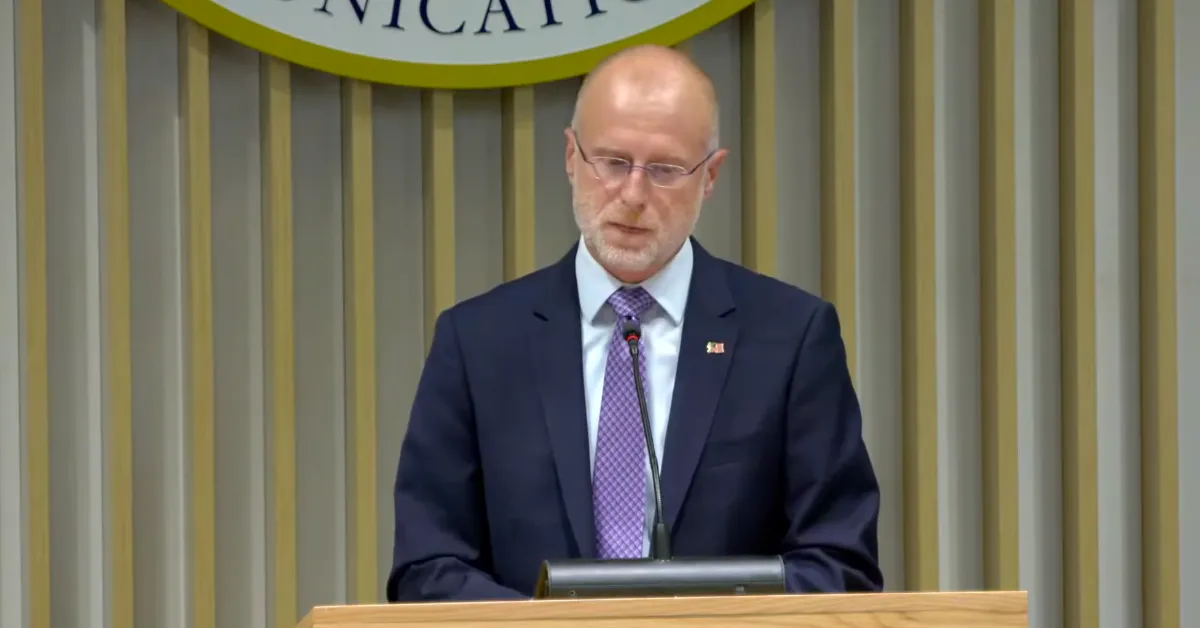
The Chairman of the Federal Communications Commission (FCC) on Wednesday defended his decision to troll broadcasters and other regulated sectors, saying his agency was not independent of undue influence from President Donald Trump and other members of his administration and that he was willing to swing the pendulum of regulation in the other direction after progressives challenged right-of-center news outlets during their time in power.
During a tense hearing before the Senate Commerce Committee, Chairman Brendan Carr was repeatedly accused of using the FCC’s ability to license local broadcast stations to exert undue influence over network programming and to demand that companies seeking approval for their business-related transactions wind down their diversity programs, among other things.
Senator Edward Markey of Massachusetts accused Carr of making “mafia threats” toward station owners in the wake of controversy surrounding “Jimmy Kimmel Live!,” after Nexstar and Sinclair temporarily pulled the ABC late-night show from some stations. Both broadcasters have pending business-related transactions that require FCC approval, and some of those plans were announced before Carr encouraged local ABC affiliates to pre-empt Kimmel’s program in mid-September.
Carr denied any coercion, saying decisions by station groups and Disney were made independent of his comments and affirming the agency’s right to regulate content on licensed TV stations for objectivity and fairness.
“If broadcasters understand, perhaps for the first time in years, that they’re going to be held accountable to the public interest, to the broadcast hoax rule, to the news distortion policy, I think that’s a good thing,” Carr told Markey, rejecting claims that his actions amounted to censorship.
He continued: “If you look at the evidence, the express statements by every single company involved — from Nexstar and Sinclair to Disney — as recently as last week is that they made these business decisions on their own.”
Senators Amy Klobuchar of Minnesota and Brian Schatz of Hawaii echoed concerns that Carr was overstepping the FCC’s authority and infringing on First Amendment protections. Klobuchar pointedly noted that Carr has launched investigations into every major broadcast network except Fox, while Schatz warned that regulatory pressure over content risks unconstitutional government interference.
Carr countered that previous commissions had allowed enforcement of the public interest standard to become dormant.
“I think the FCC has walked away from enforcing the public interest standard, and I don’t think that’s a good thing,” Carr told Klobuchar. “My position — and I think the Trump administration position — is that we should be enforcing those rules and policies.”
The hearing also exposed rare friction between Carr and the chair of the Senate committee, Republican Senator Ted Cruz of Texas who argued that the FCC’s public interest standard and its news distortion rule have outlived their usefulness and should be repealed by Congress. Cruz previously indicated he was willing to launch a bipartisan effort to enact new legislation aimed at eliminating the FCC’s ability to censor political speech.
“Democrat or Republican, we cannot have the government arbitrating truth or opinion,” Cruz said. “Government officials threatening adverse consequences for disfavored content is an unconstitutional coercion that chills protected speech.”
Carr agreed in principle that the standard should not be used to chill speech but pivoted to criticizing a Biden-era FCC decision that allowed a challenge to a Fox-owned station license to linger based on complaints about election-related programming. (Carr’s predecessor, Biden-appointed Jessica Rosenworcel, dismissed the petition earlier this year, saying the petition was politically-motivated.)
Beyond content disputes, Carr drew additional attention by asserting under questioning that the FCC is not an independent agency. Pressed by Senator Ben Ray Luján of New Mexico, Carr said the commission lacks formal independence because commissioners can be removed by the president. After that exchange, the word “independent” was removed from the FCC’s mission statement on its website, according to cached versions reviewed during the hearing.
“With the change in Administration earlier this year, the FCC’s website and materials required updating,” an FCC spokesperson said. “That work continues to ensure that they reflect the positions of the agency’s new leadership.”
Democratic Commissioner Anna Gomez disputed Carr’s characterization, saying the FCC is an independent agency and warning that broadcasters are increasingly fearful of airing content critical of the administration.
“We are hearing from broadcasters that they are afraid to air programming that is critical of this administration, because they’re afraid of being dragged before the FCC,” Gomez said.
Carr’s testimony comes as the FCC considers revisiting long-standing ownership rules, including caps on how many stations a single company can own, and as the Supreme Court weighs cases that could expand presidential authority over traditionally independent agencies.
Since becoming chair in January, Carr has opened or threatened multiple investigations involving radio and television broadcasters, revived debates over the public interest standard and signaled support for loosening ownership restrictions. His agenda, he said, is aimed at “empowering stations to meet their public interest obligations,” even as lawmakers from both parties question where enforcement ends and coercion begins.