


The Federal Communications Commission’s (FCC) lone Democratic commissioner has called on the agency to put a firm definition on what it means for a local television or radio broadcaster to serve in the “public interest.”
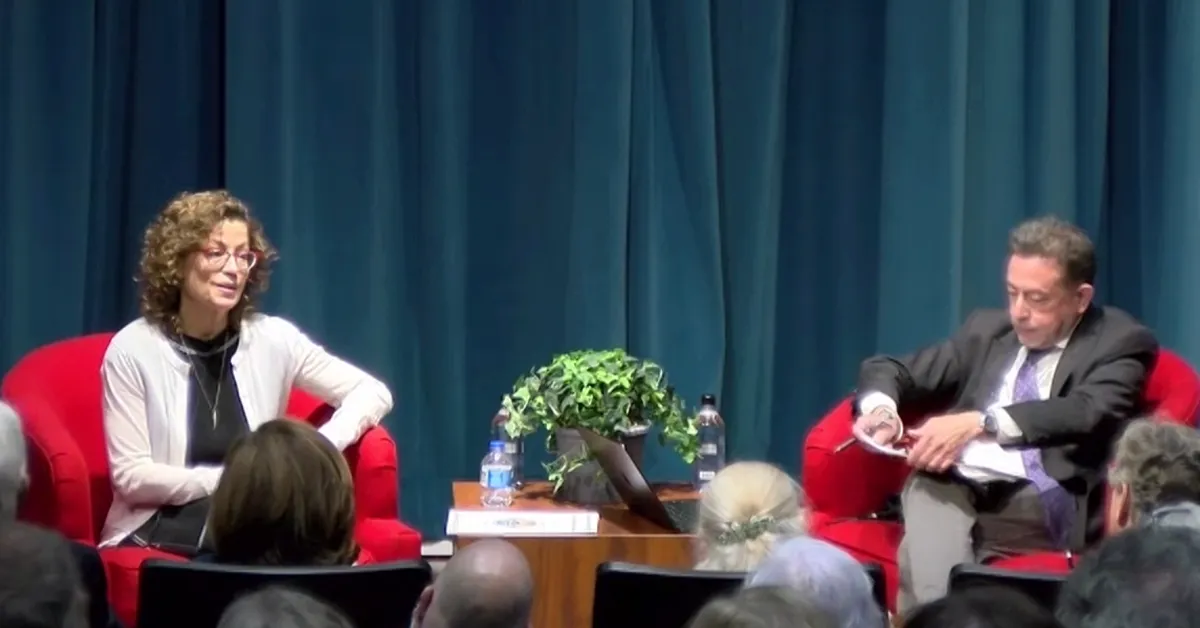
Speaking on Thursday at the University of Mississippi’s Jordan Center for Journalism Advocacy and Innovation, FCC Commissioner Anna Gomez said the agency requires local TV and radio stations to commit to certain public interest standards, though regulators have never definitively said what constitutes that type of service.
Historically, licensed radio and TV stations have pointed to news programming and community events as proof of service in the public interest. But in recent years, Gomez noted that some regulators have leveraged a broadcaster’s public interest obligation to censor certain political and social commentary.
Such was the case last month, when FCC Chairman Brendan Carr urged the owners of ABC-affiliated stations to pre-empt episodes of “Jimmy Kimmel Live!” because of the comedian’s critical remarks about President Donald Trump and his supporters during a monologue aired two days earlier.
Hours after Carr’s remarks, Nexstar Media Group and Sinclair, Inc. announced a blackout of Kimmel’s show on their local ABC affiliates. Both broadcasters have pending business deals that require FCC approval, but each said those deals did not play a factor in their decision to pull the show.
Disney, the parent company of ABC, put Kimmel’s program on a temporary hiatus based in part on the decision by Nexstar and Sinclair to block the show. The show returned the following week, and Nexstar and Sinclair allowed its affiliates to start airing the program a few days later.
In news interviews during and after the hiatus, Carr downplayed his influence in the matter, saying it was broadcasters who decided to pull the show based on their public interest obligations. He reiterated the point during the FCC’s open meeting on Tuesday, during which he said prior FCC administrators had failed to uphold the public interest requirement of local TV broadcasters.
“I think for several years or decades, the FCC has walked away from enforcing the public interest standard when it comes to local broadcasters,” Carr said. “I don’t think the FCC walking away from enforcing the public interest standard has been a good thing.”
Gomez agreed that broadcasters should be held to certain public interest obligations as a condition of being allowed to use publicly-held radio spectrum for their TV and radio broadcasts, but said a lack of a firm definition on what constitutes the “public interest” gave too much latitude for Carr and future FCC chairs to weaponize that requirement to satisfy their own political desires.
“I have called for the commission to initiate a rulemaking to define what it means by the public interest,” Gomez said on Thursday. “Otherwise, we’re just regulating against what we don’t like, and that is a direct violation of the First Amendment.”
The process of putting a definition to the public interest obligation starts with the FCC issuing a notice of proposed of rulemaking (NPRM), something the agency has yet to do. Even if it does, it is likely that Gomez will have differing views on the public interest standard from Carr and FCC Commissioner Olivia Trusty, who are both Republicans.
For now, the FCC maintains a slim Republican majority because of two vacancies. President Donald Trump has not nominated anyone to fill those vacancies; by law, he is only allowed to nominate one other Republican while Carr and Trusty are in office, though he can fill the second vacancy with someone who isn’t a registered Republican yet holds politically conservative views.
Even if Trump stacks the FCC in a way that favors right-of-center policies, Gomez said she is encouraged by those on both sides of the aisle who spoke out against Carr’s efforts to censor Kimmel when his show was put on hiatus. That gives her hope that, even if Trump fills the two vacancies with people aligned with conservative values, there will be adequate pushback by lawmakers and those in influential positions to ensure the FCC doesn’t turn into an agency of political censorship.
“It is a traditional conservative platform to protect freedom of speech, and there are a lot of very alarmed people out there now,” Gomez said. “Why? Because they fear it will come back to haunt them later.”
—
Read more:
- Lawmakers demand answers from Nexstar, Sinclair over Jimmy Kimmel suspension
- FCC Chairman Carr to testify on Jimmy Kimmel suspension
- ABC pulls “Jimmy Kimmel Live” amid threats from FCC chairman
- Law firm files FCC complaint against TV station over Kimmel monologue
- Trump urges FCC to pull TV station licenses over negative coverage
- Broadcasters who criticized Jimmy Kimmel have deals pending before FCC