Key Points

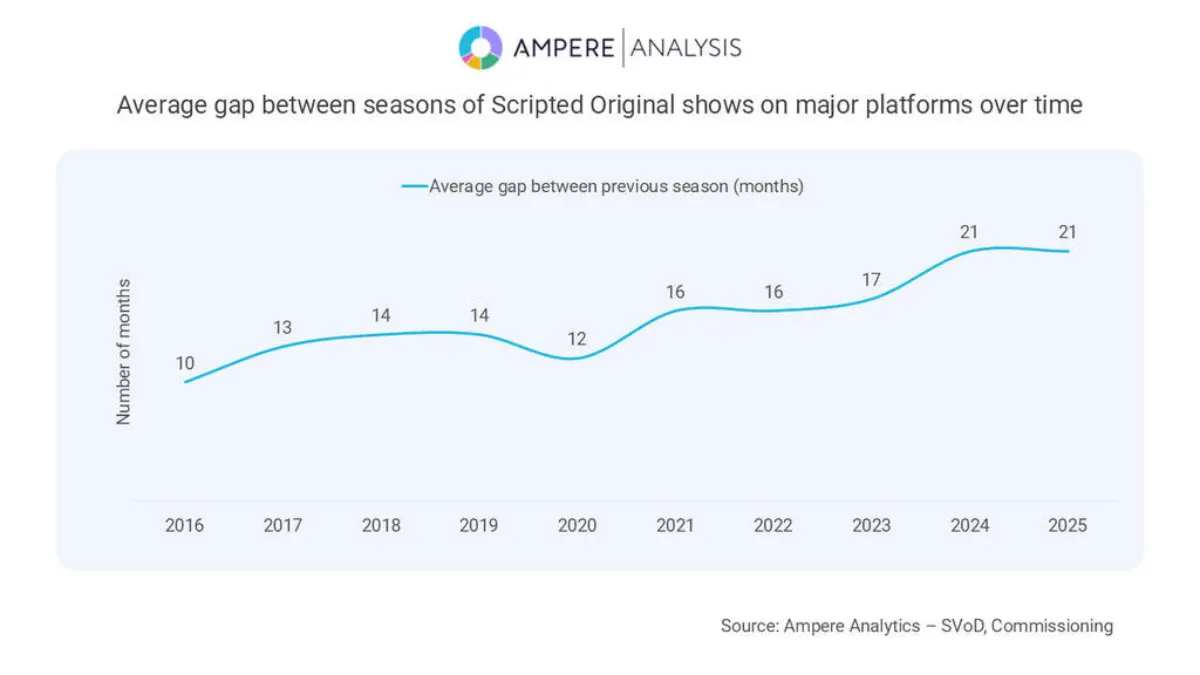
- The average gap between seasons of scripted streaming originals grew from 12 months in 2020 to 21 months in 2025, according to new research from Ampere Analysis.
- Major streaming platforms released 599 scripted original seasons in 2022, more than the combined total from 2015 through 2019.
- Longer waits could increase churn risk, with 54% of U.S. respondents saying they may cancel services they do not use often, Ampere noted.
Streaming audiences are waiting significantly longer for the return of scripted original series, with the average gap between seasons nearly doubling over the past five years, according to new research released this week by Ampere Analysis.
According to a new report released by the measurement firm on Wednesday, the average wait between seasons of scripted streaming originals increased from 12 months in 2020 to 21 months in 2025, reflecting the growing complexity and scale of high-budget productions commissioned by major streaming platforms.
Despite the longer delays, viewers have remained largely loyal to flagship series including “Severance” and “Wednesday,” both of which generated above-average engagement levels following lengthy production gaps.

Ampere said some returning series with gaps exceeding 30 months between seasons actually recorded the strongest audience engagement during the premiere month of their latest installments. The research suggests that extended breaks can encourage viewers to revisit earlier seasons while also giving new audiences time to discover established shows.
The findings come as streaming platforms continue balancing subscriber retention with rising production costs and increasingly cinematic programming strategies: The number of scripted original seasons released by major subscription video-on-demand (SVOD) services peaked during the streaming boom, Ampere noted. In 2022 alone, platforms released 599 seasons of scripted originals — more than the combined total produced between 2015 and 2019.
Ampere said genres also play a significant role in determining how tolerant audiences are of extended waits. Science fiction and fantasy series, which often involve more elaborate visual effects and larger production budgets, tend to maintain strong audience interest despite long delays between seasons. Comedy viewers, by comparison, appear less willing to wait extended periods for new episodes. Crime and thriller programming showed more consistent performance regardless of release cadence, according to the research.
One of the report’s most notable examples involved “Stranger Things,” which saw viewing rise by 300 percent during the second half of 2025 ahead of the debut of its fifth and final season. Ampere said strong engagement with the show’s first season indicated that both longtime fans and new viewers were actively revisiting the series prior to its return.
Still, the firm warned that longer production cycles present growing risks for streaming companies as consumers become more selective about maintaining subscriptions.
In the United States during the first quarter of 2026, 54 percent of surveyed respondents said they would likely cancel a streaming subscription if they were not using the service frequently enough, the report found.
“Many Original shows build highly dedicated audiences that remain loyal despite increasingly long waits between seasons,” Christen Tamisin, a Senior Analyst at Ampere Analysis, said in a statement. “However, streamers need to balance blockbuster production timelines against a steady flow of content.”