


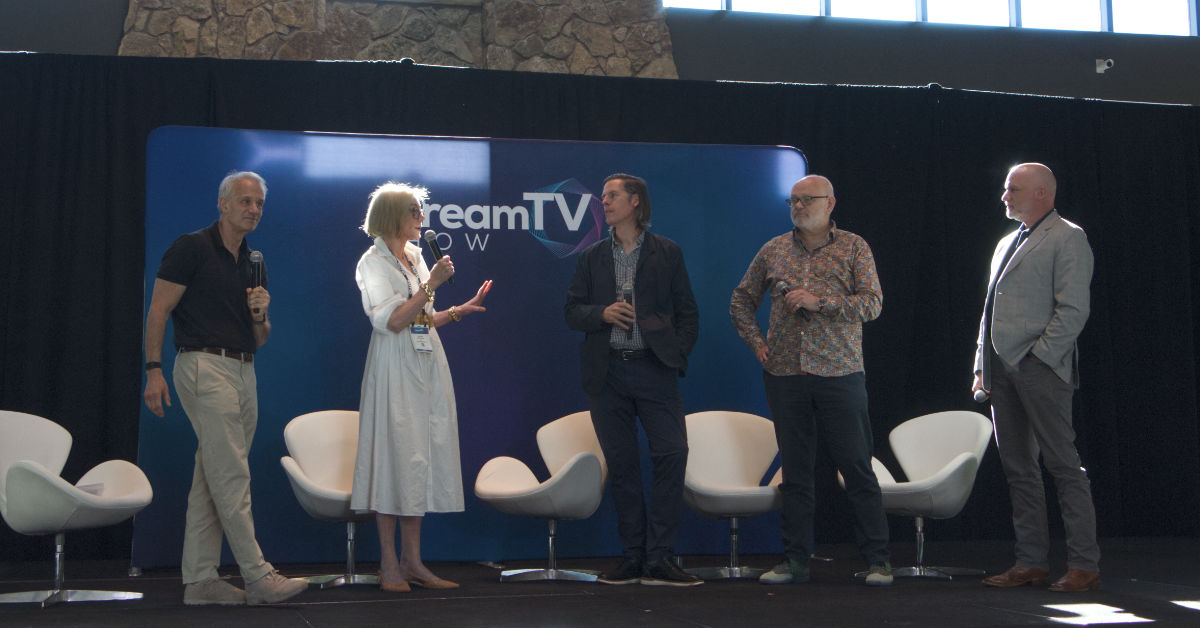
The last panel of the opening day for the 2026 StreamTV Show on Tuesday was billed as a free-for-all with some audience participation: An opportunity for expert panelists to speak off the cuff about interesting industry matters that might otherwise get overlooked.
Alan Wolk, whose TVREV Summit kicked off the conference, took the stage with microphone in hand and asked the audience for the first suggested topic.
“Somebody call out the name of an operating system!” he commanded.

“Roku!” someone shouted back.
Well, who didn’t see that coming?
Fox stunned the television industry on Monday with its surprise commitment of $22 billion to acquire the streaming hardware manufacturer and connected TV platform developer, a move that left many people with a lot of questions and few answers.
An investor conference call with Fox CEO Lachlan Murdoch and Roku CEO Anthony Wood didn’t do much to clear things up, other than to indicate that the deal was based in part on Fox’s desire to build out its digital advertising business — one that, until the deal closes, mostly involves its three direct-to-consumer streaming services.
Fox clearly wants more, and it is willing to spend for the privilege. But why?
For the next 20 minutes — indeed, the remainder of the conference day — Wolk and four of his guest panelists riffed on the deal, using strong institutional knowledge mixed with varied perspectives to fill in the blanks.
Among them, there was plenty of congratulations for Wood and his team, a deep level of respect for a group that essentially built something out of nothing two decades ago — something that wound up becoming a powerhouse in the domestic streaming market.
“It’s brilliant for Anthony Wood and the Roku team, an amazing exit, and it’s gotta be incredible getting out while the getting out is good,” said Dade Hayes, the business editor at trade publication Deadline Hollywood. But he expressed reservations about what Fox was willing to pay — “kind of a rich price” — and noted there would be “a lot of headaches” with a media company trying to maintain the hardware side of the business.
“I think it would be pretty easy for them to ruin the ultimate beachfront property,” Hayes noted. “Nobody promotes better than Fox, which is a great credit to them. But a little too much of that…this was the issue on their investor phone conference, where they were basically called out by analysts saying: Companies are not going to want to work with you. You’re not an independent company, you’re now a rival.”
Hayes wondered whether Fox competitors like Paramount, which currently sells subscriptions to their streaming service Paramount Plus through Roku’s Premium Subscriptions platform, will continue doing so once Roku falls into Fox’s hands.
“Assuming (Paramount) closes the deal (with Warner Bros Discovery) and they own CNN, are they going to react well if there are little promotions for ‘The Five’ on the Roku home screen?” Hayes questioned. “I’m not so sure.”
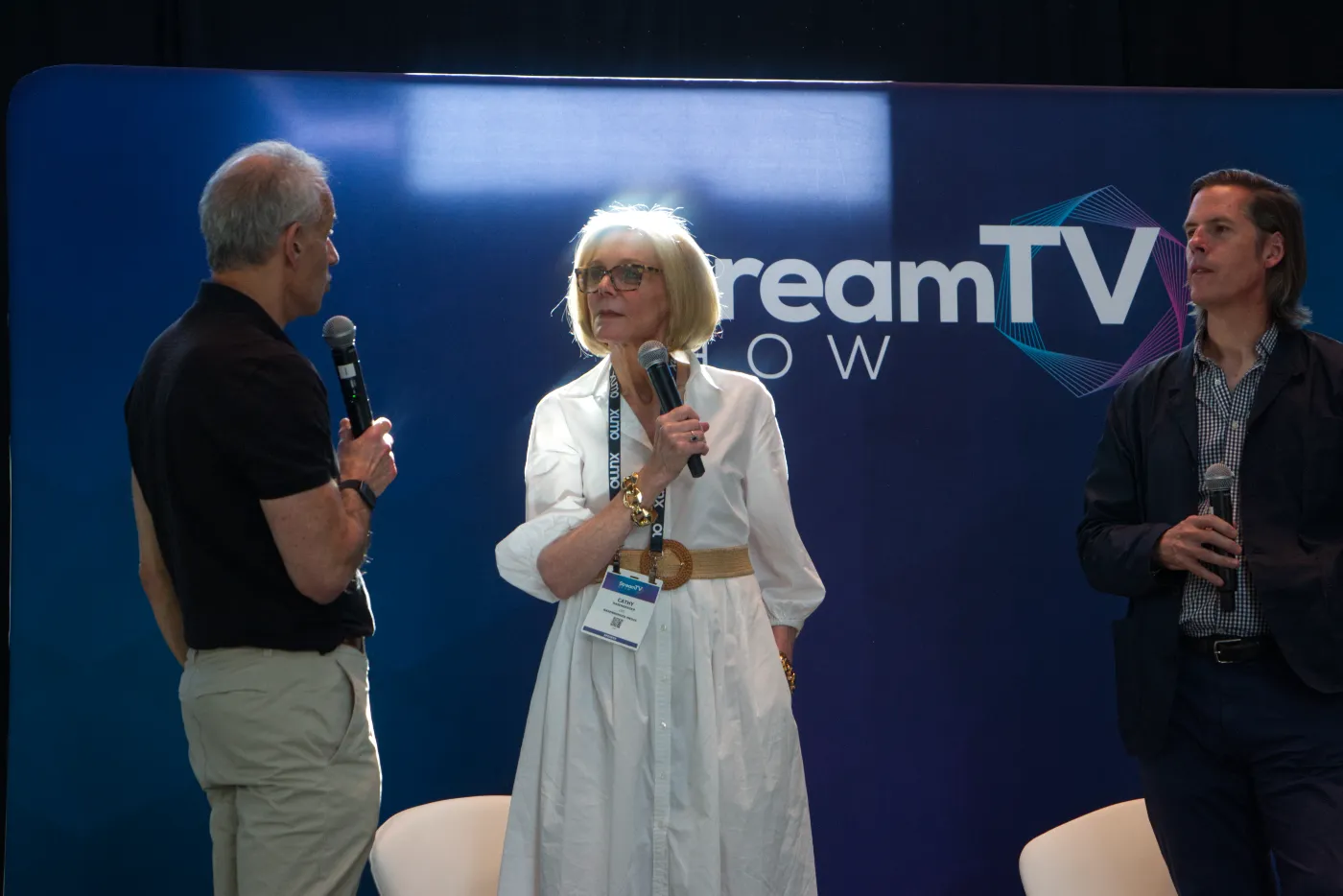
Cathy Rasenberger, the proprietor of her own consulting firm and the co-founder of Free Live Sports, aired similar concerns.
“It’s not such a great story for competitors,” Rasenberger said. “I think there will be a lot of regulatory uncertainty around this, because now Fox can use their data to surface their own content through search and discovery on the platform, and perhaps not as much from others. They can use their data to generate and aggregate better advertising for their content. So, I think there are a lot of complications for all.”
Rasenberger noted that there is already a problem with “operating systems surfacing their own content and pushing down competitive content.” She didn’t mention any by name, but Roku’s closest competitors — Google’s Android TV and Amazon’s Fire TV — are owned by technology companies that also operate free and premium streaming services.
Historically, Amazon has been the most-egregious with promoting its own interests through Fire TV. Often, when a streamer downloads an app, Amazon Pay is provided as the default method to purchase a subscription. Streamers can opt to only download an app — perhaps because they already have a subscription — but only after they switch options on an app’s installation page.
Amazon promotes its subscription ecosystem in other ways: Content tiles and home screen advertisements on Fire TV devices will surface recommendations for streaming services available within Amazon’s Prime Video Channels marketplace. Shows and movies are typically recommended if they’re available to buy or rent through the Prime Video store.
Google has taken a lighter approach to self-serving recommendations, but the favoritism is still there: When users search for a general topic using the Google Assistant on Google TV devices, videos from YouTube are shown first — even if better clips exist on another platform like Facebook or TikTok.

In recent months, Google has also started promoting more content from its premium streaming cable replacement YouTube TV, particularly around tentpole events like the 2026 Winter Olympic Games (which also streamed on Peacock) and the FIFA World Cup men’s soccer tournament (which is available on Fox One in English and Peacock in Spanish).
If Google and Amazon are willing to do this, why wouldn’t Fox leverage Roku to promote its own offerings?
Doing so would likely be perilous, because it run contrary to what made Roku such a powerful platform in the first place, warned Hub Entertainment Research’s Jon Giegengack.
“When we talk to Roku users, the superpower they’ve long had is they’re relatively agnostic,” Giegengack said. He noted that when streamers launch Netflix or Amazon’s Prime Video, they’re often shown listings for shows and movies that the apps want people to watch, rather than personalized recommendations.
“Roku is designed agnostically, just to shorten as much as it can the amount of time between when you sit down and then there’s something blank on the screen,” Giegengack affirmed. “I think that, for Fox, they will need to resist killing the golden goose to promote their own shows, because I think that would kill the thing that makes Roku special, the reason why they’re buying it in the first place.”
It is in Fox’s interest to maintain Roku’s commitment to app agnosticism, Giegengack said, in part because playing a neutral party with companies that are competitors on the broadcast side could wind up being lucrative in the long-run.
Like Amazon, Roku currently sells subscriptions to third party streaming services (curiously, one of those subscriptions — Fox One — was announced less than a month ago), and when customers buy through their subscription marketplace, Roku gets a cut of the spend.
“They actually have an incentive to promote some of these competitive companies, at least to non-subscribers,” Giegengack quipped. “If you get somebody to sign up for one of those streamers through Roku, that’s another source of revenue for them.”
“Especially if they churn out, and then go back again, because then you get them twice,” affirmed Mike Bloxham, Magid’s Executive Vice President of Global Media and Entertainment.
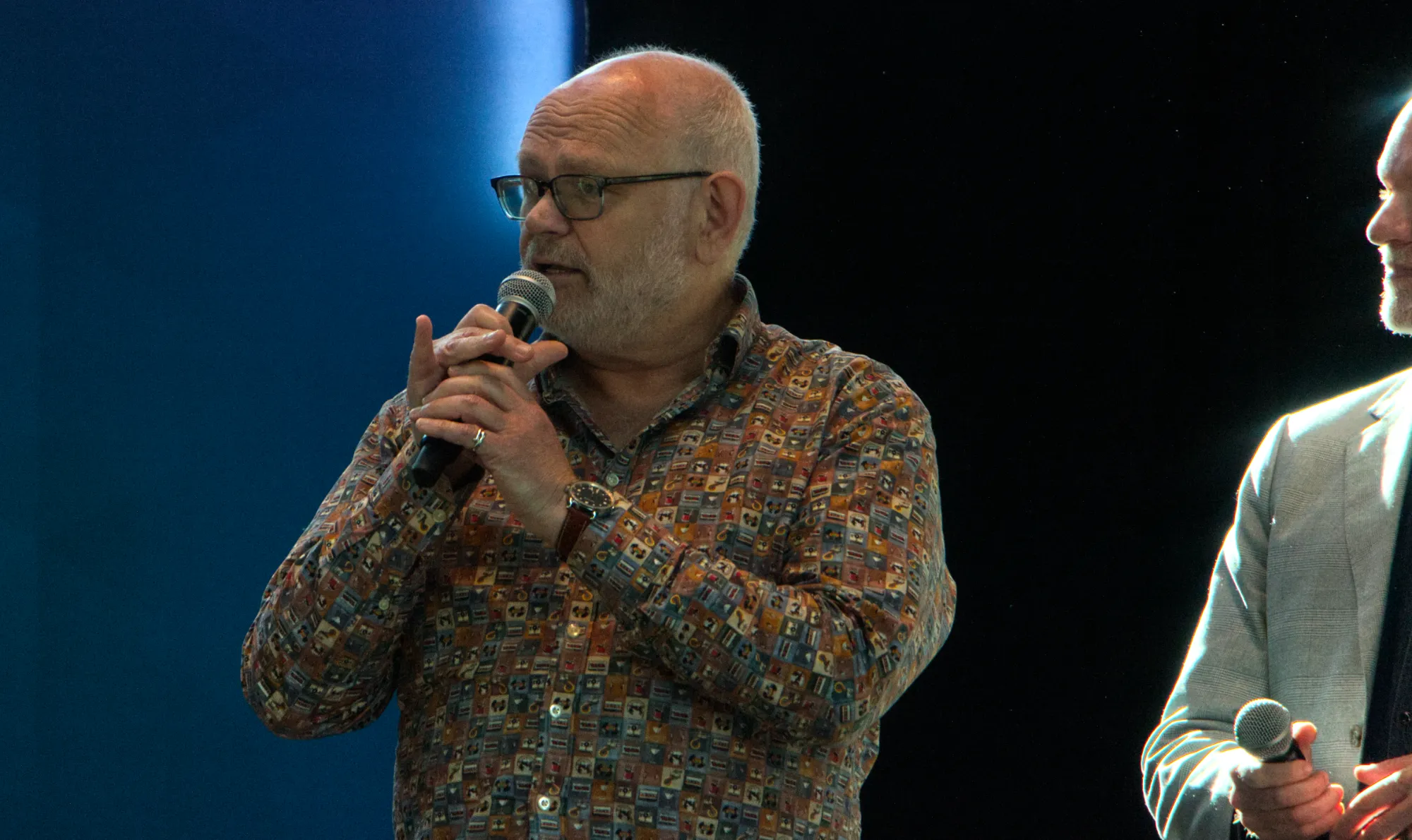
Not all of Fox’s prior bets have panned out, Bloxham noted: In 2005, Fox’s former parent company News Corporation spent $580 million acquiring social networking platform MySpace, only to watch the service’s audience abscond to other social networks like Facebook. By 2009, Facebook’s active user count surpassed that of MySpace for the first time, and the pendulum never swung back. News Corporation offloaded MySpace two years later; the company never disclosed how much it sold for, but some reports put the figure at $35 million. (21st Century Fox was spun out of News Corporation in 2013; present-day Fox Corporation was formed in 2017 after some TV and film assets were sold to Disney.)
“Hopefully, Roku won’t be the same,” Bloxham said of the MySpace deal. “But, for the good folks at Roku, they’re going to cash out first.”
Bloxham stopped well short of calling the Roku deal a bad bet for Fox. Instead, he said Fox could wind up cashing in on the advertising side because much of its present-day advertising business relies on political ad spending — which occurs every two years — or key events like the Super Bowl, the World Series and the World Cup to generate windfalls. By comparison, Roku continuously monetizes its platform once a streaming stick or smart TV is activated in a home.
“Taking on Roku, among other things, actually gives them an opportunity to scale their revenues in a way that is not as seasonal,” Bloxham opined. “They’re not as pegged to big annual, biannual or quadriannual events.”
Wolk noted the topic of who might acquire Roku has come up multiple times in the years since he’s moderated and participated on panel discussions, but no one has ever pegged Fox as a possible buyer. He said one long-term problem Roku has encountered in the past is one Fox might be able to solve: Scaling Roku’s hardware and platform business overseas.
While Roku does sell its streaming sticks and smart TVs in parts of Latin America and Europe, the company has lagged behind Android and Fire TV because it was late to market. By ceding ground to other operating systems, developers overseas are less likely to build for its hardware when they can build one Android app and deploy it on the two leading connected TV platforms. (Fire TV has, historically, been a fork of Android, though Amazon is moving toward its own Linux-based system amid criticism from some media companies and governments of enabling piracy via Fire TV.)
“You need a whole new set of engineer’s to build a Roku app, so you can’t use the same people who build the other apps. It’s been a sore issue for them,” Wolk offered. “I’m curious if, when Fox comes in, that’s going to be one of the things they do, because Roku has really resisted changing their underlying operating system, and if they go to something more Android-based, it makes it easier for them to move outside the U.S.”
There isn’t anything keeping Roku from maintaining its own operating system stateside, and shipping hardware running Android or another operating system overseas. But it might be too late in Europe and other key markets where emergent platforms like V (formerly VIDAA) have made serious endroads in the connected TV space.
On an earlier panel, V CEO Guy Edri said Roku has traditionally been the embodiment of a “closed” platform — akin in strategy to Apple’s Macintosh and iOS systems — while V is more of an “open” platform (similar to Microsoft Windows or Android) who is willing to cooperate with any developer or advertiser in the connected TV space.
“If you own the platform, you’ll probably promote more things from your own home,” Edri said.
Of course, all of these opinions assumes one thing: That Fox actually closes on the deal. While the boards of both companies have affirmed the transaction, the marriage of Fox and Roku still needs approvals from the shareholders of both companies and government regulators.
In the current political environment, it is anyone’s guess if regulators will sign off on the deal. The Trump administration has expressed a willingness to allow media companies to consolidate, though it typically requires some kind of advantageous political or personal concession to President Donald Trump himself.
State regulators could also wind up blocking the deal. Rok is based in the San Francisco Bay Area, where Fox-owned Tubi is also headquartered. Fox also owns licensed TV stations in two California cities, meaning the state’s Department of Justice has standing to bring a legal challenge if it wants to block the deal on antitrust grounds.
Reached by e-mail on Monday, a spokesperson for the California Department of Justice said the agency could not confirm or deny whether it was probing the deal between Fox and Roku. But the spokesperson provided a broader statement that strongly implies the matter is on the state DOJ’s radar.
“California Department of Justice believes further consolidation in markets that are central to American economic life — whether in the financial, airline, grocery, or broadcasting and entertainment markets — does not serve the American economy, consumers, or competition well,” the spokesperson told The Desk. “We are committed to protecting consumers and California’s economy from consolidation we find unlawful.”
—
The Desk is an editorial partner of this year’s StreamTV Show.