Key Points

- Reporters Without Borders is calling on the incoming Congress to impeach FCC Chairman Brendan Carr over his treatment of broadcasters and news organizations.
- The organization accused Carr of using the FCC’s regulatory authority to punish media outlets whose coverage displeases President Donald Trump, citing past and ongoing probes against a San Francisco radio station and broadcast TV networks ABC, CBS and NBC.
- Reporters Without Borders also criticized Carr’s role in media mergers and the FCC’s decision to eliminate the national broadcast television ownership cap; the group says it has never called for the ousting of a U.S. government official before.
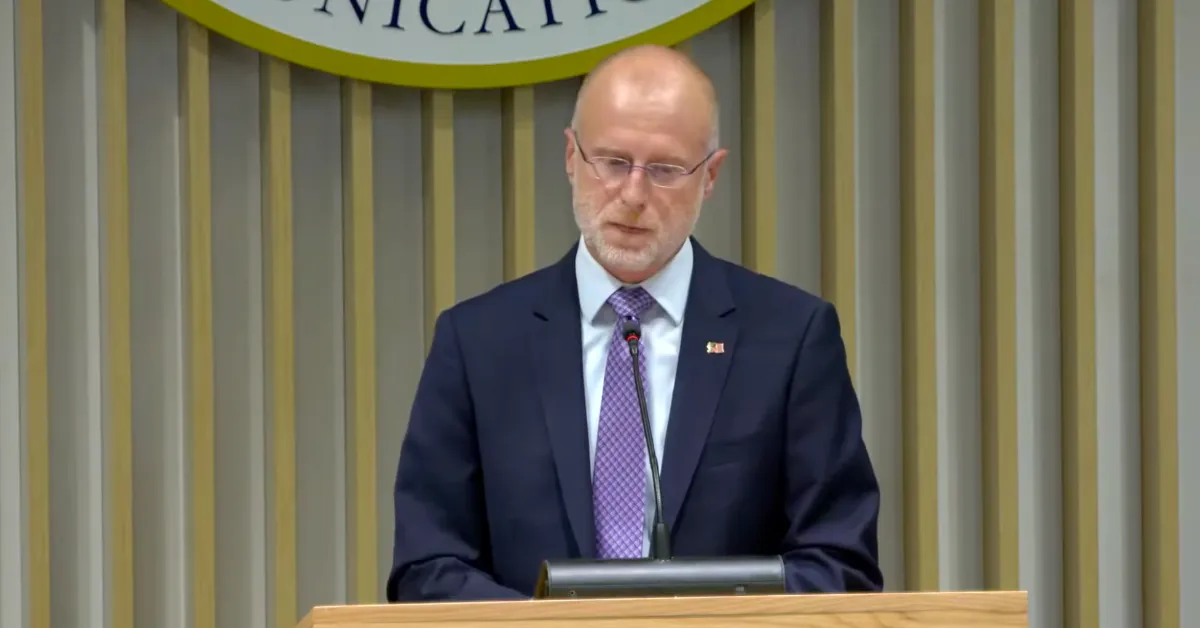
Press freedom advocacy group Reporters Without Borders (Reporters Sans Frontieres, RSF) has called on federal lawmakers to begin impeachment proceedings against Federal Communications Commission (FCC) Chairman Brendan Carr, accusing the Trump administration official of weaponizing his agency’s regulatory abilities to target broadcasters and news outlets that President Donald Trump has criticized over the past few years.
In a statement released by the group on Wednesday, officials at RSF said Carr’s actions have undermined the agency’s ability to conduct its business independent from the White House — Carr has previously downplayed the FCC’s autonomy — and threatened constitutional protections for journalists and broadcasters at home.
The call for impeachment follows indications that Democrats intend to increase congressional oversight of the FCC when they assume control of Congress in January.

“Few individuals have been more instrumental to the White House’s campaign to weaken the First Amendment than Brendan Carr,” Clayton Weimers, Executive Director of Reporters Without Borders North America, said in a statement on Wednesday.
The organization cited several FCC investigations and regulatory actions involving national television networks, public broadcasters and local radio stations. Among them were the agency’s investigation of ABC following controversy involving late-night host Jimmy Kimmel, its scrutiny of daytime talk show “The View” under political equal-time regulations and actions involving CBS and NBC. RSF also criticized the FCC’s investigation of KCBS (740 AM, 106.9 FM) in San Francisco over its reporting on a federal immigration enforcement operation, along with renewed scrutiny of NPR and PBS.
The organization accused Carr of using the commission’s licensing authority to pressure broadcasters over editorial decisions and questioned his involvement in major media mergers, including the combination of Paramount and Skydance. Disney, the parent company of ABC, recently said Carr’s ongoing probes against the broadcaster influenced the booking decisions of some of its shows leading up to the midterm election.
RSF also criticized Carr’s decision to push for a vote that eliminated the broadcast TV ownership cap in August, opting instead for a case-by-case review of corporate mergers and transfers of broadcasting licenses. Previously, the FCC prohibited companies from having direct ownership of licensed TV stations that reach more than 40 percent of the American viewing audience. Critics of the FCC’s vote in August, which Carr influenced, said the agency violated the law because Congress requires an ownership cap and FCC enforcement of it.
Weimers said the organization’s request was unprecedented, noting that RSF has “never before called for the removal of a U.S. official.”
Weimers argued that Congress should make restoring the FCC’s independence a priority as it prepares to examine the agency’s conduct under Carr. But impeaching him could prove difficult: While the new composition of Congress will involve Democratic majorities in both chambers, the U.S. Senate can only convict and remove an impeached official if two-thirds of lawmakers vote to approve, which will require Republicans to break from the party on the issue.
The FCC has not commented on the matter.
During a press conference in October, Carr downplayed any concerns about a possible progressive shift in Congress, which came to pass when Americans replaced a number of Republican seats in the U.S. House and U.S. Senate by electing Democrats.
“No concerns on my end at all,” Carr said. “I’m always happy to work with anybody when we’re aligned on the right types of policy outcomes.”
Shortly after Trump appointed Carr chairman in 2025, he appeared at a media event where he said one of his top priorities was rebalancing media oversight after years of progressive initiatives.
“The FCC is a place that operates by case law and precedent, and these cases and precedent that were established over the past four years were apparently not controversial when the Democrats were in charge,” Carr said. “I’m surprised that applying the same precedent is now considered controversial.”
More Stories
- Broadcasters who criticized Jimmy Kimmel have deals pending before FCC
- Disney, ABC sue FCC over probe that triggered license renewals
- FCC’s Carr engages in election interference with baseless threat about polls
- FCC nominee questioned over chairman’s targeting of broadcasters
- FCC renews call for court to dismiss ABC lawsuit over license renewals