


Key Points

- TV and streaming are the primary drivers of soccer fandom growth across North America, according to a report from Nielsen.
- Soccer fans in the region now exceed 136 million, up nearly 11 percent since 2020, with the U.S. ranking fourth globally.
- Younger and more diverse audiences are driving momentum, with strong participation from Millennials, Gen Z and female viewers.
Americans and Canadians are more likely to become soccer fans after watching games on television compared to any other exposure point, according to a new report released on Tuesday by Nielsen.
The report, called “The Fans Behind the Game: FIFA World Cup 2026 Edition,” claims there are more than 136 million fans now following the sport in North America — which should be music to FIFA’s ears just as their global men’s soccer tournament kicks off this week.
The number of soccer fans in North America increased nearly 11 percent between May 2020 and May 2025, fueled in part by rising TV viewership and growing engagement with international and domestic competitions, Nielsen noted in its report. The United States now has the fourth-largest soccer fan base in the world, with more than 62 million fans, Nielsen said.
Broadcasters have leaned into the trend of soccer fandom by gobbling up live rights to premium events: Fox is now the exclusive English-language broadcast home for the FIFA World Cup men’s soccer tournament, having grabbed the rights from ESPN in 2015, while other broadcasters like Comcast’s NBC Universal, the E. W. Scripps Company and Paramount’s CBS have also acquired live soccer rights for their channels and streaming platforms. (Comcast’s Telemundo has the Spanish-language rights to the FIFA World Cup tournament, and those games will simulcast on Peacock.)
Those deals are churning out more soccer fans than ever before, in part because the games are now widely available on free broadcast networks and low-cost streaming platforms. Nielsen said nearly two-thirds of current soccer fans expect their interest in the sport to increase in the coming years, and new fans are being developed daily.
“Nielsen’s new report illustrates the profound and measurable surge in popularity of soccer in North America, reinforcing the decision to host the FIFA World Cup 2026 across the continent,” a FIFA spokesperson said in a statement.
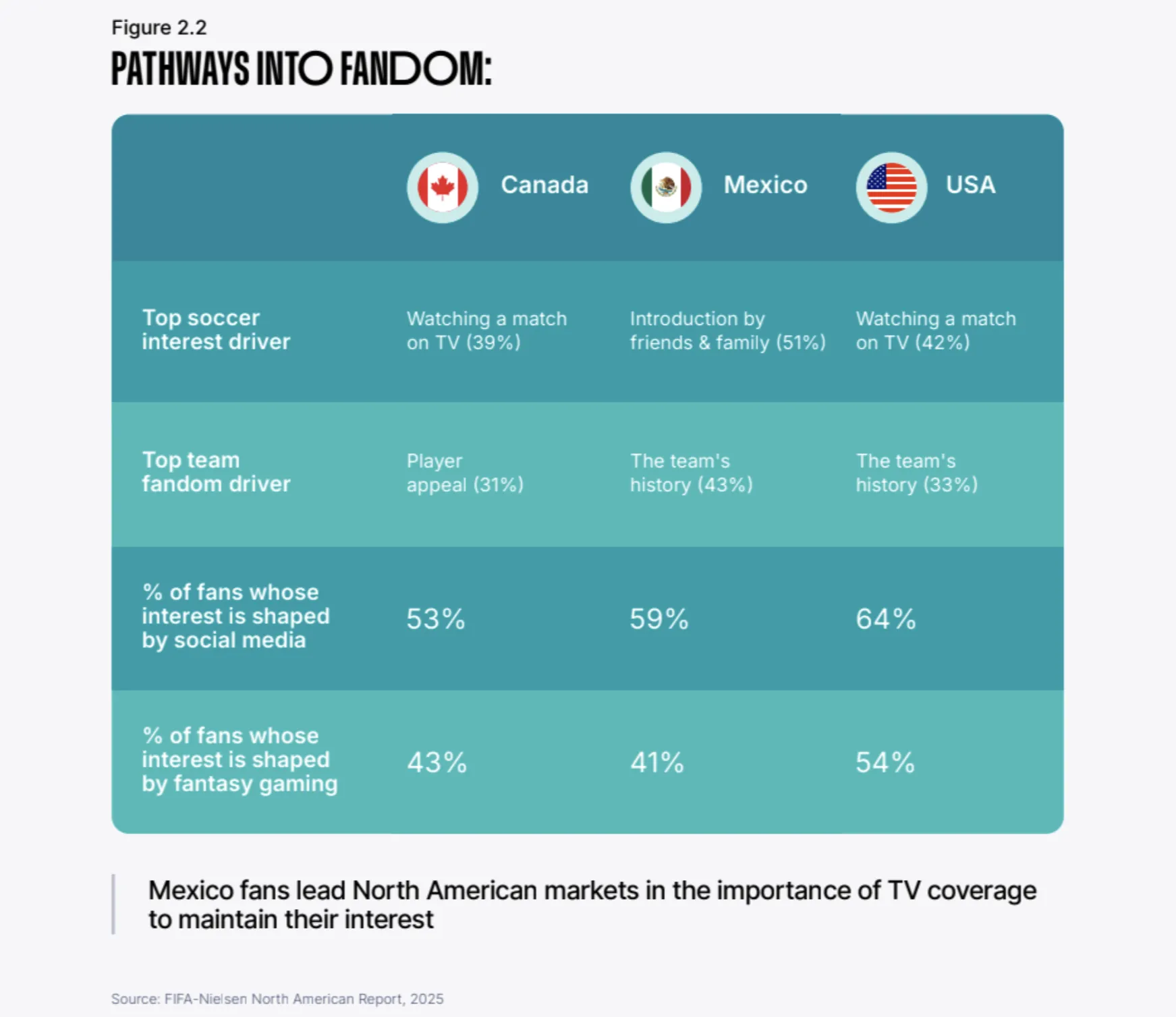
Mexico remains the strongest soccer market in the region, with 63 percent of consumers identifying soccer as their favorite sport. As in the U.S., soccer games aired in Mexico are widely available on free broadcast TV, and many are also moving to free or low-cost streaming services there. The average Mexican soccer fan has followed the sport for approximately 14 years, Nielsen noted.
In Canada, soccer ranks as the third most-popular sport, behind hockey and other domestic sports properties, while it ranks fourth in the United States behind American football and other established leagues.
Even so, Nielsen found substantial growth among newer fans. Approximately one-quarter of soccer fans in North America said they became interested in the sport within the past five years, while 68 percent said their interest has increased over the past three years as anticipation for the World Cup has grown.
In the United States, soccer fans tend to be younger and more affluent than average consumers. Seventy-six percent are either Millennials or members of Generation Z, and female engagement is notably higher than in Europe. Women account for 43 percent of soccer fans in North America, compared with 36 percent in European markets measured by Nielsen.
The study found soccer also plays a broader role in many fans’ lives beyond entertainment. Respondents cited personal enjoyment, social connection, family traditions and physical fitness among the reasons they follow the sport.
When it comes to media consumption, TV and streaming remain the primary ways fans watch matches: Across North America, 72 percent of soccer fans watch games through TV broadcasts or streaming platforms. Social media was the next most popular source of content, cited by 47 percent of respondents, according to Nielsen.
Canadian fans were more likely to consume highlights and short-form content, while Mexican fans showed the strongest preference for watching live matches, often with family and friends.
The full report is available to view by clicking or tapping here.