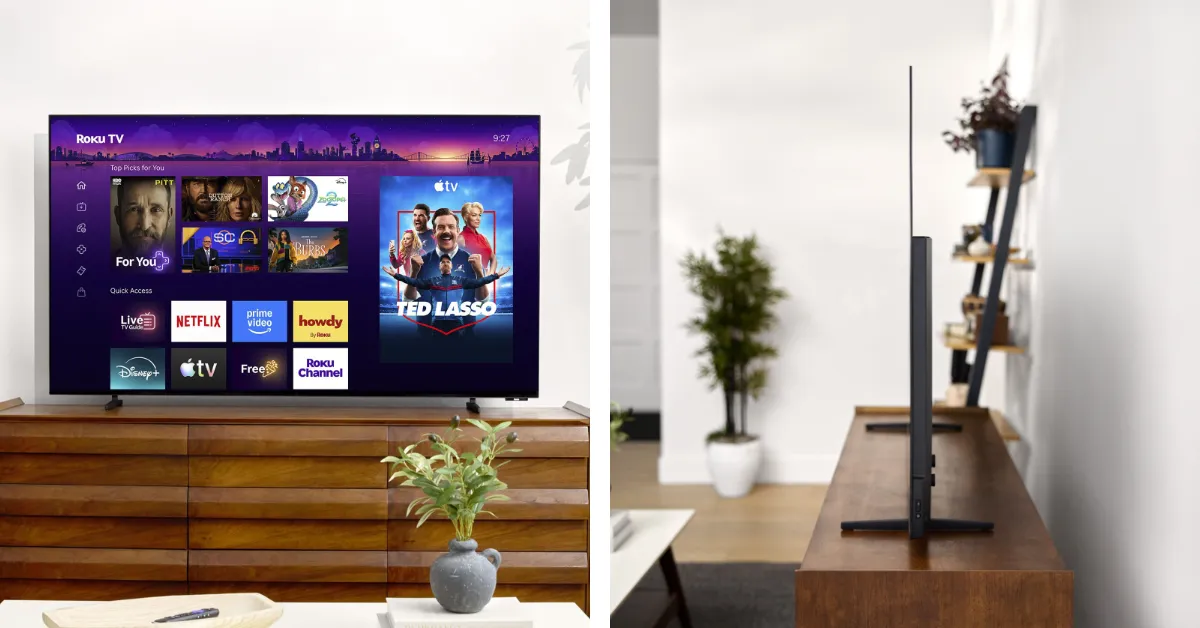
Connected television ownership has reached near-universal levels in the United States, while advertisers are increasingly turning to streaming platforms to supplement traditional television campaigns, according to a new report from the Video Advertising Bureau (VAB).
The report, released ahead of the agency’s appearance at the StreamTV Show in Denver this week, found 86 percent of U.S. households now own at least one connected TV (CTV) device, up from 75 percent in 2019 — a sign that streaming technology has moved firmly into the mainstream. With penetration levels nearing saturation, future growth is expected to come largely from consumers upgrading older television sets to smart TVs rather than adding connected devices for the first time.
Smart TVs now account for roughly two-thirds of installed television streaming devices in U.S. households, and their share is expected to continue growing through next year. The report noted that falling prices and improvements in picture quality are encouraging consumers to replace legacy sets rather than purchase standalone streaming devices such as Roku boxes or Amazon Fire TV sticks.
As CTV adoption continues to mature, traditional pay television is losing ground: VAB found 56 percent of CTV households are now either cord-cutters or cord-nevers, compared with 34 percent in 2018. The share of connected TV homes that still subscribe to a traditional multichannel television service has fallen to 43 percent.
Streaming now accounts for 34 percent of total television usage, surpassing broadcast television’s 23 percent share and approaching cable’s 31 percent share, according to Nielsen data cited in the report. Combined, however, broadcast and cable still represent a majority of viewing, accounting for 54 percent of television consumption. (The data appeared to originate from The Gauge, a monthly snapshot from Nielsen that received some criticism earlier this year.)
The growing popularity of ad-supported streaming has also strengthened its appeal to marketers: VAB found 86 percent of streamers watch ad-supported content, with nearly half reporting they watch only ad-supported programming. Just 14 percent rely exclusively on ad-free services.
U.S. audiences now have more than 300 standalone streaming services from which to choose, though recent industry consolidation has modestly reduced the number of available platforms. Despite concerns about subscription fatigue, households continue to maintain multiple services, subscribing to an average of 5.3 streaming platforms while accessing nearly three different streaming apps each month.
Streaming has not replaced live television entirely: Instead, VAB found consumers increasingly combine both viewing habits, with more than four in 10 streamers regularly watching a mix of streaming services and traditional live TV. Nearly 90 percent of viewers also report being satisfied with their overall streaming experience, citing content availability, convenience and value as the primary drivers.
Long-form video content also continues to drive strong audience engagement. VAB cited research showing movies and television series generate stronger fandom than music or sports, while 90 percent of viewers describe themselves as highly engaged when streaming television programs and films. Streaming increasingly serves as social currency as well, with viewers discussing shows online and with friends and family.
For advertisers, one of the report’s most significant findings involves the growing acceptance of ad-supported streaming: Nearly nine in 10 viewers now use streaming services that include advertising, and most subscribers report choosing ad-supported plans because of their lower cost. Preference for free, ad-supported video increased across all age groups over the past year, reflecting growing consumer sensitivity to subscription costs and a broader shift toward value-oriented viewing.
That trend is helping fuel continued growth in the free ad-supported streaming television, or FAST, sector. VAB found the number of active FAST households more than doubled from 22 million in 2020 to 54 million this year. During the same period, the number of FAST channels expanded from 424 to approximately 1,700. Much of that growth has been driven by unscripted programming, including reality, lifestyle and game-show content.
The report also highlights growing innovation in connected television advertising: Consumers generally view targeted CTV advertising favorably, with research showing personalized ads are less likely to feel overwhelming and more likely to drive engagement. Interactive advertising formats are also gaining traction, generating substantially higher engagement and recall than traditional ad units.
The report had the fortunate timing of being released on the same day that Fox Corporation announced its intention to acquire streaming hardware maker and CTV platform developer Roku for $22 billion in cash and stock, a move that is largely predicated on the long-term future of CTV advertising. Two years ago, Walmart placed a similar bet, acquiring Vizio for more than $2 billion in cash in order to bolster its retail advertising business.
The full VAB report is available to view with registration by clicking or tapping here. The report will be further discussed during the StreamTV Show in Denver, which takes places this week from Tuesday through Friday.
The Desk is an editorial partner of this year’s StreamTV Show. Readers can save 10 percent off a conference pass by using the code DESK10 at this registration page.