
Key Points

- One-third of pay TV users subscribe for a unified, all-in-one viewing experience, highlighting demand for aggregated platforms.
- Aggregated services like Philo boost engagement and ad attention by simplifying discovery and improving personalization.
- vMVPD subscribers show stronger interest in interactive ads and commerce, creating high-value opportunities for advertisers.
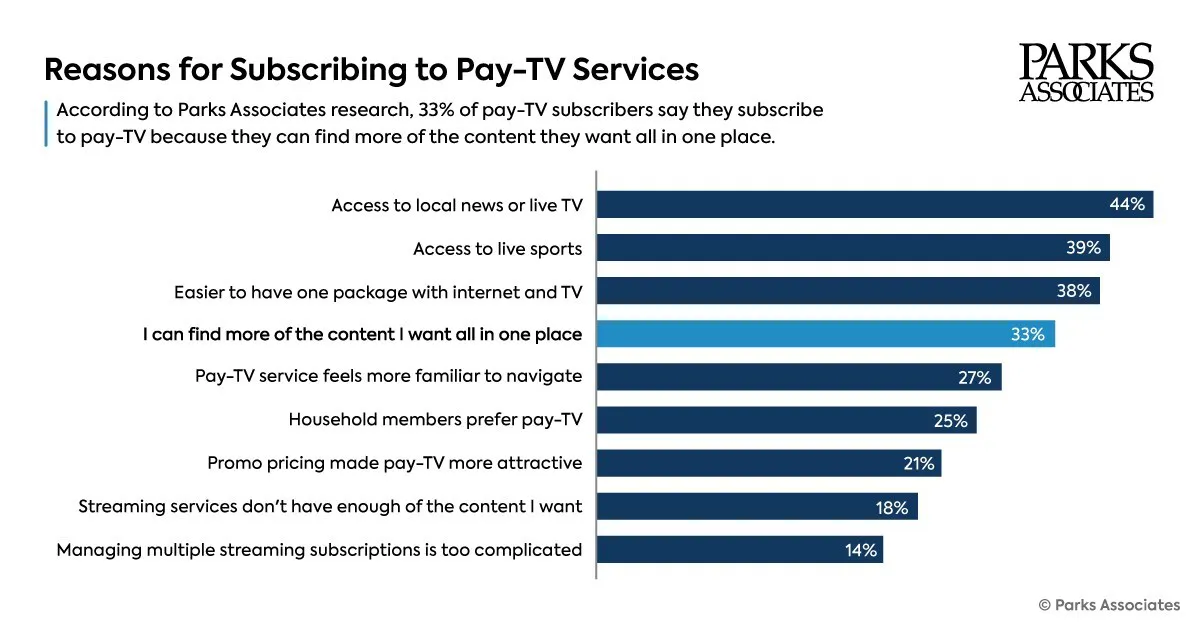
One-third of consumers who pay for television service say they do so because they want to watch content from a single aggregated experience, according to new research released by Parks Associates and Philo this week.
The data was released in a new white paper called “Unified Streaming: Unlocking Next-Gen Advertising,” which positions pay TV platforms like Philo as having a strong value proposition with consumers who want access to as much content as possible from a single app or service.
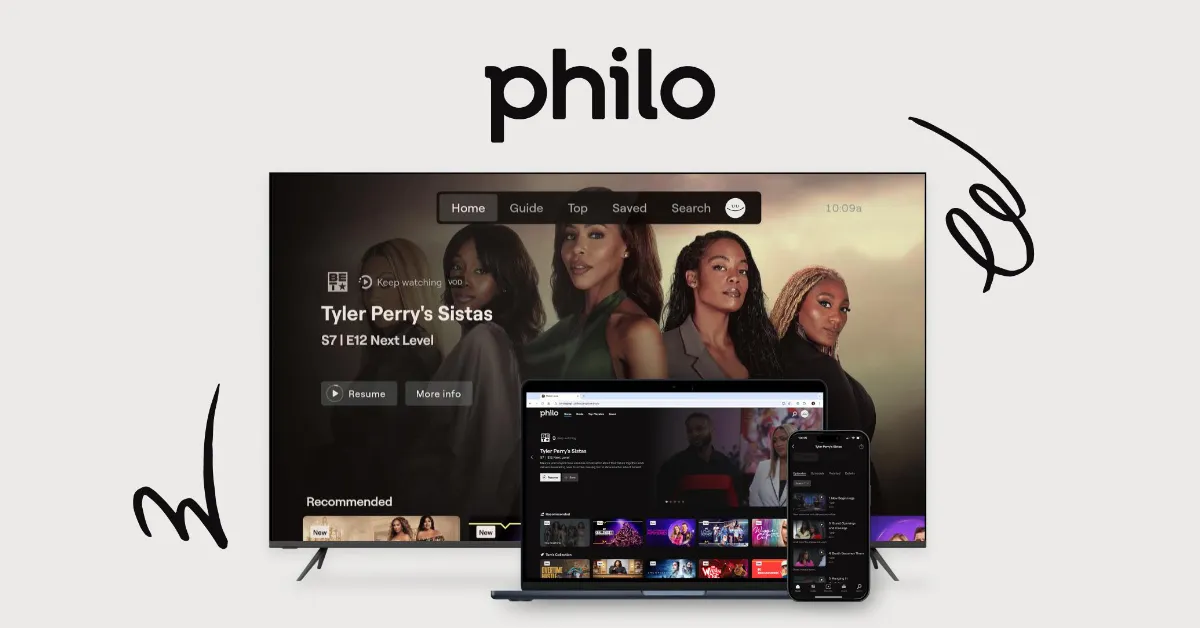
Philo offers access to tens of thousands of TV episodes and movies from its programming partners, including Paramount Global, Warner Bros Discovery, A+E Global Media, Weigel Broadcasting and AMC Global Media, through its distribution of 70 premium cable networks, more than 100 free, ad-supported streaming TV (FAST) channels and robust on-demand content libraries.

The wallet-friendly service costs $25 per month for access to its premium linear networks, FAST channels and on-demand content, or $33 per month if customers also want access to the ad-supported plans of AMC Plus, HBO Max and Discovery Plus. Shows and movies from Starz and MGM Plus are available for separate fees.
“Aggregation is now a strategic advantage,” Elizabeth Parks, the President and Chief Marketing Officer at Parks Associates, said in a statement. “Unified platforms simplify discovery, deepen engagement, and provide advertisers with more consistent measurement and targeting capabilities.”
As audiences flock to aggregated services like Philo, Parks said attention to advertising is carrying through.
“A key finding of our research shows the strength of streaming TV (vMVPD) audiences as a foundation for next-generation advertising,” Parks noted, using an initialism associated with pay TV platforms.
The typical U.S. household subscribes to just over five streaming services, Parks noted, a figure that is backed by consumer research released by Bango and other firms over the past year.
More than 300 premium streaming services exist in the U.S. marketplace, and as streamers incorporate more of those apps into their media diets, they’ve grown frustrated with having to bounce between platforms simply to watch the shows, movies and live events they want. Consumer surveys also point to lackluster experiences with content personalization, search and discovery — when streamers want to watch something new, they often have to navigate several rows or menus and spend several minutes, if not hours, looking through content catalogs before they find something that interests them.
Philo has worked to solve some of those challenges: The company has rolled out several device-specific user interface improvements over the past few years that help streamers sift through its channels and on-demand catalogs based on the devices they’re using. Philo’s mobile and tablet applications include personalized content cards on its home menu, along with recommendation and “Keep Watching” rows that take the guesswork out of finding something to watch and makes it easy for streamers to pick up where they left off in a movie or series.
On television, Philo quietly introduced new apps for Apple TV, Android TV and other devices that incorporate some of the same personalization features as its mobile and tablet apps, and introduced larger and bolder data within its electronic programming guide (EPG), so channels and listings are easy to see on small and large TVs alike. Users of Philo’s premium tier can easily favorite premium networks and free streaming channels, with their favorites appearing at the top of the EPG, in alphabetical order by channel name. Below their favorites, premium networks and free streaming channels are segregated into two distinct categories.
To improve content recommendations and personalization, Philo recently announced a partnership with streaming intelligence firm Reelgood to incorporate their content metadata and catalog into the Philo platform. Doing this will allow Philo to make better decisions about the type of shows and movies to recommend to streamers, and will help inform the company about the type of shows, movies and channels to license from third parties, executives said in a statement.
As Philo improves the user experience of its app, streamers are more likely to stick with the service and sample across its channels and content when they’re looking for new things to watch. That translates to stronger attention to advertising across the app, since most of the programming offered by Philo includes commercial breaks. (Philo hasn’t released updated subscriber figures in some time; last year, the company launched an advertising portal that reported 3.4 million monthly active users counted across its premium subscribers and those who watch its FAST channels without a subscription.)
According to Parks, more than half of streaming TV subscribers who pay for a vMVPD service like Philo expressed an interest in clicking through content tiles for information about a product or service, compared to just under one-third of streamers don’t subscribe to a vMVPD service.
Around half of streamers who pay for a service like Philo also expressed interest in shopping for merchandise or memorabilia that is tied to a show or live event they’re watching, compared to 23 percent of those who don’t subscribe to a streaming cable-like service.
“vMVPD subscribers, like Philo’s lifestyle and entertainment viewers, are watching longer than nearly anyone else in streaming,” Reed Barker, the Head of Advertising at Philo, said in a statement. “What this research confirms is what our advertising partners already see in their results: Sustained, engaged viewing creates some of the strongest environments for CTV advertising.”
Lifestyle content, like reality shows, should be top of mind for most ad buyers because the audience attracted to that programming “show strong alignment with commerce-driven advertising, with higher-than-average mobile purchasing behavior and interest in interactive features,” Parks Associates said in its report.
Other areas exist in local news and sports programming, which are the top reasons why a streamer is likely to buy and maintain a subscription to a vMVPD service, according to Parks research.
The full white paper is available to download by clicking or tapping here.
More Stories
- In frigid pay TV environment, Philo bundles up
- Philo partners with Reelgood to improve programming, personalization
- Philo rolls out cheaper TV plan without bundled content
- Parks Associates: Smart TVs are primary streaming devices in homes
- Parks Associates: Cost is biggest driver of streaming churn in 2025