Key Points

- Ampere Analysis says Netflix, Disney Plus and Amazon have reduced the size of average streaming subscription price increases over the past three years.
- Across the three streamers, average price increases fell from 24 percent of the prior subscription price in 2023-24 to 14 percent in 2025-26.
- In dollar terms, the average increase declined from $1.67 to $1.54 over the same period.
Major streaming television services are still raising prices at regular intervals, but the price hikes are becoming smaller over time as consumers start to vote with their wallets, according to a new report released by Ampere Analysis early Monday morning.
Across three major streaming services — Netflix, Amazon’s Prime Video and Disney Plus — average price increases fell from 24 percent of the previous subscription price in 2023-24 to 14 percent in 2025-26, data from Ampere showed. In dollar terms, the average increase declined from $1.67 to $1.54 over the same period.
Average increases were $1.62, or 17 percent, in 2024-25, Ampere said; across the full three-year period, the average individual price increase was $1.60, equivalent to 17 percent of the previous subscription price.

A number of factors are at play when it comes to smaller price hikes over the years, including increased competition from different players in the space and a saturation of the market overall, Ampere noted.
Ad-free plans have continued to absorb larger price increases than ad-supported tiers. Ampere said ad-free tiers across Netflix, Disney Plus and Amazon saw average increases of $1.62 over the past three years, compared with $1.21 for ad-supported plans.
That has widened the price gap between the two types of subscriptions. In markets where ad-supported tiers are available, the average global difference between ad-free and advertising plans across the three streamers increased from $4.53 between August 2023 and July 2024 to $5.35 between August 2025 and July 2026.
In the U.S., the gap between Netflix’s Standard with Ads plan and its ad-free Standard plan grew from $8.50 in August 2023 to $11 in July 2026, Ampere said.
Those pricing trends demonstrate the growing importance of ad-based plans to streaming platforms: As ad revenue becomes a larger part of the business, platforms have an incentive to keep ad-supported tiers attractively priced while pushing higher-paying subscribers toward premium, ad-free plans, Ampere noted.

To some degree, this also tracks with comments made by executives at Netflix and other services, who have openly admitted that price increases on ad-free plans tend to be heavier than those on ad-supported plans because streaming companies are hoping price-sensitive consumers will switch to plans with ads.
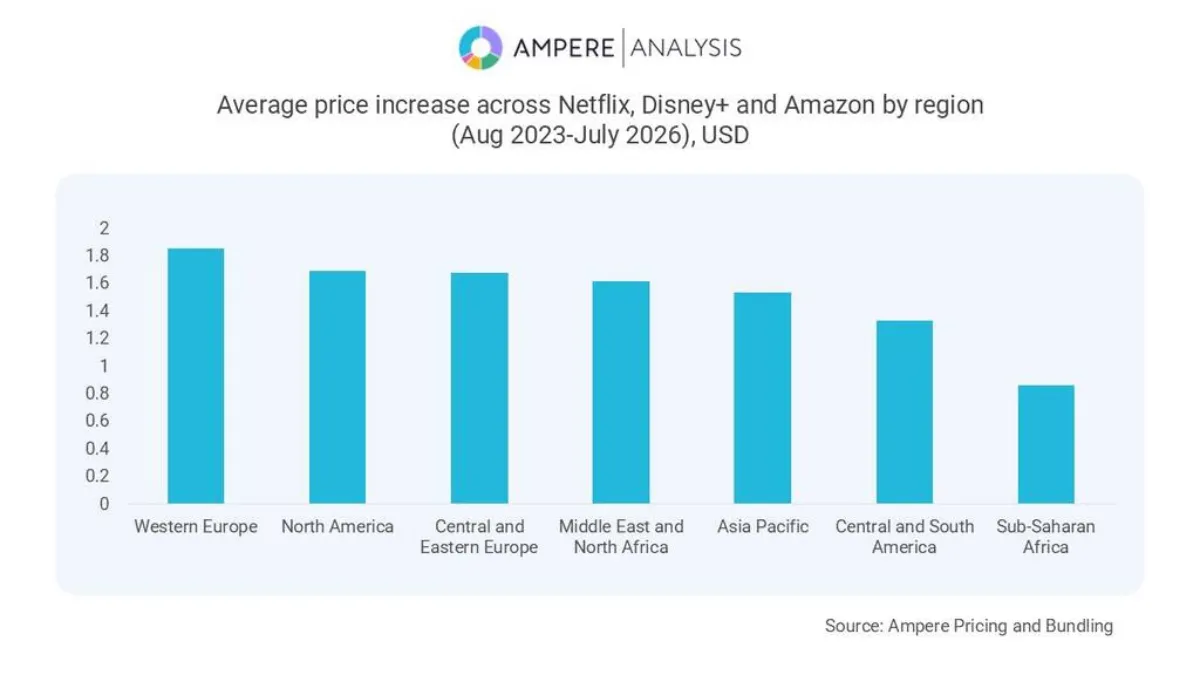
Streaming price hikes have leveled off in mature markets like North America, but in other parts of the world, where streamers are still growing their business, price hikes are heftier. Ampere recorded some of the largest price hikes in Western Europe over the past three years, where the average hike was $1.86. The same is true for Central and Eastern Europe, where the average cost adjustment was $1.68.
In those markets, streaming platforms are still priced lower compared to what American consumers pay, though content availability differs.
“The decline in price increases comes as streamers diversify how they monetize their audiences,” Jaanika Juntson, a Senior Research Manager at Ampere Analysis, said in a statement on Monday. “Advertising is an increasingly important revenue stream, reducing reliance on subscription pricing alone, while password-sharing crackdowns allow streamers to generate more value from existing audiences through extra member slots.”