

Nearly one-third of streamers who drop a subscription-based service wind up purchasing access to another one within 30 days, according to new data released by Antenna.
The findings come from Antenna’s Cord Cutter Insights product, which tracks where consumers go after leaving traditional and virtual multichannel video programming distributors (MVPDs) like cable, satellite and streaming cable-like services.
Antenna said the pay TV and streaming industries have historically had limited visibility into that consumer journey because cable operators know who canceled service while streamers know who signed up, but the connection between the two has been difficult to measure.
But Antenna’s data — based largely on opt-in financial metrics like bank statements and credit card bills — indicates most pay TV cancelers are not new to streaming: 72 percent of traditional cord-cutters have at least one premium subscription service active before they cancel their cable or satellite subscription. Among digital cord cutters — people who drop a service like YouTube TV or Fubo — that figure rises to 82 percent.
That behavior suggests cord cutting is less a move from traditional television to streaming than a deeper shift within an already hybrid video household.
So, which platforms are streamers moving to when they cancel their prior subscriptions?
Paramount Plus emerges as the big winner in Antenna’s post-churn competition, with a 14 percent uptake in its ad-free plan after traditional cord cutters leave their cable or satellite plan. Antenna didn’t offer specifics as to why Paramount Plus was seen as most-valuable to cord-cutters, but the company’s offering of live sports from CBS, coupled with its inclusion of Showtime content, likely makes it an attractive option.
Netflix saw the second-biggest uptake among former cable and satellite subscribers, with 11.5 percent of consumers purchasing access to its commercial-free Premium tier. Peacock Premium and Netflix Standard tied for third place with 9.5 percent uptake.
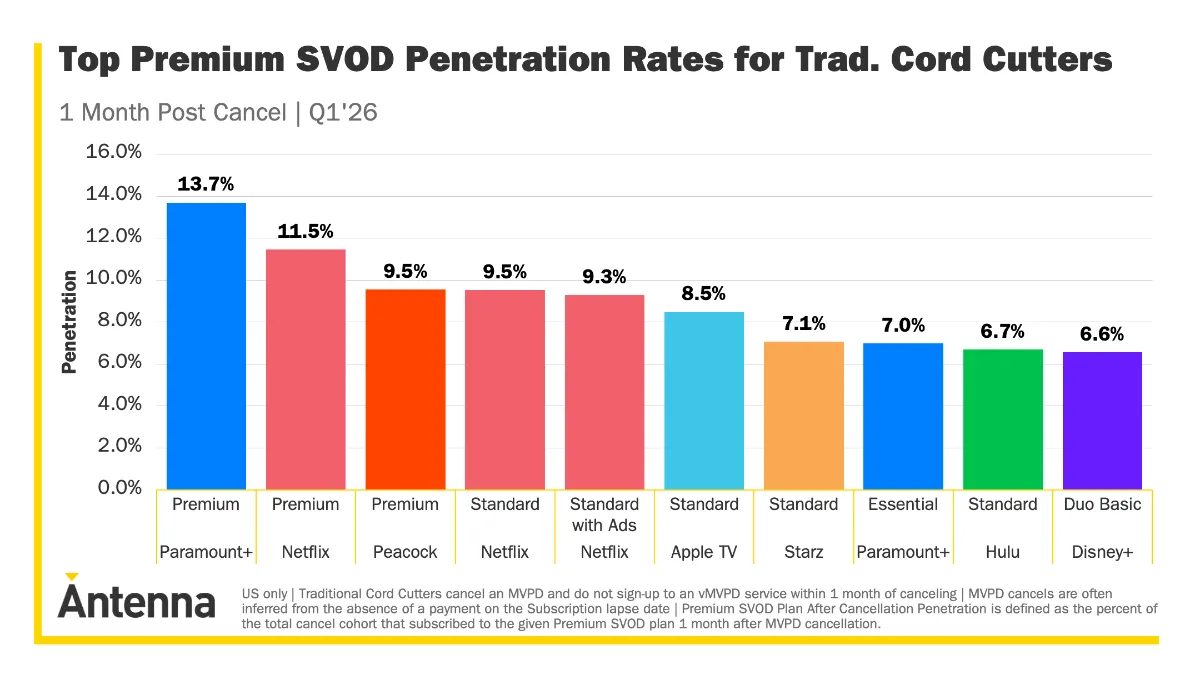
The plan mix also challenges the assumption that cord cutters are primarily seeking the cheapest streaming options: Antenna said the top four premium subscription plans by penetration among traditional cord cutters were ad-free plans. Overall, ad-free plans accounted for six of the 10 highest-penetration premium plans in the first month after pay television cancellation.
Of course, taking on one or two premium streaming services is more-expensive than simply buying the ad-supported plan, but it still comes well under the usual rate that most cable and satellite customers pay for access to channels they may never watch — so, to the consumer, buying a mix of Paramount Plus and Netflix Premium still saves them money on a monthly basis compared to an expensive cable, satellite or streaming cable-like plan.