



Some Americans who cut the cord on cable or satellite television in favor of broadband-delivered video programming eventually return to traditional pay TV within about a year, according to new research released this week by Parks Associates.
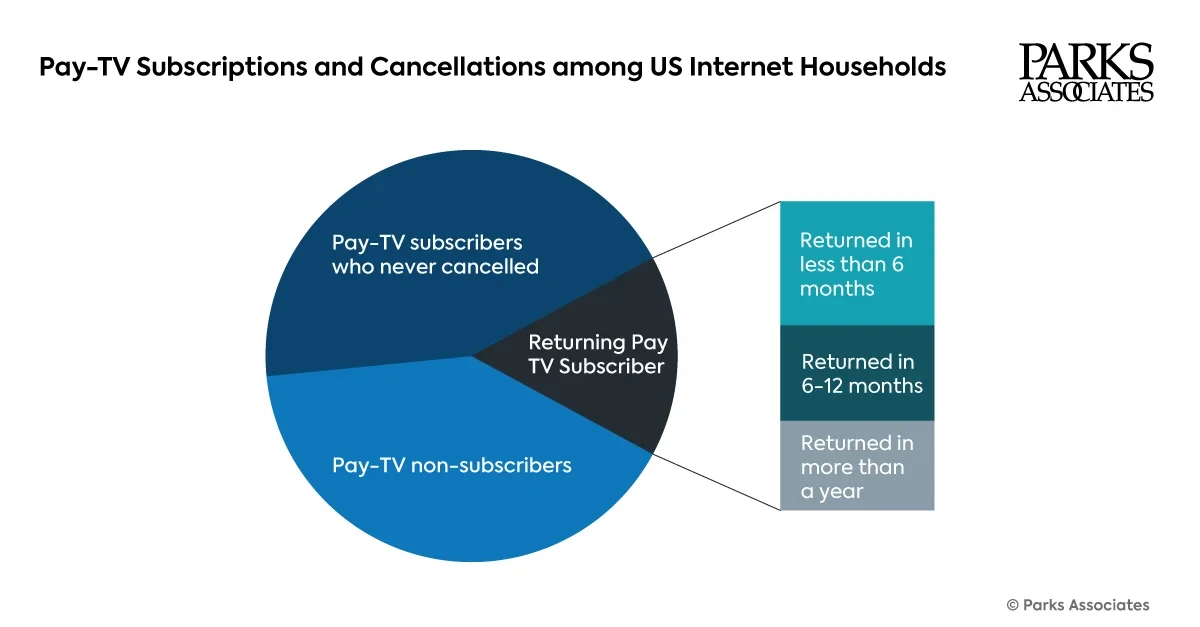
In its latest snippet from a proprietary report called “The New Live TV Model: Skinny Bundles, Sports, News,” Parks Associates said 16 percent of American broadband consumers ultimately return to a pay TV platform after cutting the cord, with 40 percent restarting their subscription within six months of cancellation.
More than one-third of returning pay TV customers said live sports offered by a cable or satellite company won back their business, while nearly 30 percent said the same for access to local news or other forms of live TV programming.
The report is likely to be an encouraging sign for cable, satellite and streaming cable-like replacements that are looking to win back business at a time when churn remains relatively high in the industry. But the window for traditional pay TV is pretty short, with consumers opting to purchase a streaming cable-like replacement — think YouTube TV or Fubo — the longer they go without cable or satellite.
“The research also shows that the longer consumers remain away from pay TV, the more likely they are to choose a vMVPD when they return,” Michael Goodman, the Director of Entertainment Research at Parks Associates, said in a statement. “This behavior is changing the competitive environment, and providers like YouTube TV, DIRECTV Stream and Charter/Spectrum are responding with different approaches to packaging.”
Charter made the most-aggressive move a few years ago, courting broadcasters and cable TV programmers to offer access to their streaming apps as a condition of being carried in its Spectrum TV plans. DIRECTV made a similar move, dropping Disney-owned networks for a while until the company agreed to have channels like ESPN, FX and the Disney Channel distributed through lower-priced, genre-based streaming plans.
Earlier this year, YouTube TV launched its own genre-based plans, offering live sports, child-focused networks and entertainment channels in separate packages. News networks can be tacked on for a separate fee, and all plans include broadcast TV channels. YouTube TV continues to sell an all-inclusive package for around $82 per month, but its genre-based plans are priced slightly lower and give customers the option to pick and choose what bundles of channels they want.
Pay TV penetration has stabilized after years of declines, remaining in the low-to-mid 50 percent range among U.S. internet households, according to Parks Associates data. The firm estimates that 57 percent of all U.S. households currently subscribe to pay television.
Meanwhile, subscription video-on-demand adoption exceeds 90 percent, with the average subscription television household maintaining more than six video services across traditional television and streaming platforms.
“Consumers are managing these larger streaming portfolios without materially increasing their overall entertainment spending, creating intense competition for wallet share,” Goodman said. “Consumers still value live sports, news and events, but they increasingly reject the traditional large-channel bundle.”
Parks Associates will take a deeper dive into their data and intelligence during their next Future of Video: Business of Streaming conference, a two-day industry event in Marina del Rey, California that starts November 17. The Desk is an editorial partner of the event.