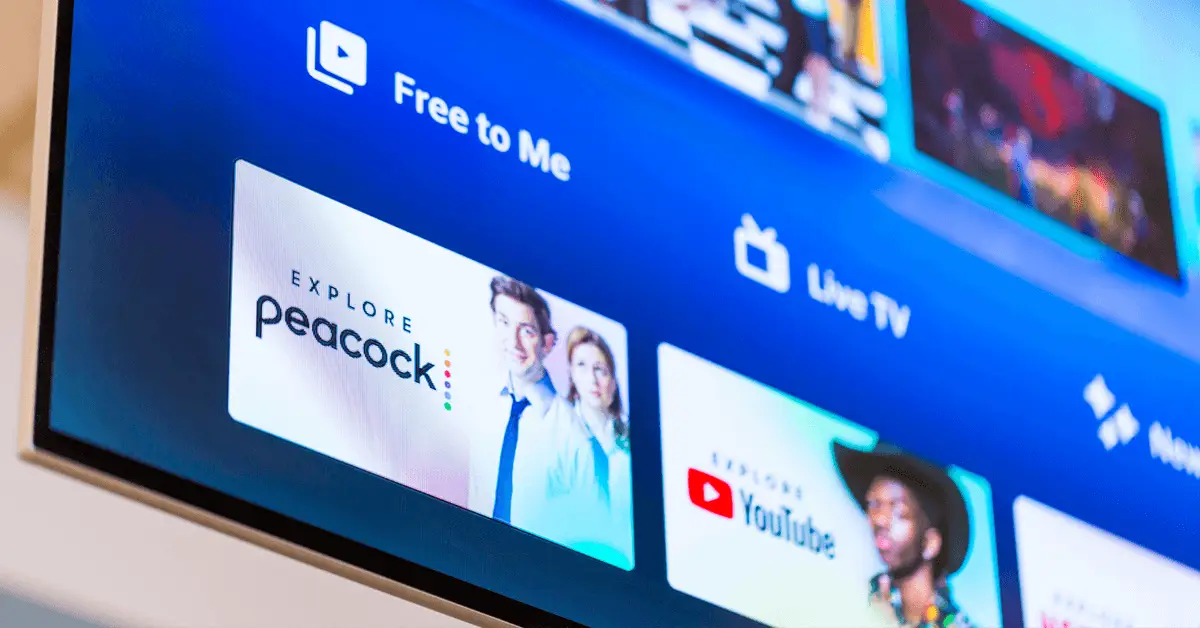
Broadcast television networks serve as ideal platforms to market complementary streaming platforms that offer on-demand programming, multi-view features and other added value enhancements, a leading NBC executive said in an interview this week.
Speaking with The Verge, NBC Universal Media Group Chairman Matt Strauss said Comcast’s streaming service Peacock isn’t necessarily trying to compete for viewership against the company’s own NBC network and its portfolio of stations and affiliates, but views broadcast stations and streaming platforms as parts of a larger TV sum.
NBC, in particular, has been used by NBC Universal to drive stronger interest in Peacock since the streaming platform debuted in mid-2020, helping the network secure higher ratings for its premium live sports, news and prime-time programming.

“NBC has been like a megaphone,” Strauss said during the interview. “Given the reach of NBC, it’s been incredibly strategic in growing Peacock, which is a bit ironic because I think so many people believed that broadcasting was a bit of a relic of the past in this digital world, but it’s actually proven to be the opposite.”
Strauss acknowledged the TV landscape has become fragmented over the years as broadcast and cable networks look for ways to deliver their own programming directly to viewers over streaming.
But broadcast’s immense reach means it is still the ideal platform to reach the largest possible audience at any given time, especially for appointment-viewing TV like news and sports.
“We’ve got this unbelievable portfolio of sports content, and that’s a strategic asset when we’re partnering with the leagues because we believe in broadcast,” Strauss said. “We believe in broad reach. We’re not trying to put everything exclusively on a streaming platform.”
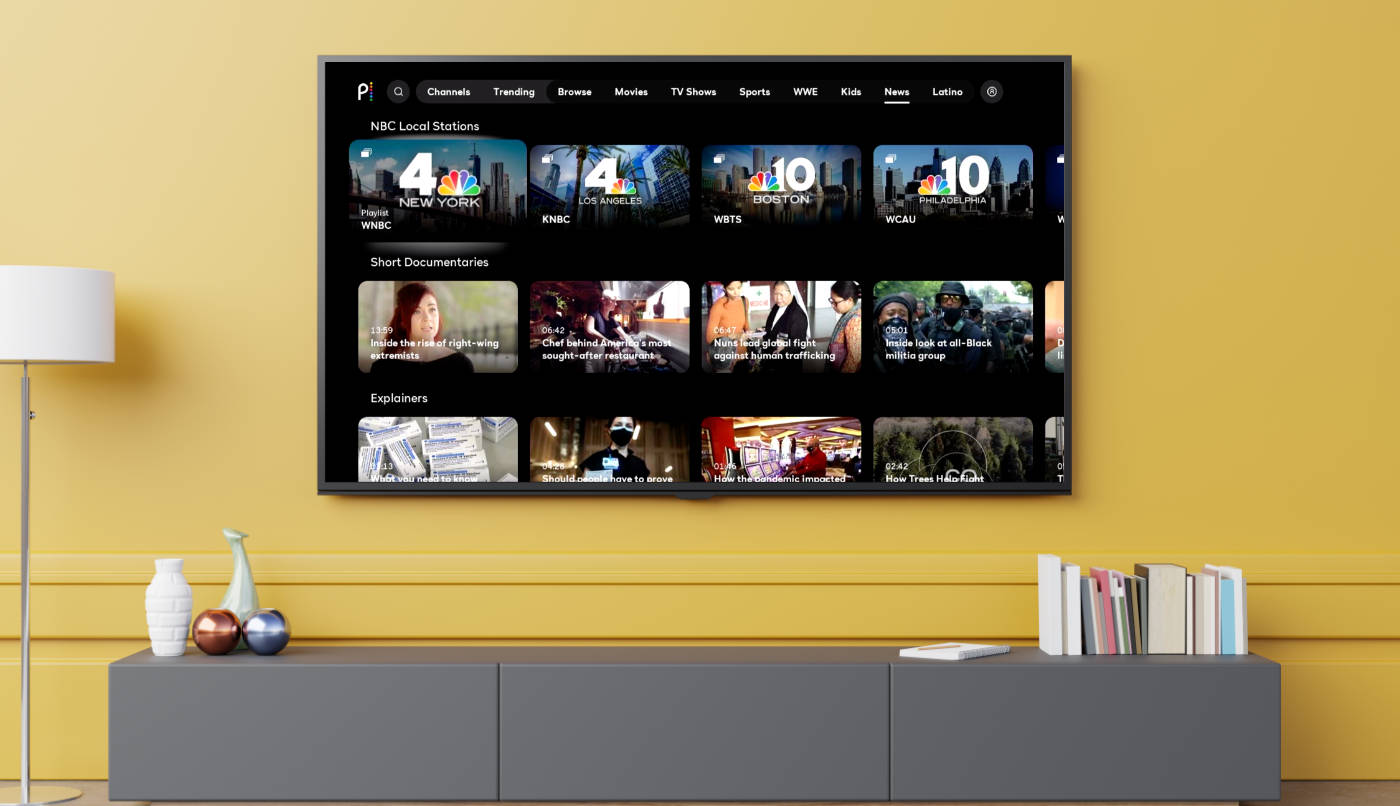
The original roll-out of Peacock was meant to time with a major broadcast event: The 2020 Summer Olympic Games from Tokyo, with the streaming platform poised to offer enhanced features like every Olympic event live (instead of tape-delayed, which has drawn criticism — but, also, high ratings — as NBC relegates broadcast coverage of key events to prime-time) and other perks.
With the Olympics delayed one year because of the coronavirus pandemic, NBC instead had to lean on its slate of original programming and deep catalog of prime-time network hits to draw interest to the service. One of the biggest moves was recapturing the rights to its own hit mockumentary comedy “The Office,” which moved from Netflix to Peacock on an exclusive basis.
Peacock initially juiced its subscriber count by bundling with Comcast’s Xfinity TV and Xfinity Internet plans, allowing customers of those services to activate a complementary subscription. Over the years, that perks has largely gone away — now, Gig-speed broadband customers get two years of Peacock for free, while almost everyone else has to pay for the service, though there are still novel bundles that allow Xfinity customers to activate Peacock as part of a multi-service bundle sold through the company’s StreamSaver program. Non-Xfinity customers can bundle Peacock with Apple TV at a discount.
Still, Peacock’s ability to capture the biggest share of audience hasn’t materialized, especially when it comes to sports. During the 2024 Summer Olympic Games, one-tenth of prime-time Olympics viewership took place on Peacock, with the majority of sports fans watching the games on NBC and its co-owned linear cable networks. (NBC split most of its cable networks, except Bravo, into a standalone company called Versant earlier this year, but the two companies continue to share sports rights.)
NBC’s other sports programming, like National Football League kick-off games and “Sunday Night Football,” continue to see higher viewership on local stations and affiliates compared to Peacock, even as interest in cable and satellite plans go down over time.
For this reason, NBC has combined its ratings from broadcast and cable TV with that of Peacock. NBC and other channels continue to be measured by Nielsen, while Peacock is measured by Adobe Analytics. (Adobe’s measurement service isn’t accredited by the Media Rating Council, while Nielsen is.)
“When we look at the ratings, we’re combining what you would think of as more traditional ratings for linear television with streaming and all of our digital platforms,” Strauss said.
Given strong interest in NBC, Strauss said the network has been tapped to serve as a window shop that markets the availability and features of Peacock, including first-look episodes of shows like The Office spin-off “The Paper.” It works the other way, too, with Peacock-exclusives being repurposed in prime-time on NBC, introducing streaming-first series to new fans.
“What we’re starting to experiment with is, well, what if we premiere The Paper on Peacock but then introduce it onto NBC six months later?” Strauss said. “Now you’re bringing a show that was created for streaming and making it available on NBC to a new audience. You also have this added message, which is that if you want to watch next week’s episode now, go get Peacock. All of a sudden, NBC is not only reaching new audiences but it’s also becoming a sales channel for driving people back to sign up for Peacock.”
While much of the industry continues to view streaming as the next logical front for the TV industry, Strauss said the landscape is more complicated than that. To put it simply, streaming is starting to look more like linear TV, adopting many of the same time-tested programming and business practices that traditional linear TV perfected over decades.
“I would argue that a lot of what streaming looks like today is replicating a broadcast network: There’s a broad household demographic where there’s something for everyone in the home with a dual-revenue stream,” Strauss said. “That market is moving towards bundling — the more you get, the better the price — which is exactly how the cable industry was built. Everything old is new again. I think this is back to the future, but we designed ourselves in a way where we bet that’s where the market would go.”
The full interview is available to view on The Verge’s website by clicking or tapping here.