




Key Points

- A new study from Hub Entertainment Research finds affordability has become the top factor consumers use to evaluate streaming services.
- Average monthly spending on subscription television remains flat at $82 despite continued inflation, the report showed.
- Free streaming services such as Tubi, Pluto TV and The Roku Channel receive the highest value ratings from consumers, based on their premium content and low barrier to access.
As premium streaming services insist on raising prices across their apps, consumers are becoming more sensitive to costs and are starting to evaluate which services they keep and drop based largely on how much they’re expected to pay, according to a new study conducted by Hub Entertainment Research.
The firm’s annual “How to Monetize Video” study found consumers remain reluctant to increase their monthly television spending, even as the number of available streaming services continues to grow.
According to the survey, U.S. broadband households currently spend an average of $82 per month on subscription television services, unchanged since 2023. While respondents said they would be willing to spend as much as $93 per month, the increase appears driven more by higher living costs than a desire to subscribe to additional services.

The study found that “low price” has become the single most important attribute consumers consider when judging the value of a streaming service. Its contribution to perceived value increased from 12 percent in 2025 to 21 percent this year, making affordability the dominant factor in subscription decisions.
At the same time, live sports have become increasingly valuable as more streaming platforms invest in exclusive rights: The importance of sports programming nearly doubled over the past year, rising from 6.7 percent to 13 percent of consumers’ overall value assessment. The increase reflects the continued migration of major sporting events to streaming platforms, including coverage of the Olympics, the FIFA World Cup men’s soccer tournament and other premium sports properties.
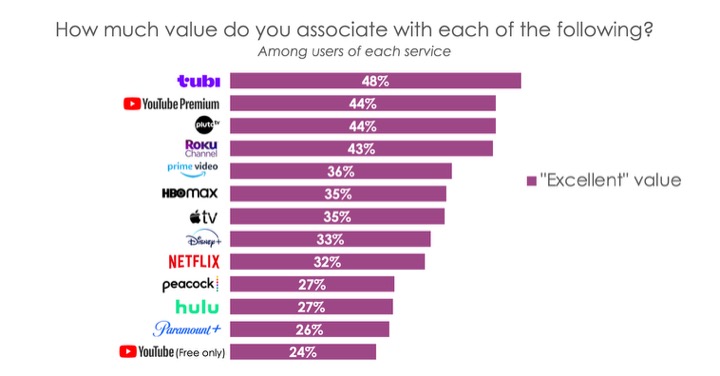
Those findings help illustrate the desire by some premium services like Netflix and Prime Video to chase after sports rights over the past few years, while emergent apps like Paramount Plus and Peacock have invested millions of dollars to capture their own share of live sports telecasts. Netflix now offers one-off events from football, professional fighting and baseball, while Paramount Plus recently spent billions to acquire Ultimate Fighting Championship (UFC) rights away from ESPN. Peacock offers year-round sports from the National Football League (NFL), Major League Baseball (MLB) and National Basketball Association (NBA), among other sports leagues.
Sports, coupled with premium features like ad-free streaming, still remain a highly-valued benefit among consumers, especially those willing to shell out more money to access those events and watch on-demand shows and movies without interruptions, Hub’s report showed.
At the same time, free streaming platforms like Fox-owned Tubi, Paramount’s Pluto TV and The Roku Channel are starting to capture more time spent with TV in American homes, with consumers offsetting rising streaming prices with more free-to-access apps and services that offer comparable premium programming.

Jason Platt Zolov, a Senior Consultant at Hub Entertainment Research, said the findings suggest streaming providers must better align their marketing and product strategies with changing consumer priorities.
“Marketing that leads with ‘free’ and ‘low price’ will continue to capture consumers first,” Zolov said. “Signaling the value of unique sports content, bundled with a portfolio of premium content, will best match consumer priorities that keep them subscribing.”
The findings are based on Hub’s 2026 “How to Monetize Video” survey of 1,600 U.S. consumers between the ages of 16 and 74 with broadband internet access. The research was conducted in June.