The maker of a popular line of television digital video recorders (DVR) and a broadcast TV consortium are trading blame for an issue that is preventing some newer-model DVRs from being fully compatible with the NextGen TV broadcast standard.
In a letter sent to the Federal Communications Commission (FCC) earlier this month, officials at Pearl TV said SiliconDust’s decision to use a chip made by Huawei in its HDHomeRun broadcast tuners and DVRs is the reason why the company has not secured the proper certification needed to decrypt certain over-the-air channels.
Specifically, the issue involves channels that some broadcasters have chosen to encrypt through the NextGen TV standard, which uses ATSC 3.0 technology to deliver improved signals to consumers.
A group called the ATSC 3.0 Security Authority (A3SA) is responsible for certifying consumer devices that incorporate NextGen TV tuners so they can receive and transcode encrypted TV signals.
SiliconDust’s line-up of HDHomeRun tuners allows consumers interested in broadcast TV to install an antenna, then deliver live and recorded TV programming to phones, tablets and smart TVs using the free HDHomeRun app. The company has offered several models of the HDHomeRun compatible with NextGen TV broadcast signals, but consumers aren’t able to access channels that broadcasters have chosen to encrypt.
Broadcasters aren’t required to encrypt their channels on NextGen TV, but many say encryption is a benefit because it prevents pirates from stealing and redistributing their programming, to include over the Internet. Pearl TV — which includes a number of private broadcast companies, including Cox Media Group, Gray Television, TEGNA, Hearst Television and Sinclair — is one of the proponents of broadcast TV encryption.
To date, A3SA has not certified a network-connected tuner or DVR that is capable of sending broadcast TV signals to non-TV devices. In the case of SiliconDust and its HDHomeRun tuners, Pearl TV says the company’s decision to utilize a chip made by Huawei is the reason.
In 2020, the FCC issued a directive that designated Huawei as a “national security threat,” a label that also applies to its subsidiary businesses. The federal government has never offered proof that Huawei is a security threat, and some industry experts believe its designation was meant to help bolster the competitive efforts of American tech firms like Apple and Microsoft.
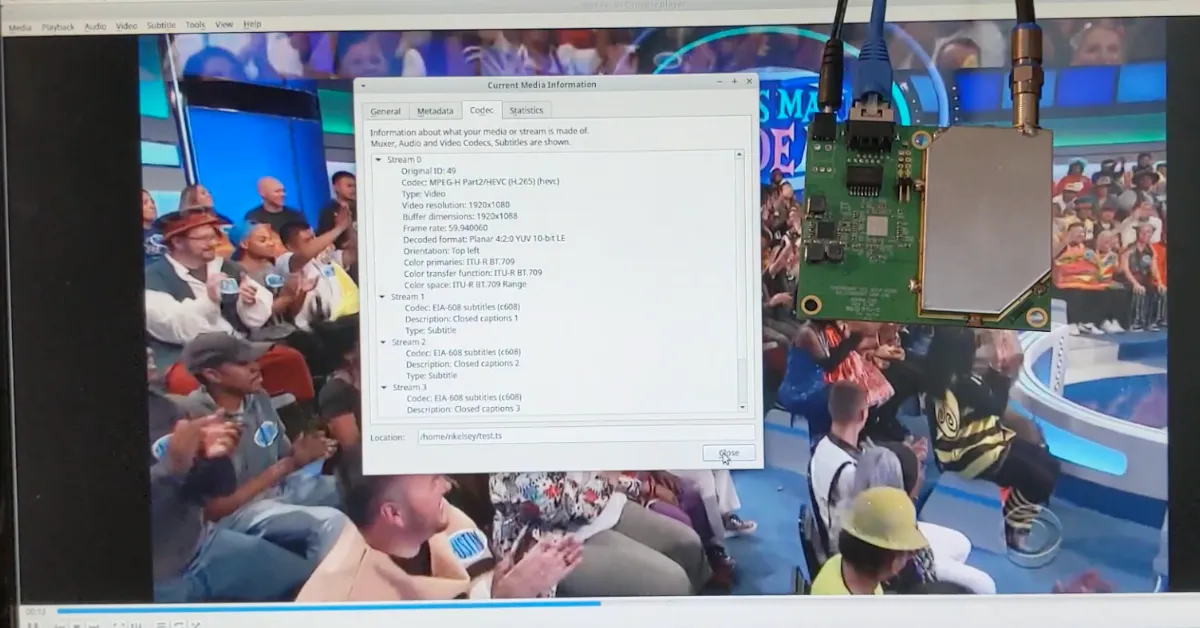
SiliconDust uses a chip made by a Huawei subsidiary. Pearl TV says this decision is the reason why the company’s HDHomeRun tuners are not eligible for A3SA certification, according to a letter sent to the FCC by the organization’s attorneys of record.
“The most troubling aspects of SiliconDust’s behavior is that it actively markets a device to consumers that it knows will not work with the A3SA content protection technology being used by ATSC 3.0 broadcasters,” the letter continued.
For years, officials at SiliconDust say they’ve been ready to implement the encryption certificates and other technology needed to make its HDHomeRun tuners compatible with encrypted NextGen TV broadcast signals. This month, executives complained that shifting industry standards and sleight of hand on the Huawei issue were ultimately the reasons why consumers who have HDHomeRun tuners are still not able to access encrypted channels.
“The specifications and rules that relate to DRM are not part of the ATSC 3.0 standard but a private set of specifications and rules put together by the five voting members of A3SA,” Nick Kelsey, the President and Chief Technology Officer of SiliconDust’s U.S. business, said in a statement.
Kelsey specifically called out the four main broadcast networks — ABC, CBS, NBC and Fox — as well as Univision, who are voting members of the A3SA, which complements the efforts of Pearl TV but is otherwise separate from the organization.
“The HDHomeRun is not a Chinese developed or made product and does not fall under this categorization,” Kelsey continued. “We have zero association with the Chinese government…and are proudly designed and developed in the United States of America.”
The HDHomeRun does not actually decrypt signals, Kelsey said. Instead, the hardware passes on the encrypted signal to supported devices, including smart TVs. A companion smart TV app would be responsible for decrypting the signal using encryption certificates that the company cannot obtain because A3SA refuses to give it the necessary approvals.
Other hardware manufacturers have obtained the necessary approvals to offer encrypted channels via their devices, including smart TV makers like Samsung and Sony, which utilize some Chinese-made parts in their smart TVs.
The issue is the latest involving a conflict between a hardware maker and the NextGen TV standard. Two years ago, South Korean TV manufacturer LG said it would stop implementing NextGen TV tuners in its devices after losing a civil case involving a company whose patents are utilized by the standard.
Another company, called ADTH, began shipping a standalone NextGen TV tuner that it marketed as being able to receive encrypted channels without a broadband connection, which is usually utilized to download the certifications needed to unlock those channels. Tech reviewers later found the claim was misleading, because the box needed an Internet connection during the set-up process and an occasional connection to download new encryption certificates.
The problems come at a time when most of the broadcast TV industry is rallying around an initiative by their lobbying group, the National Association of Broadcasters, to transition all over-the-air signals to ATSC 3.0 by mid-2030. The move would require the approval of the FCC.