
Key Points:
- The FCC voted 3-0 to review long-standing broadcast ownership rules.
- Current TV rules cap ownership at 39 percent of U.S. households.
- The review examines TV, radio, and dual network limits.
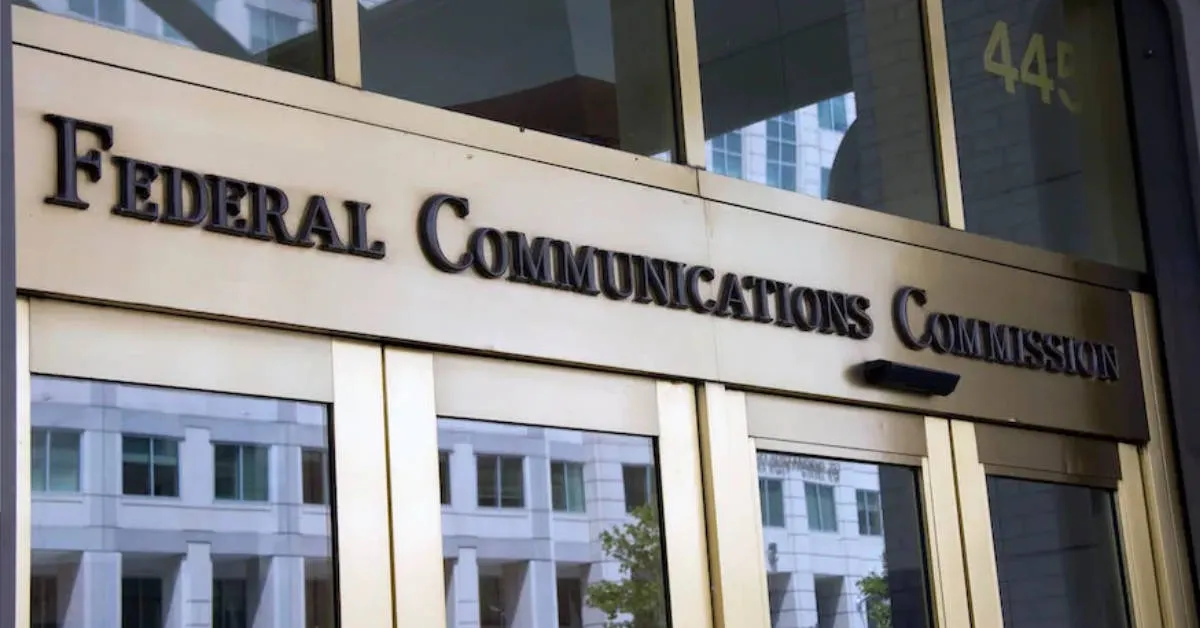
The Federal Communications Commission on Monday voted to begin a review of several long-standing broadcast ownership rules to determine whether they should be retained, modified or eliminated as the media landscape continues to evolve.
In a unanimous 3-0 decision at its monthly open meeting, the FCC adopted a Notice of Proposed Rulemaking that will seek public comment on multiple regulations governing radio and television station ownership. The rules under review include local television restrictions that limit how many broadcast stations a single company can own in a given market, along with the so-called “dual network” rule that prevents any of the top four national broadcast networks — ABC, CBS, Fox, and NBC — from merging.
Also up for consideration is the local radio ownership rule, which places caps on the number of radio stations one entity may control within a market.
Current FCC policy prohibits one broadcast group from owning stations that collectively reach more than 39 percent of U.S. television households. That threshold can be exceeded under two provisions: the “UHF discount,” which reduces the coverage area of certain television stations for ownership calculations, and the “duopoly” rule, which allows a single company to operate more than one station in a local market under specific circumstances.
FCC officials said the review is intended to solicit input from broadcasters, consumer advocates and the public on whether the rules continue to serve the public interest at a time when streaming platforms and digital outlets compete directly with traditional broadcast television and radio.
“Given the dramatic shifts in how Americans access news, information, and entertainment, it is appropriate for the commission to take a fresh look at ownership rules that were crafted decades ago,” the FCC said in a statement following the vote.
The NPRM will open a period for public comment, after which the FCC will consider replies before deciding on any changes to the rules. That process could take several months.
The review does not include lifting the ownership cap beyond its 39 percent threshold — a matter some industry stakeholders have urged the FCC to examine for several years.
In a statement, the National Association of Broadcasters — one of the stakeholders urging the FCC to lift the ownership cap — praised the agency’s decision this week as a step in the right direction.
“We commend Chairman Carr for advancing this long-overdue proceeding to modernize outdated broadcast ownership rules,” Curtis LeGeyt, the CEO of NAB, said on Tuesday. “Local radio and television broadcasters continue to face outdated restrictions that hinder investment, innovation and the ability to serve their communities.”
Broadcast ownership rules have long been a contentious issue in Washington. Broadcasters argue that loosening restrictions would allow them to achieve greater economies of scale and compete more effectively with larger media and tech companies. Critics contend that further consolidation could reduce localism, limit diversity of voices and harm competition in local media markets.
The last major FCC ownership review was completed in 2017, when the commission voted to eliminate the newspaper-broadcast cross-ownership ban and made other changes that eased restrictions. Those decisions were upheld by the Supreme Court in 2021 after a lengthy legal challenge.
—
Read more:
- Appeals court issues mixed ruling on FCC’s broadcast ownership rules
- NAB renews call for FCC to eliminate broadcast ownership cap
- Nexstar CEO not worried about FCC rules impacting TEGNA deal
- Newsmax CEO: FCC lacks authority to eliminate broadcast ownership cap
- Nexstar asks local TV station executives to support media deregulation
