


Movies are reclaiming their place as a cornerstone of streaming engagement, with feature-length films now accounting for a growing share of both viewership and revenue across leading streaming platforms, according to a report from Parrot Analytics.
The firm analyzed thousands of titles across Amazon’s Prime Video, Disney Plus, Netflix and HBO Max in the U.S. and concluded that movies deliver disproportionately high engagement compared to the total hours of content they represent. The findings contradict the prevailing belief that films had fallen behind TV series as streamers shifted their focus toward long-form episodic programming.
In 2022, movies represented roughly 27 percent of total streaming revenues, Parrot said. By 2024, that share had climbed to nearly 50 percent. Within movie-driven revenue, Pay-2/3 and library windows accounted for about two-thirds of total film value, up from just 26 percent in 2022. The company said those numbers align with Netflix’s own data, which shows older titles from as far back as 2020 continue to generate meaningful viewership years after release.
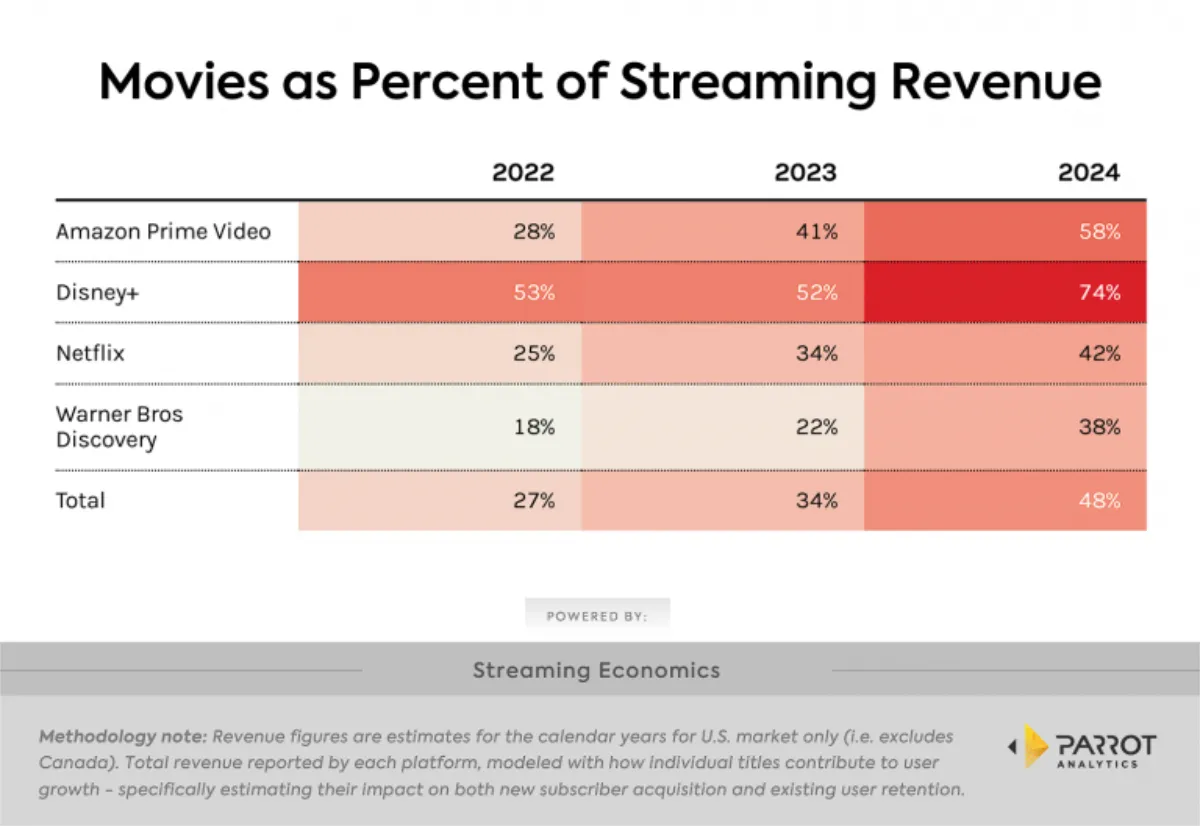
Parrot attributes the resurgence to three main factors: churn management, profitability and supply-side shifts. As competition in the streaming market intensifies, reducing churn has become critical. Netflix Co-CEO Ted Sarandos has repeatedly said the company’s film library is where “members go to watch their weekend movie.” Sarandos noted that the habit formation and emotional familiarity of streaming content translated into better subscriber retention and higher lifetime value.
Financial pressures are also reshaping how streamers approach content spending. Wall Street’s focus on profitability has led companies to scrutinize development pipelines and favor predictable returns. Licensing third-party films, particularly those in later pay windows, offers more reliable margins than funding new, untested series. HBO executive Casey Bloys said earlier this year that the network is emphasizing content its subscribers actually watch, which increasingly includes Pay-1 films.
On the supply side, distributors are also adapting to shorter theatrical windows and rising global demand for streaming content. Producers are finding new ways to monetize catalog and genre-driven titles, said Jeff Sackman and Berry Meyerowitz of Quiver Distribution, who called movies “a critical role in the premium streaming landscape.”
Parrot said the rebound of films as a retention tool offers a blueprint for what comes next in streaming. Sports are emerging as the next major frontier, offering live engagement and advertising potential that films can’t match, but at a much higher cost.
“The key for platforms will be to find the right balance, combining the dependability of film libraries with the cultural heat of live events,” Parrot concluded. “We see this evolution not as the decline of any format, but as a rebalancing of the entertainment industry guided by the attention economy.”
—
Read more: