



Special Coverage
Media and information companies that own intellectual property and related data should be licensing that material to developers of large language models (LLMs) used by artificial intelligence tools.
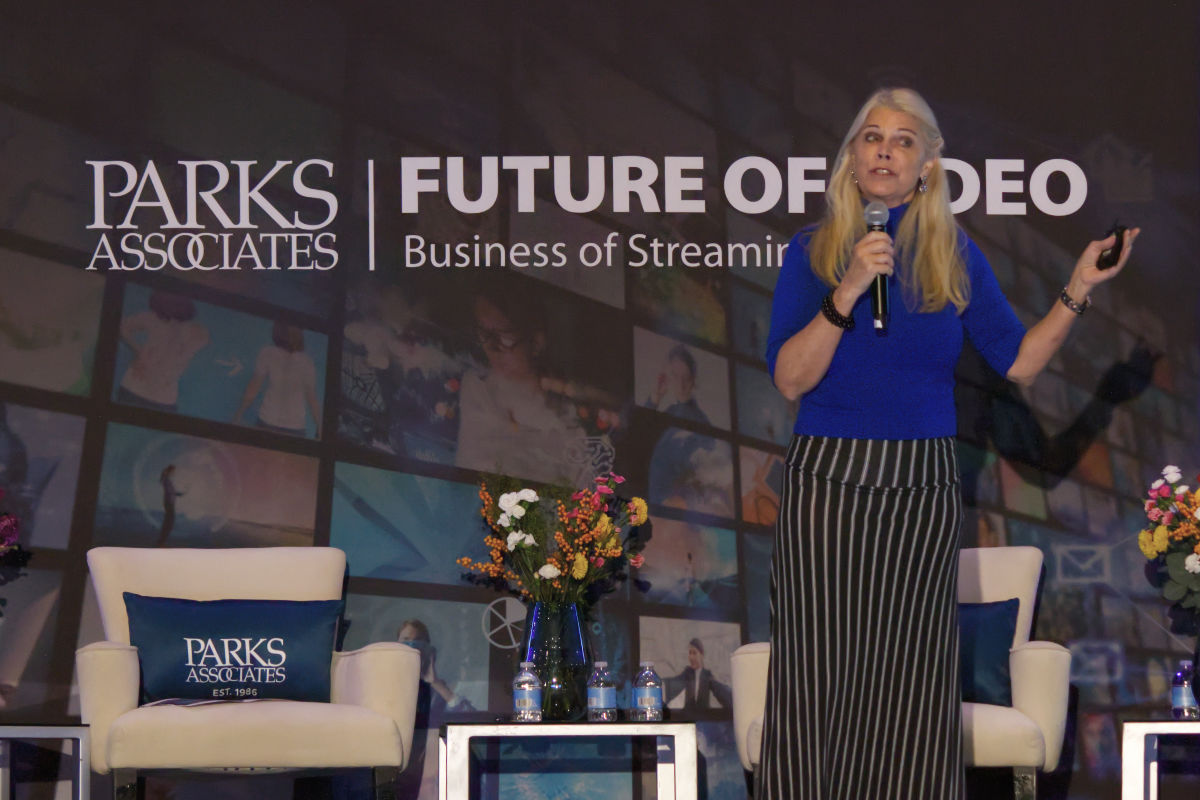
That was one of the major takeaways from a keynote presentation delivered by Laura Martin, the Senior Entertainment & Internet Analyst at asset management at Needham & Company, during a keynote presentation at the Parks Associates Future of Video conference in Southern California on Wednesday.
Martin said CuriosityStream shines as an example of a company that has tapped into a new source of revenue by licensing its catalog of fact-based documentaries and TV series to companies developing artificial intelligence tools — materials that help train large language models on reliable information that can be repurposed for other things, like chatbots.

The decision to license its content to AI developers helped CuriosityStream boost its overall revenue 46 percent to $18.4 million and lower its financial losses to less than $4 million during the third quarter (Q3) of the year, The Desk previously reported.
Licensing its content to AI developers is just one pipeline of revenue at CuriosityStream, whose core business is still focused on distributing its shows and documentaries on its own premium streaming service and through free, ad-supported streaming television (FAST) channels in the U.S. and other countries.
But Martin emphasized that the company’s decision to assist with the development of LLMs, rather than try to avoid the trend, was the biggest reason for its revenue growth during Q3 — and other companies should follow its example.
“It is our opinion on Wall Street that everyone who controls first-party data should be generating a revenue stream from (licensing it to) large language models,” Martin said. “If you don’t own first-party data, you will go out of business, because the guys who can generate a revenue stream from large language models will put you out of business.”
For weeks, Martin has been beating that drum: The comments she made about CuriosityStream’s decision to license its IP were similar to ones offered during a debate hosted by the publication Streaming Media in October, during which Martin said that selling data to AI developers for their LLMs was one of two new sources for revenue for media and entertainment companies moving forward. (The second source — and the one many are focused on now — is shoppable TV, she said.)
“I give you a 50 percent markup on your valuation multiple for every revenue stream you add,” Martin said.
Few major media companies seem to be resistant to the idea of licensing their first-person data and other intellectual property to AI developers, but those arrangements have been largely reactive rather than proactive, particularly when it comes to characters, movies and shows.
In June, the Walt Disney Company and Universal Pictures filed a federal lawsuit against San Francisco-based Midjourney after some users were generating artwork that featured strong resemblances to popular characters like Winnie the Pooh and Shrek. Warner Bros Discovery (WBD) filed a related lawsuit three months later. All three studios accuse Midjourney of training its LLM on their shows and movies without permission or compensation.
It isn’t just entertainment companies that are battling AI developers on that front: Last year, the New York Times filed a lawsuit against OpenAI, the developer behind ChatGPT, accusing the company of violating its copyright by using its articles to make its generative AI chatbot knowledgeable. Microsoft, an investor in OpenAI, is also named as a defendant in the lawsuit, and both companies have denied the allegations.
In those cases, the aggrieved companies appear willing to license their content and data, as long as they are compensated and there are safeguards around it. Some companies have reached agreements with AI developers to license their intellectual property and first-party data to others, including Reddit, which has an arrangement with Google that follows along those lines.
CuriosityStream is the newest company to lean into licensing data to the developers of LLMs; the company’s CEO, Chris Stinchcomb, says the company can play in a space typically reserved for news and book publishers because its catalog contains ethically-sourced documentaries and TV series that are fact-based, rather than fantasy and fiction.
The company also doesn’t have to worry about paying actors or dealing with labor unions, because few of those elements are present in its content, if any, Stinchcomb asserted. That makes it easier for a company training an LLM on fact-based material to enter into a licensing agreement with CuriosityStream, especially since most of the material is already organized with broad and specific metadata alike.
“It’s certainly easier when you’re in the nonfiction space than when you are in the world of scripted entertainment, and you have talent to deal with and guilds,” Stinchcomb told Luminate last month.